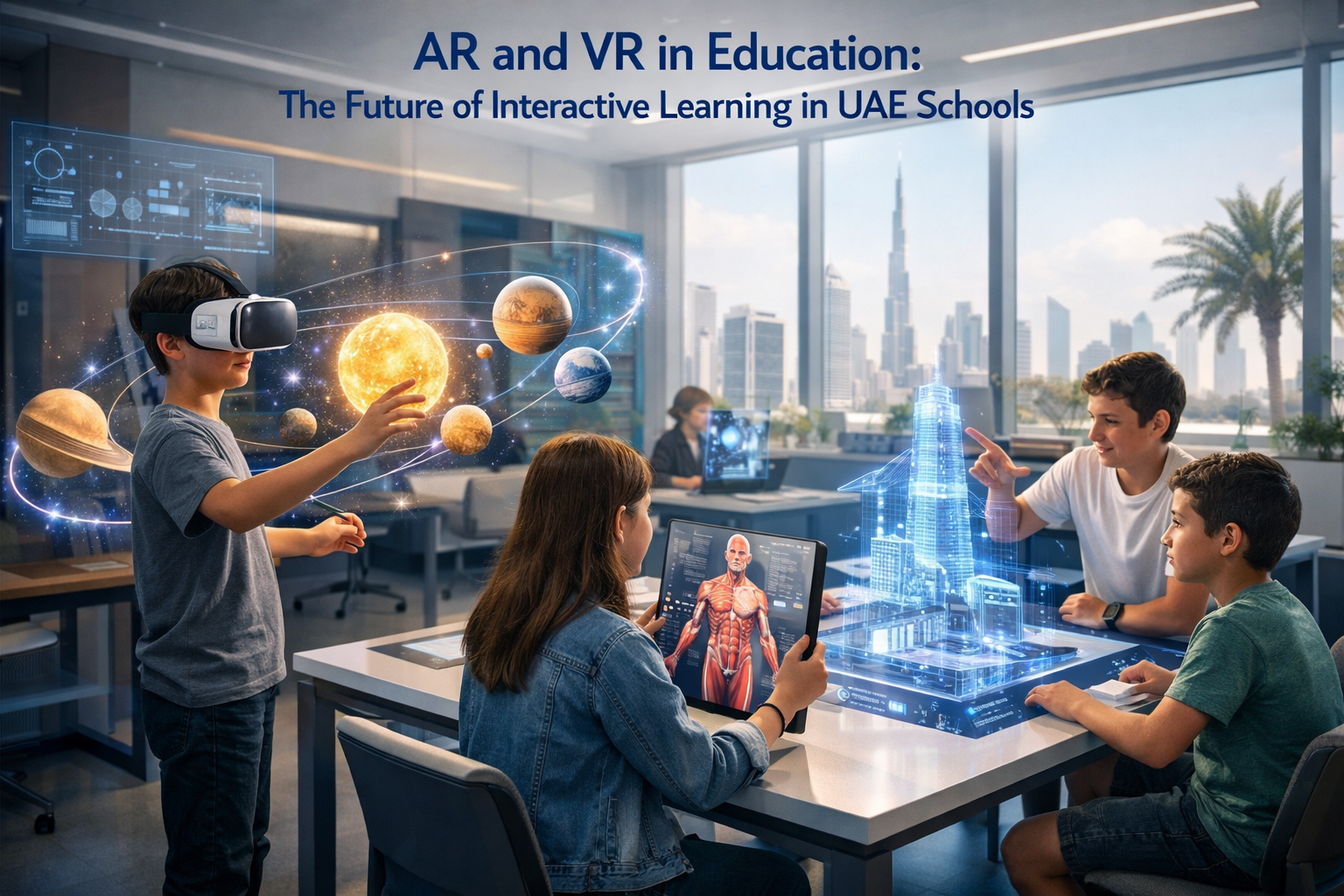
AR and VR in Education: The Future of Interactive Learning in UAE Schools
Quick Answer
AR and VR in education are transforming UAE classrooms by turning traditional lessons into immersive experiences. Students can explore 3D environments, interact with simulations, and better understand complex concepts through hands-on digital learning.
Introduction
Education in the UAE is moving toward a more interactive and experience-based approach. Schools are no longer relying only on textbooks and lectures. Instead, they are creating environments where students can actively engage with what they learn. One of the key drivers behind this shift is AR and VR in education in the UAE. These technologies allow students to step inside lessons rather than just observe them. Concepts that once felt abstract can now be explored visually and interactively. At the same time, schools are adopting structured solutions like immersive learning in education to ensure that these technologies are implemented in a consistent and meaningful way across classrooms.
What AR and VR Mean in Education
Augmented Reality (AR) and Virtual Reality (VR) are technologies that change how students experience learning. AR enhances the real world by overlaying digital content onto physical environments. Students can scan a page or object and instantly view a 3D model or animation. VR creates a fully immersive environment where students can explore virtual spaces. They can interact with objects, navigate simulations, and understand concepts in ways that feel real. Together, these technologies move learning from passive observation to active participation, making it easier for students to grasp complex topics.
Why UAE Schools Are Adopting AR and VR
The UAE is focused on building a future-ready education system that aligns with technological advancement. Schools are expected to prepare students for industries that rely on digital tools, innovation, and problem-solving. AR and VR support this goal by allowing students to experience learning rather than just study it. This leads to better understanding and stronger engagement. It also supports the broader vision of smart classrooms, where technology is integrated into daily learning and not treated as an add-on.
How AR and VR Are Used in UAE Classrooms
AR and VR are already being applied across different subjects in UAE schools, making lessons more interactive and practical. In science, students can explore complex systems such as the human body or chemical structures in 3D. This removes the difficulty of visualising concepts from flat diagrams. In history, students can experience events and environments in a virtual setting. This helps them understand context and timelines more clearly. In engineering and design, students can test ideas in virtual environments before building physical models. This reduces errors and improves creativity. These applications show how immersive learning is becoming part of everyday education rather than an occasional tool.
How AR and VR Learning Delivers Measurable Results
Immersive learning improves how students process and retain information. When students interact with content, they understand it more deeply compared to traditional methods. This approach leads to higher engagement, better participation, and stronger confidence in learning complex topics. Students are also more willing to explore subjects further because they are actively involved. Instead of memorising information, they experience it, which improves long-term retention.
Traditional Learning vs Immersive Learning
|
Learning Metric |
Traditional Learning |
AR/VR-Based Learning |
|
Student Engagement |
60–70% participation |
85–95% participation |
|
Concept Understanding |
Theory-based |
Visual and experiential |
|
Retention Rate |
Moderate |
High |
|
Interaction Level |
Low |
High |
|
Practical Exposure |
Limited |
Strong |
|
Student Motivation |
Around 65% |
Up to 89% |
This comparison clearly shows why immersive learning is becoming a preferred approach in modern education.
Skills Students Develop Through AR and VR
AR and VR learning builds skills progressively as students interact with immersive environments. At the initial stage, students learn how to navigate virtual spaces and understand visual representations of concepts. As they progress, they begin solving problems within simulations and testing different approaches. Over time, students develop the ability to analyse situations, think critically, and apply knowledge in practical contexts. This prepares them for real-world challenges.
Some of the key skills students develop include:
-
Spatial understanding through 3D visualization
-
Problem-solving using simulation-based learning
-
Creative thinking through interactive environments
-
Confidence in using advanced technologies
Role of Teachers in AR/VR Learning
Teachers play an essential role in making immersive learning effective. They guide students through virtual experiences and help them connect what they see with real-world concepts. Instead of simply delivering information, teachers support exploration, encourage questions, and help students think critically about what they are learning. This creates a classroom environment where students are actively engaged and more involved in the learning process.
Supporting Ecosystem for Immersive Learning
For AR and VR to be effective, schools need structured systems and resources. Many institutions rely on immersive learning in education to implement these technologies in a scalable and consistent way. In addition, insights from AR and VR in education in the UAE help educators understand how immersive learning is applied in real classroom environments. These resources ensure that both students and teachers can benefit from immersive learning without unnecessary complexity.
Challenges in Implementing AR and VR
While AR and VR offer strong benefits, there are challenges that schools need to address. These include the cost of devices, the need for teacher training, and access to structured content. Some schools may also face technical limitations when implementing these systems. However, many UAE schools are actively working to overcome these challenges through investment and improved infrastructure.
Future of Interactive Learning in UAE Schools
The future of education in the UAE is closely tied to immersive technologies. AR and VR will continue to grow as schools adopt more advanced tools. Classrooms will become more interactive, with students relying on simulations and real-time experiences to understand concepts. We can expect a shift toward learning environments that focus on practical application rather than theory alone. This will help students better prepare for technology-driven careers.
Conclusion
AR and VR in education in the UAE are changing how students learn by making lessons more interactive and experience-based. Instead of focusing only on theory, students can explore concepts, test ideas, and understand how things work in real situations. As immersive learning continues to grow, students will develop stronger skills and be better prepared for the future. Schools that adopt these technologies are creating learning environments that reflect the needs of modern education.
الأقسام
إقرأ المزيد
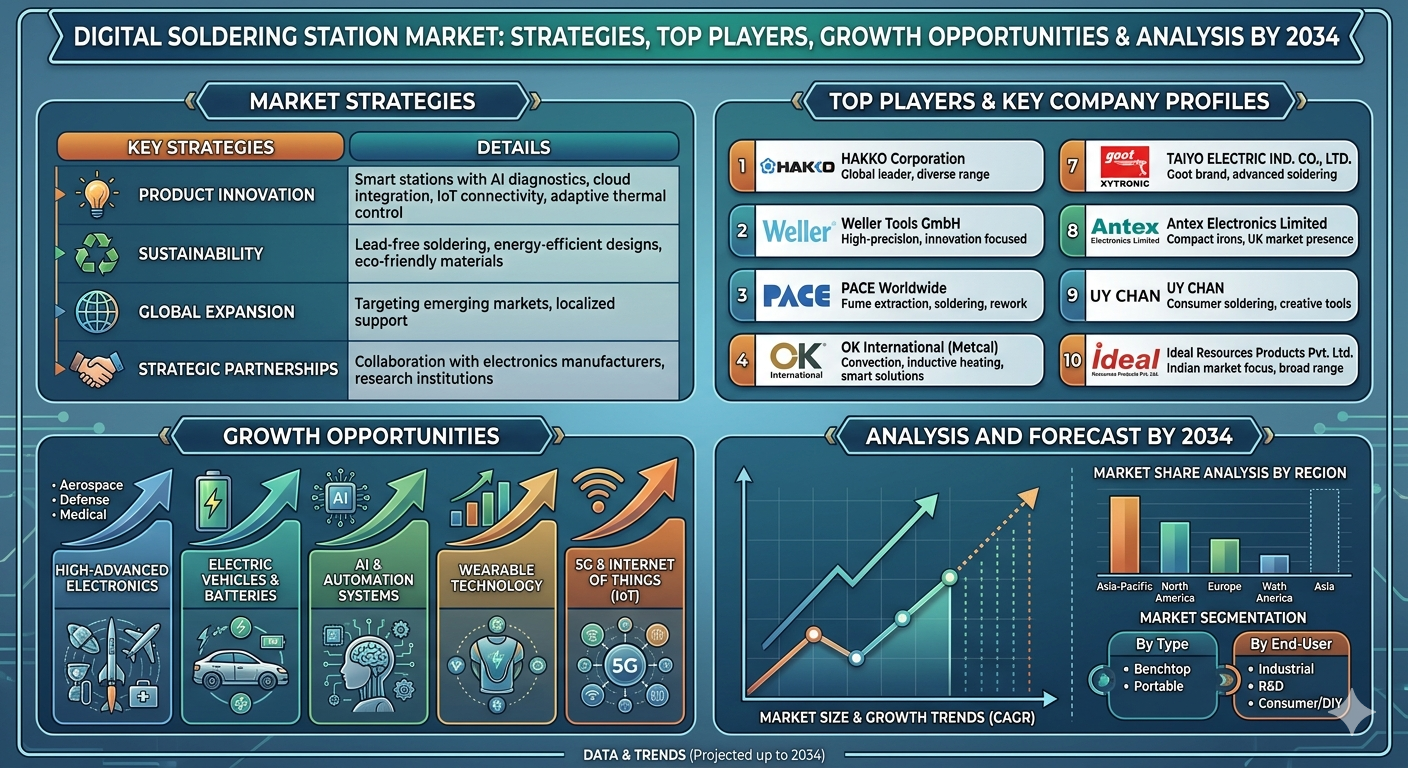
The growing demand for precision electronics assembly and repair solutions is accelerating the adoption of advanced soldering technologies across industrial and commercial sectors. Digital soldering stations are becoming essential tools in electronics manufacturing, PCB assembly, automotive electronics, aerospace systems, and consumer device repair applications. Their ability to provide...
Marketing agencies in Lebanon play a central role in helping businesses grow, compete, and establish strong brand identities in an increasingly competitive marketplace. With the rapid evolution of digital platforms and consumer behavior, companies rely on professional marketing expertise to reach their target audiences effectively. Marketing agencies in Lebanon provide comprehensive services...
Brawl Stars continues to surprise its community by blending heartfelt stories with engaging content. Recently, the game introduced a special new skin that serves as a touching homage to a beloved feline companion. This skin was created to honor Mariano, the cherished pet of one of the game’s artists, Fernanda, who experienced the loss over a year ago. The gesture has resonated deeply with...

Maintaining a comfortable and productive environment in your commercial property is essential for employee satisfaction and operational efficiency. Over time, even the most reliable air conditioning systems can lose efficiency, experience frequent breakdowns, or fail completely. Understanding Commercial AC Replacement In Chino Valley AZ is crucial for business owners who want to ensure...
The Oil Gas Defoaming Separator Market Outlook highlights a growing market driven by increasing oil and gas production, advanced separation technologies, and efficiency-focused operations. As Per Market Research Future, defoaming separators are essential for preventing foam formation, ensuring smooth oil and gas separation, and enhancing operational safety across upstream and midstream...