Linking Controls to Residual Risk and Prioritization

In any workplace, hazards are unavoidable, but how an organization manages these hazards determines the safety of its employees. Imagine a busy construction site where scaffolding is partially secured. The team identifies the hazard, implements safety barriers, and schedules additional inspections. Yet, even with controls in place, some risk remains—the residual risk. Understanding how to link controls to this residual risk and prioritize actions is essential for effective safety management. For professionals looking to formalize this knowledge, an OSHA 30 Hour Course provides a comprehensive foundation in hazard recognition, control measures, and risk management strategies.
Residual risk is the portion of risk that persists after safety measures have been implemented. Every control, whether administrative, engineering, or procedural, reduces risk but rarely eliminates it entirely. For example, installing guardrails reduces the risk of falls, but human error or equipment failure may still pose a threat. The key is to recognize these remaining risks and prioritize interventions to protect workers effectively.
Controls and Their Role in Risk Management
Controls are the measures organizations implement to mitigate identified hazards. These can be categorized as:
1.Engineering Controls
These involve physical changes to equipment or processes to reduce risk. For instance, machine guards, ventilation systems, and ergonomic workstations all minimize exposure to hazards. Engineering controls are typically the most reliable because they do not rely solely on human behavior.
2.Administrative Controls
Policies, procedures, and training fall under administrative controls. These include job rotation schedules, safety briefings, or hazard communication programs. While effective, administrative controls depend on consistent compliance, making them inherently less reliable than engineering measures.
3.Personal Protective Equipment
PPE, such as helmets, gloves, and respirators, provides an additional layer of protection. Although essential, PPE is considered the last line of defense since its effectiveness relies heavily on correct usage and maintenance.
Linking Controls to Residual Risk
Residual risk is the risk remaining after all control measures are applied. Linking controls to residual risk involves understanding both the effectiveness of the control and the nature of the remaining hazard.
Consider a chemical plant where operators handle corrosive substances. Installing automated pumps (engineering control) reduces direct exposure, implementing procedural steps like spill drills (administrative control) further minimizes risk, and providing gloves and goggles (PPE) protects employees if an accident occurs. The residual risk might include rare equipment failure or procedural non-compliance. Properly linking controls allows safety professionals to understand these gaps and develop strategies to address them.
Assessing Residual Risk
-
Identify remaining hazards after each control is applied.
-
Evaluate severity and likelihood of potential incidents.
-
Assign a risk rating to prioritize further interventions.
-
Document findings to support continuous improvement.
A practical approach is to use a risk matrix. For example, a medium-severity hazard that occurs infrequently may require monitoring, while a high-severity hazard with a moderate likelihood demands immediate corrective measures.
Prioritizing Actions Based on Residual Risk
Once residual risks are identified, prioritization ensures resources are allocated effectively.
Steps to Prioritize:
-
Rank hazards by severity: Focus first on risks that can cause serious injury or fatality.
-
Consider frequency: High-likelihood hazards should be addressed promptly, even if severity is moderate.
-
Evaluate cost-effectiveness of controls: Choose interventions that provide meaningful risk reduction without unnecessary complexity.
-
Monitor and review: Residual risks should be regularly reassessed as workplace conditions change.
For instance, in a warehouse setting, poorly stacked pallets pose a frequent but moderate risk. Prioritizing proper stacking procedures and staff training may reduce incidents more effectively than expensive automated lifts that address a rare hazard.
Micro Case Study: Manufacturing Plant
A mid-sized manufacturing facility introduced new conveyor machinery. Risk assessments identified pinch points as a major hazard.
-
Control implemented: Machine guards and emergency stop buttons (engineering control).
-
Residual risk: Rare maintenance errors or improper operation.
-
Prioritization: Implement targeted staff training sessions, regular audits, and clear signage.
By linking controls to residual risk, the plant reduced incidents by 60% in six months while ensuring that remaining hazards were actively managed.
Practical Checklist for Safety Professionals
-
Review all implemented controls and their effectiveness.
-
Identify remaining hazards to calculate residual risk.
-
Use a risk matrix to assign severity and likelihood.
-
Rank residual risks to prioritize follow-up actions.
-
Ensure documentation supports continuous improvement.
-
Reassess controls regularly as processes or personnel change.
Training and Learning Pathways
Understanding residual risk and control prioritization is complex, which is why structured education is essential. Programs like the OSHA 30 Hour Course provide practical guidance on hazard recognition, control strategies, and compliance requirements. Learners explore real-world scenarios and gain the skills to evaluate controls and residual risks effectively.
When choosing training, consider the quality of instruction and the comprehensiveness of the curriculum. A well-designed OSHA Safety Course ensures that students not only understand theoretical concepts but also learn to apply them in live work environments. Institutes offering interactive modules, hands-on exercises, and scenario-based assessments enhance learning retention and prepare professionals for real-world safety challenges.
FAQs
Q1: What is residual risk in workplace safety?
Residual risk is the remaining risk after all safety controls have been applied. It represents hazards that could still cause harm despite preventive measures.
Q2: How do I prioritize actions based on residual risk?
Rank hazards by severity and likelihood, then focus on high-severity and high-frequency risks. Use risk matrices for structured decision-making.
Q3: Are engineering controls more effective than administrative controls?
Typically yes, because they do not rely on human behavior. However, a combination of engineering, administrative, and PPE controls is most effective.
Q4: Why is formal training important for residual risk management?
Training ensures that professionals can identify, assess, and prioritize hazards systematically. Courses like the OSHA 30 Hour Course provide practical skills for real-world application.
Q5: Can PPE alone eliminate residual risk?
No, PPE is the last line of defense and is effective only when used correctly. Comprehensive risk management combines multiple control strategies.
Conclusion
Effectively linking controls to residual risk and prioritizing actions is central to modern safety management. By understanding the limits of each control and assessing remaining hazards, organizations can focus resources where they matter most. Structured training, such as an OSHA 30 Hour Course, equips professionals with the knowledge and practical skills to manage residual risk systematically. Safety is not about eliminating all risk—it is about understanding, controlling, and prioritizing it in a way that protects every worker.
Categorii
Citeste mai mult
" According to the latest report published by Data Bridge Market Research, the Marine Steering System Market CAGR Value The global marine steering system market size was valued at USD 1.29 billion in 2024 and is expected to reach USD 2.38 billion by 2032, at a CAGR of 7.95% during the forecast period This Marine Steering System...

The manner in which people watch sport has been evolving radically in the recent past. Everything has been shifted online and sports fans seek fast, reliable, and convenient platforms. Dafabet sports is one of the many alternatives that are present in the current market, with a reputation earned particularly by its users in India. Dafabet is known to provide coverage of a wide range of sports...

Hypercalcemia is a medical condition characterized by elevated calcium levels in the bloodstream, often associated with underlying disorders such as cancer, hyperparathyroidism, kidney disease, and certain endocrine conditions. Growing awareness regarding early diagnosis, improvements in healthcare infrastructure, and continuous advancements in targeted therapies have significantly enhanced...
Identity authentication and proofing processes must be strengthened to thwart evolving threats, and NIST 800-63-4 provides an ideal framework with its modular approach for identity proofing, authentication and federation. The new guidance sets stricter security requirements for phishing-resistant MFA and introduces stronger federation standards, formalizing a framework enabling...

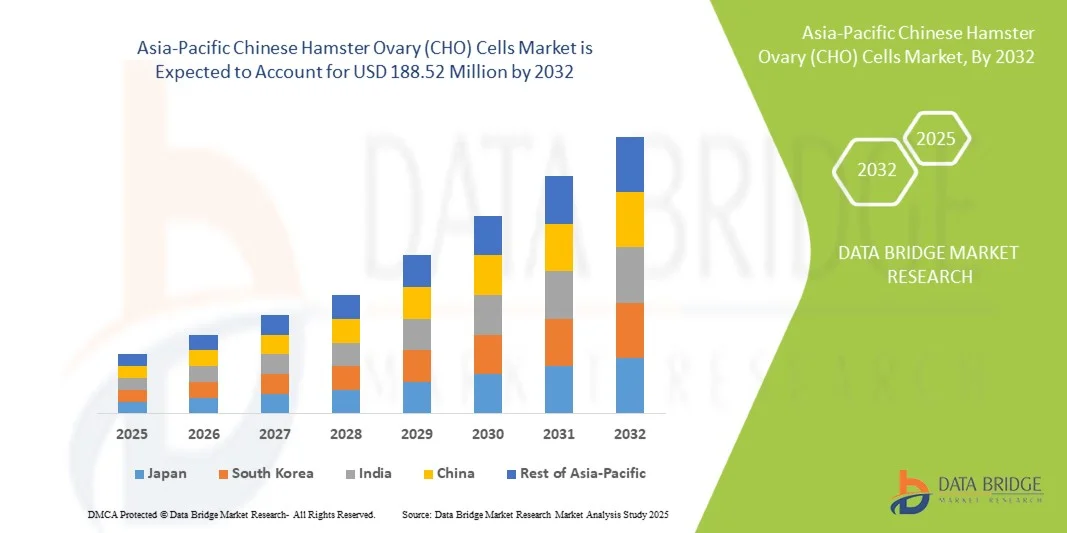
"Asia-Pacific Chinese Hamster Ovary (CHO) Cells Market Summary: According to the latest report published by Data Bridge Market Research, the Asia-Pacific Chinese Hamster Ovary (CHO) Cells Market The Asia-Pacific Chinese Hamster Ovary (CHO) Cells Market was valued at USD 87.85 million in 2024 and is expected to reach USD 188.52 million by 2032, at a CAGR of...