What It Takes to Build AI Pattern Recognition Trading Software in 2026
Financial markets have always rewarded those who can spot patterns faster than everyone else. But in 2026, the game has fundamentally changed. Markets are no longer driven solely by human psychology or traditional indicators; they're influenced by algorithmic trades, global data streams, and real-time sentiment shifts that unfold in milliseconds. In this environment, relying on manual analysis or static models isn’t just inefficient, it's a competitive disadvantage.
This is where AI-powered pattern recognition trading systems come into play. These systems don’t just analyze charts; they learn, adapt, and evolve with the market. They identify hidden correlations, detect anomalies, and respond to signals that are invisible to the human eye. However, building such software is not a simple plug-and-play exercise. It requires a deep intersection of financial expertise, data engineering, machine learning, and system architecture.
In this blog, we’ll explore what it truly takes to build AI pattern recognition trading software in 2026 from understanding market complexity to choosing the right models, designing scalable infrastructure, and evaluating long-term costs. Whether you’re a fintech founder, product leader, or investor, this guide will help you navigate the technical and strategic landscape with clarity.
Understanding the Complexity of Pattern Recognition in Financial Markets
At first glance, pattern recognition in trading might seem straightforward: identify trends, analyze historical data, and predict future movements. But real-world markets are far more chaotic and nuanced. Patterns are often non-linear, transient, and influenced by a mix of structured and unstructured data sources.
Unlike traditional rule-based systems, AI-driven trading software must interpret multiple layers of information simultaneously. These include price movements, trading volumes, macroeconomic indicators, news sentiment, and even social media signals. The challenge lies in distinguishing meaningful patterns from noisesomething that becomes increasingly difficult as data velocity and volume grow.
Another key complexity is the dynamic nature of markets. A pattern that worked yesterday may fail today due to changing market conditions, regulatory shifts, or unexpected global events. This is why modern systems must be adaptive. They need continuous learning capabilities, allowing models to retrain and recalibrate without compromising performance.
Moreover, latency plays a critical role. In high-frequency or intraday trading environments, even microsecond delays can impact profitability. This means pattern recognition systems must not only be accurate but also extremely fast and efficient in processing real-time data streams.
Core Technologies Behind AI Pattern Recognition Trading Systems
Building an advanced trading system requires a carefully orchestrated tech stack. It’s not just about choosing a machine learning model, it's about integrating multiple technologies into a cohesive, high-performance ecosystem.
Machine Learning and Deep Learning Models
At the heart of these systems are machine learning algorithms that identify patterns in historical and real-time data. In 2026, deep learning models such as LSTMs, Transformers, and hybrid architectures dominate this space. These models excel at capturing temporal dependencies and complex relationships within financial time series.
However, model selection isn’t a one-size-fits-all decision. For example, convolutional neural networks (CNNs) are increasingly used to analyze visual representations of price charts, while reinforcement learning models are applied to optimize trading strategies through continuous feedback loops.
Data Engineering and Pipeline Design
No AI system can function without high-quality data. Building robust data pipelines is one of the most critical and often underestimated components of AI pattern recognition trading software development. These pipelines must ingest, clean, normalize, and store massive volumes of data in real time.
Data sources typically include:
-
Market data feeds (tick-level, OHLC)
-
Alternative data (news APIs, sentiment analysis, social media)
-
Historical datasets for backtesting
-
Macroeconomic indicators and global financial metrics
The challenge is ensuring data consistency and minimizing latency while maintaining scalability.
Real-Time Processing and Infrastructure
Modern trading systems rely heavily on cloud-native architectures and distributed computing frameworks. Technologies like Apache Kafka, Spark Streaming, and Kubernetes enable real-time data processing and model deployment at scale.
Low-latency execution environments are equally important. Many firms deploy hybrid infrastructures combining cloud scalability with on-premise systems for ultra-fast trade execution. This balance ensures both performance and flexibility.
Designing a Scalable and Adaptive Trading Architecture
A successful AI trading system is not just about intelligence, it's about resilience and adaptability. The architecture must support continuous learning, rapid experimentation, and seamless scaling as market conditions evolve.
One of the most critical design principles is modularity. Instead of building a monolithic system, modern architectures are composed of independent modules, data ingestion, feature engineering, model training, signal generation, and execution. This allows teams to update or replace components without disrupting the entire system.
Another essential aspect is model lifecycle management. AI models require constant monitoring, validation, and retraining. Without proper governance, models can degrade over timea phenomenon known as model drift. Implementing automated retraining pipelines and performance monitoring tools ensures the system remains accurate and reliable.
Security and compliance also play a significant role. With increasing regulatory scrutiny in financial markets, trading systems must adhere to strict data governance and auditability standards. This includes maintaining logs of model decisions, ensuring transparency, and protecting sensitive financial data.
Finally, user interface and experience should not be overlooked. Even the most advanced system needs intuitive dashboards and visualization tools for traders, analysts, and decision-makers. Clear insights and actionable signals are what ultimately drive value.
Balancing Performance, Risk, and Cost in Development
Building AI trading software is a high-investment endeavor, and understanding the trade-offs between performance, risk, and cost is crucial for long-term success.
One of the biggest considerations is the AI development cost, which can vary significantly depending on system complexity, data requirements, and infrastructure choices. High-performance models require extensive computational resources, especially during training phases. Additionally, real-time systems demand robust infrastructure that can handle continuous data streams without downtime.
Working with an experienced AI development company can help optimize these costs by leveraging pre-built frameworks, scalable cloud solutions, and domain expertise. However, it’s important to strike a balance between outsourcing and in-house capabilities to maintain control over core intellectual property.
Risk management is another critical factor. AI models, while powerful, are not infallible. They can overfit historical data, misinterpret anomalies, or fail under extreme market conditions. This is why robust backtesting, stress testing, and risk modeling are essential components of the development process.
Key considerations for balancing these factors include:
-
Model accuracy vs. interpretability: Highly complex models may deliver better predictions but can be harder to explain and trust.
-
Speed vs. cost: Ultra-low latency systems require specialized infrastructure, increasing operational expenses.
-
Automation vs. control: Fully automated systems reduce human intervention but may increase exposure to unforeseen risks.
-
Scalability vs. stability: Rapid scaling can introduce system vulnerabilities if not managed carefully.
Achieving the right balance requires continuous iteration, testing, and strategic decision-making.
The Role of Strategy, Talent, and Continuous Innovation
Technology alone does not guarantee success in AI trading. The real differentiator lies in strategy, talent, and the ability to innovate continuously.
First, a clear trading strategy must guide the development process. AI should enhance a well-defined approach, not replace it. Whether it’s momentum trading, arbitrage, or sentiment-driven strategies, the system must align with specific business objectives and risk tolerance levels.
Second, building the right team is essential. This includes data scientists, quantitative analysts, software engineers, and domain experts who understand financial markets. Collaboration between these roles ensures that models are not only technically sound but also financially relevant.
Continuous innovation is equally important. Markets evolve, and so must your system. This involves experimenting with new models, integrating emerging data sources, and refining algorithms based on performance feedback. Organizations that treat AI trading as a static product often fall behind, while those that view it as an evolving ecosystem stay competitive.
Finally, ethical considerations and transparency are gaining importance in 2026. Stakeholders increasingly demand accountability in AI-driven decisions. Building systems that are explainable, auditable, and aligned with regulatory standards is no longer optionalit’s a necessity.
Conclusion: Building for the Future of Intelligent Trading
Developing AI pattern recognition trading software in 2026 is a complex yet highly rewarding endeavor. It requires more than technical expertise, it demands a strategic mindset, a deep understanding of financial markets, and a commitment to continuous improvement.
From designing adaptive architectures to selecting the right models and managing costs, every decision plays a crucial role in shaping the system’s success. The most effective solutions are those that combine speed, accuracy, and resilience while remaining flexible enough to evolve with changing market dynamics.
As competition intensifies and markets become more data-driven, organizations that invest in intelligent, well-designed AI trading systems will gain a significant edge. The future of trading belongs to those who can not only recognize patterns but understand, adapt, and act on them in real time.
Categorie
Leggi tutto
The Rise of Pea Protein Ham: How Plant-Based Innovation Is Transforming the Deli Counter Pea protein ham is no longer a fringe food product tucked away in the corner of a health food store it is fast becoming a mainstream staple reshaping how the world thinks about protein, sustainability, and the future of food. As consumers across the globe rethink their relationship with meat, driven by...

Top Gym in Kharadi for Modern Fitness Goals Introduction Finding the right Top Gym in Kharadi can significantly impact your fitness journey, especially in a fast-growing city like Pune. With increasing awareness about health and wellness, more people are looking for professional fitness centers that offer quality training and modern facilities. Whether your goal is weight loss, muscle building,...

Weight management is one of the most common health goals today. Many people struggle with stubborn fat, slow metabolism, and frequent cravings that make it difficult to maintain a healthy body weight. Diet and exercise alone do not always give fast or consistent results, which is why many individuals look for natural support solutions. One such product gaining attention...
According to the latest report published by Data Bridge Market Research, the Biomedical Textiles Market The global biomedical textiles market size was valued at USD 9.47 billion in 2024 and is expected to reach USD 15.39 billion by 2032, at a CAGR of 6.25% during the forecast period The world-class Biomedical Textiles Market report analyses some of the challenges that Biomedical...

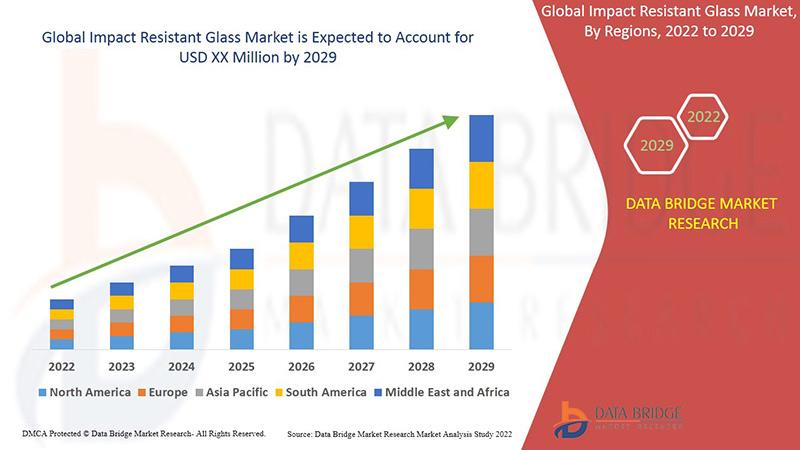
"Regional Overview of Executive Summary Impact Resistant Glass Market by Size and Share Data Bridge Market Research analyses that the impact resistant glass market will witness a CAGR of 8.57% for the forecast period of 2022-2029. Impact Resistant Glass Market analysis gives a clear idea on various segments that are relied upon to observe the quickest business development amid the...