


What role does HVAC play in IVF Laboratory Design?
INTRODUCTION
In today’s advanced fertility care environment, IVF Laboratory Design is a critical determinant of clinical success. Among all the technical systems involved, HVAC (Heating, Ventilation, and Air Conditioning) stands out as one of the most essential components. It is not merely a support system but the backbone that ensures a stable, sterile, and controlled laboratory environment.
IVF procedures involve delicate biological materials such as oocytes, sperm, and embryos, all of which are extremely sensitive to environmental changes. Even minor fluctuations in air quality, temperature, or humidity can significantly impact outcomes. Therefore, HVAC systems are indispensable in maintaining optimal conditions for successful assisted reproductive procedures.
This comprehensive guide explores the role of HVAC in IVF laboratory design, detailing its functions, standards, benefits, and design considerations.
Introduction to HVAC in IVF Laboratories
HVAC systems in IVF labs are engineered to regulate and maintain:
- Air purity and cleanliness
- Temperature stability
- Humidity control
- Airflow patterns
- Pressure differentials
Unlike conventional HVAC systems, those used in IVF laboratories must meet stringent cleanroom standards to ensure contamination-free conditions.
Why HVAC is Crucial in IVF Laboratory Design
The success of IVF procedures depends heavily on environmental control. HVAC systems contribute by:
- Protecting embryos from airborne contaminants
- Maintaining consistent temperature for cell development
- Regulating humidity to prevent media evaporation
- Removing harmful gases and VOCs
Without proper HVAC systems, IVF laboratories risk contamination, reduced embryo viability, and lower success rates.
Core Functions of HVAC in IVF Labs
1. Air Filtration and Purification
Air quality is paramount in IVF labs.
Key Features:
- HEPA filters with 99.97% efficiency
- Removal of dust, bacteria, and airborne particles
- Activated carbon filters for VOC removal
These systems ensure that embryos are not exposed to harmful contaminants.
2. Temperature Regulation
Temperature stability is essential for maintaining biological processes.
Ideal Conditions:
- Laboratory ambient temperature: 20°C to 24°C
Temperature fluctuations can negatively impact embryo development and lab performance.
3. Humidity Control
Humidity must be carefully controlled to maintain optimal lab conditions.
Ideal Range:
- 40% to 60% relative humidity
Improper humidity levels can affect culture media and promote microbial growth.
4. Airflow Management
Airflow design is critical for contamination control.
Key Concepts:
- Laminar airflow systems
- Unidirectional airflow
- Controlled air velocity
Proper airflow prevents turbulence and minimizes contamination risks.
5. Pressure Differentials
Pressure control helps maintain sterile conditions.
Principles:
- Positive pressure in sterile zones
- Lower pressure in adjacent areas
This ensures that contaminated air does not enter sensitive zones such as embryology labs.
6. VOC (Volatile Organic Compound) Control
VOCs can be harmful to embryos and must be eliminated.
Sources:
- Paints and adhesives
- Cleaning agents
- Furniture and construction materials
HVAC systems incorporate activated carbon filters to remove these harmful compounds.
HVAC Zoning in IVF Laboratory Design
HVAC systems must align with lab zoning requirements:
Sterile Zone:
- Highest air purity
- HEPA filtration
- Positive pressure
Semi-Sterile Zone:
- Moderate air control
- Controlled airflow
Non-Sterile Zone:
- Standard ventilation
This zoning ensures proper contamination control across different lab areas.
Air Changes Per Hour (ACH)
ACH is a crucial parameter in HVAC design.
Recommended Levels:
- 15–20 ACH for IVF labs
- Higher ACH for critical areas
Frequent air exchange reduces contamination risks and maintains air quality.
Standards Governing HVAC in IVF Labs
1. ICMR Guidelines
The Indian Council of Medical Research recommends maintaining controlled environments and proper ventilation systems for IVF labs.
2. ISO Cleanroom Standards
The International Organization for Standardization defines cleanroom classifications and air quality requirements.
3. NABH Standards
The National Accreditation Board for Hospitals & Healthcare Providers ensures compliance with infection control and environmental safety standards.
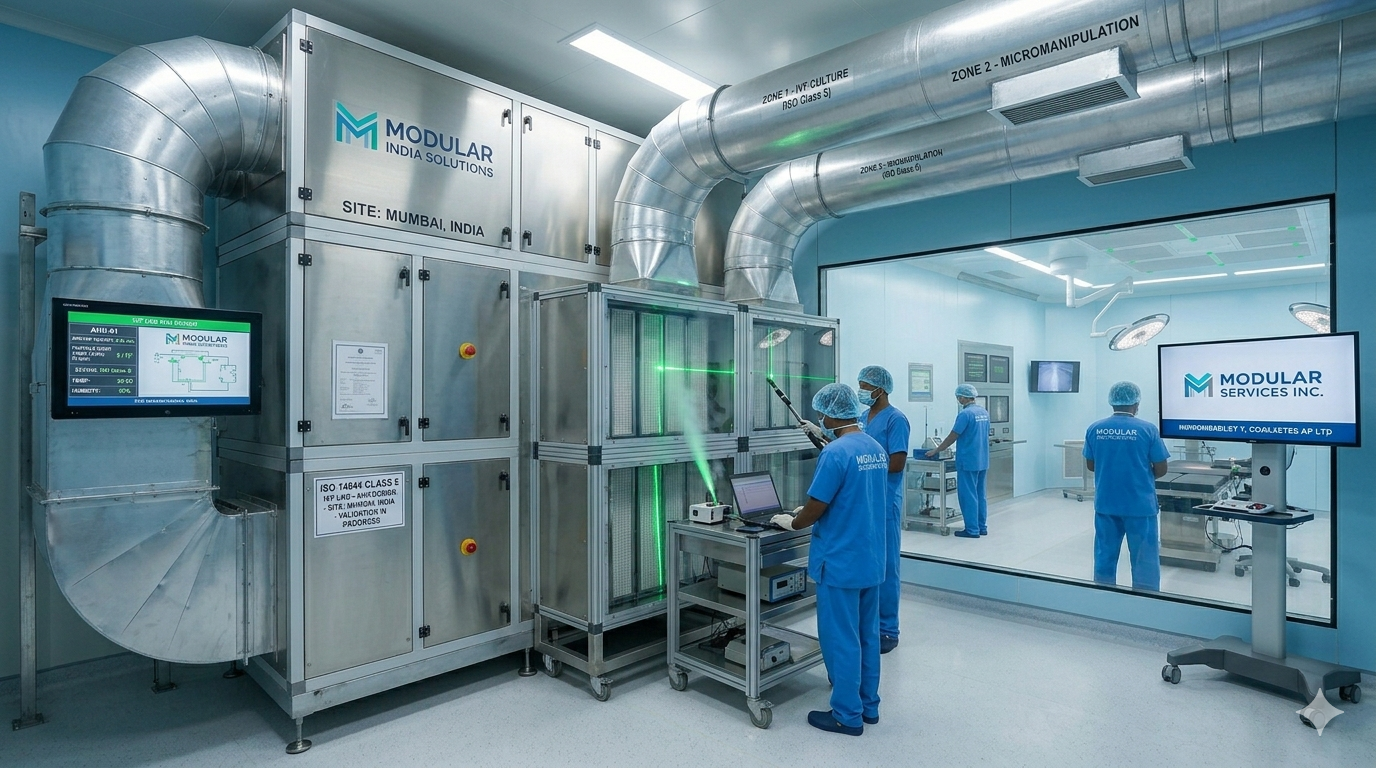
Components of an HVAC System in IVF Labs
A robust HVAC system includes:
- Air Handling Units (AHUs)
- HEPA filters and pre-filters
- Ducting and airflow systems
- Diffusers and return air grilles
- Temperature and humidity sensors
- Control and monitoring systems
Each component works together to maintain a stable environment.
Design Considerations for HVAC Systems1. Material Selection
- Use low-VOC materials
- Avoid toxic finishes
2. Equipment Placement
- Ensure even air distribution
- Avoid direct airflow on sensitive work areas
3. Noise and Vibration Control
- Use low-noise equipment
- Install vibration dampeners
4. Energy Efficiency
- Optimize airflow design
- Use energy-efficient components
5. Redundancy and Backup Systems
- Backup HVAC units
- Emergency power supply
Challenges in HVAC Implementation
Some common challenges include:
- High installation and maintenance costs
- Need for skilled personnel
- Continuous monitoring requirements
- Managing VOC levels
Benefits of Effective HVAC Design
- Improved embryo quality
- Higher IVF success rates
- Reduced contamination risk
- Compliance with healthcare standards
- Enhanced operational efficiency
Future Trends in IVF HVAC Systems
- Smart HVAC systems with automation
- AI-based environmental monitoring
- Advanced filtration technologies
- Sustainable and energy-efficient designs
Conclusion
HVAC systems are an integral part of successful IVF Laboratory Design, ensuring that laboratories maintain a stable, sterile, and controlled environment for sensitive reproductive procedures. From air filtration and temperature control to pressure management and VOC removal, HVAC systems directly influence clinical outcomes and lab efficiency.
A well-designed HVAC system not only improves success rates but also ensures compliance with regulatory standards and long-term operational reliability. Partnering with experts like Altus Airflow ensures that IVF laboratories are equipped with advanced HVAC solutions tailored for precision and excellence.
FAQs
1. What is the role of HVAC in IVF Laboratory Design?
HVAC in IVF Laboratory Design controls air quality, temperature, humidity, and pressure to maintain a sterile and stable environment.
2. Why is air filtration important in IVF Laboratory Design?
Air filtration in IVF Laboratory Design removes contaminants and VOCs that can harm embryos and reduce success rates.
3. What temperature is maintained in IVF Laboratory Design?
IVF Laboratory Design typically maintains temperatures between 20°C and 24°C.
4. How does HVAC prevent contamination in IVF Laboratory Design?
HVAC in IVF Laboratory Design uses HEPA filtration, airflow control, and pressure differentials to prevent contamination.
5. What standards apply to HVAC in IVF Laboratory Design?
HVAC in IVF Laboratory Design must comply with ICMR, ISO, and NABH standards.
Read Our Previous Blog------>What role does HVAC play in IVF Labs Design?
Categorias
Leia Mais
"Powered Storage Devices Market summary According to the latest report published by Data Bridge Market Research, the Powered Storage Devices Market The global powered storage devices market size was valued at USD 40.97 billion in 2025 and is expected to reach USD 136.20 billion by 2033, at a CAGR of 16.20% during the forecast period The universal Powered...

The rapid advancement of digital technology has created a new era of entertainment where Asialive88 Slot Gacor online platforms have become an important part of modern lifestyles. The expansion of internet access, smartphone usage, and innovative software solutions has changed the way people discover and interact with entertainment services. Online slot entertainment is one of the digital...
Unlock Cricket Betting Success with Lotus999 in 2026 Cricket fever is at its peak with IPL 2026 on the horizon. Fans are hunting for reliable platforms to place smart bets. Enter lotus999, a standout name in the SBM betting world. This guide breaks down everything you need to know about getting started, focusing on creating your personal access key. Why Choose Lotus999 for Cricket...
In today's global healthcare environment, many doctors are looking beyond their home countries to pursue international medical careers. Germany has become one of the most attractive destinations for medical professionals due to its advanced healthcare system, excellent working conditions, competitive salaries, and strong demand for qualified doctors. However, German language proficiency is...
Your heart is one of the most important organs in your body. It works non-stop, pumping blood and delivering oxygen and nutrients to every part of your system. Taking care of your heart is not just about avoiding disease—it’s about living a longer, more energetic, and fulfilling life. In today’s fast-paced world, many people ignore early warning signs and adopt habits...