How to Prepare for DGCA Exams: A Practical Guide for Aviation Students
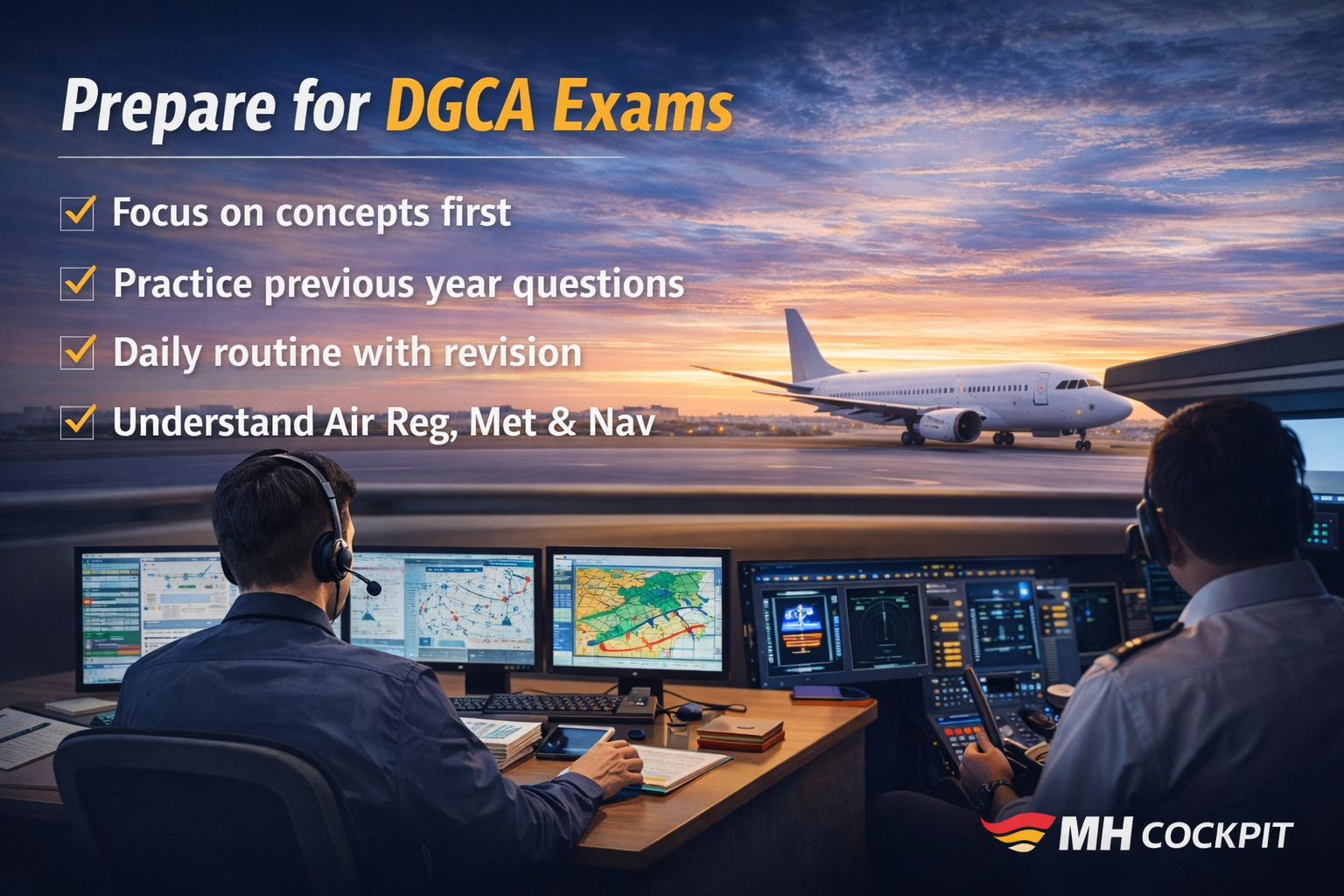
Preparing for DGCA exams can feel overwhelming at first. There are multiple subjects, unfamiliar concepts, and a lot of information to cover. But the truth is, these exams are not about studying everything. They are about studying smart, staying consistent, and understanding patterns.
If you approach it the right way, clearing DGCA papers becomes much more manageable.
Understanding the DGCA exam structure
Before jumping into preparation, it’s important to know what you’re dealing with. DGCA exams typically include subjects like Air Regulation, Meteorology, Navigation, and Technical General.
Each subject is different. Air Regulation focuses more on rules and procedures, Meteorology is concept-based, Navigation involves calculations and accuracy, and Technical subjects deal with aircraft systems.
Because of this variety, a one-size-fits-all study method doesn’t work. You need a structured approach.
Start with the right subject
One of the most effective strategies is to begin with Air Regulation.
This subject is more straightforward compared to others. It is based on aviation rules, DGCA CARs, and standard procedures. With proper revision, it becomes easier to score well. Starting with Air Regulation also helps you understand how DGCA frames its questions.
Once you clear your first subject, your confidence improves, and the rest of the preparation becomes smoother.
Focus on concepts before memorization
A common mistake students make is trying to memorize everything from day one. This works temporarily but fails during the exam.
Instead, focus on understanding concepts first.
For example, in Meteorology, don’t just memorize weather terms. Try to understand how weather systems form and how they affect flights. In Navigation, understand the logic behind calculations instead of just applying formulas blindly.
When concepts are clear, memory becomes automatic.
Use limited and reliable study material
Another mistake is using too many books, notes, and online resources.
More material does not mean better preparation. In fact, it often leads to confusion.
Stick to:
- DGCA CAR documents
- One set of trusted notes
- A reliable question bank
Keeping your resources limited helps you revise better and stay focused.
Practice previous year questions regularly
If there’s one thing that can significantly improve your chances of clearing DGCA exams, it’s solving previous year questions (PYQs).
These exams are pattern-based. Many concepts repeat in different forms.
By practicing PYQs:
- You understand the exam pattern
- You identify important topics
- You improve speed and accuracy
Make this a daily habit, not something you do at the end.
Create a simple daily routine
You don’t need to study for 10 hours a day. What you need is consistency.
A simple and effective routine could be:
- 2–3 hours of concept study
- 1–2 hours of question practice
- 30 minutes of revision
Even 4–5 focused hours daily can give better results than long, unstructured study sessions.
Handle each subject differently
Every DGCA subject requires a slightly different approach.
- Air Regulation: Revise multiple times and focus on key rules
- Meteorology: Understand concepts and practice interpretation (METAR/TAF)
- Navigation: Practice calculations daily
- Technical: Focus on understanding systems rather than memorizing blindly
Adapting your strategy to each subject makes preparation much more efficient.
Don’t ignore revision
Revision is where most students either succeed or fail.
Studying something once is never enough. You need multiple revisions:
- First revision for clarity
- Second for retention
- Third for confidence
Short notes can help a lot during this stage. Keep them simple and easy to review before exams.
Role of guidance and training
While self-study is possible, many students prefer structured learning because it saves time and reduces confusion.
Training institutes provide:
- Clear explanation of concepts
- Doubt-solving support
- Regular mock tests
Some students in India explore options like MH Cockpit and other aviation academies for this purpose. However, the institute itself is only a support system. Your consistency and effort matter far more.
Avoid common mistakes
A few things can slow down your progress:
- Studying without a plan
- Ignoring previous year questions
- Switching study materials frequently
- Leaving everything for the last minute
Avoiding these alone can improve your preparation significantly.
Final thoughts
DGCA exams are not impossible. They are structured, predictable, and very much clearable with the right approach.
The key is simple:
- Start with the right subject
- Focus on understanding
- Practice regularly
- Revise consistently
If you stay disciplined and follow a clear plan, you won’t just pass, you’ll do it with confidence.
For anyone serious about an aviation career, this is one of the most important steps. And once you clear your first paper, everything else starts to fall into place.
Categorias
Leia mais
Een mooie tuin verdient comfortabel en stijlvol tuinmeubilair. Een Tuinbank is daarbij een van de meest geliefde keuzes. Of je nu wilt genieten van een zonnige middag, een boek wilt lezen in de frisse buitenlucht of samen wilt ontspannen met familie en vrienden, een tuinbank biedt de perfecte plek om tot rust te komen. Bij Tuinmeubelsale vind je een uitgebreide collectie tuinbanken in...

"Electric Toothbrush Market Summary: According to the latest report published by Data Bridge Market Research, the Electric Toothbrush Market The global electric toothbrush market size was valued at USD 5.43 billion in 2025 and is expected to reach USD 8.52 billion by 2033, at a CAGR of 5.80% during the forecast period Thorough and transparent research...

According to the latest report published by Data Bridge Market Research, the Brewing Equipment Market CAGR Value With the use of integrated approaches and latest technology for the best results, Brewing Equipment Market research report is generated. Efficient and advanced tools and techniques are used to prepare this report that includes SWOT analysis and Porter's Five...
"Future of Executive Summary Membrane Air Dryer Market: Size and Share Dynamics The global membrane air dryer market size was valued at USD 3.58 billion in 2024 and is projected to reach USD 4.98 billion by 2032, with a CAGR of 4.20% during the forecast period of 2025 to 2032.To thrive in this rapidly transforming marketplace, today’s businesses call for innovative and superlative...

Prostate health is an important part of overall male well-being, especially as men grow older. The prostate is a small gland located below the bladder and in front of the rectum. It plays a key role in the male reproductive system by producing fluid that nourishes and transports sperm. However, as men age, the prostate can become enlarged or develop other issues that affect urinary...