


The Automated Pulse of Finance: An Overview of the Algorithm Trading Industry
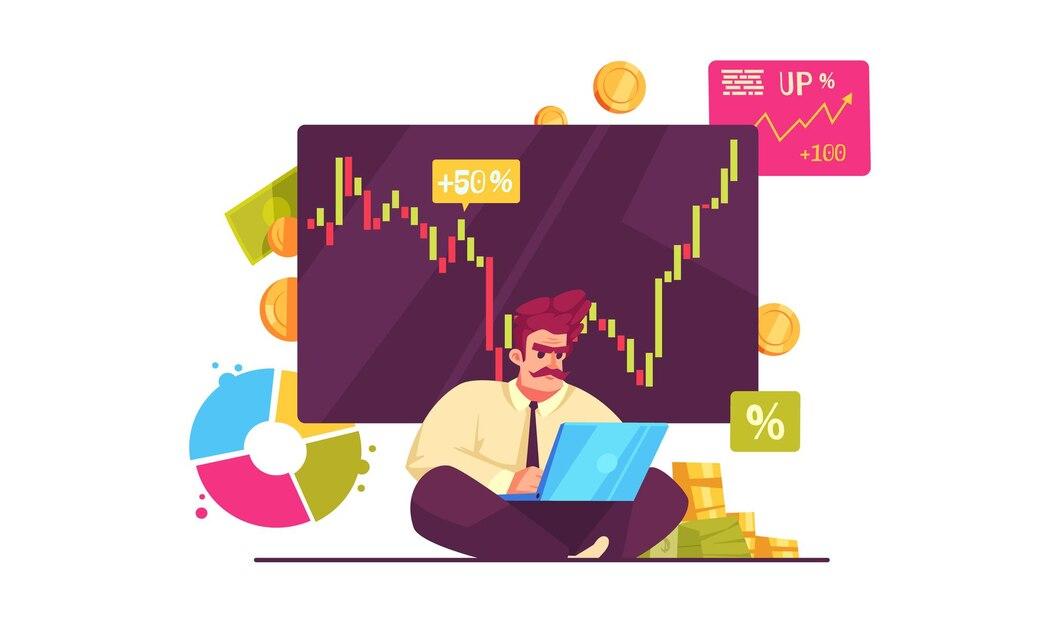
The world's financial markets, once the domain of crowded trading floors and human intuition, have been fundamentally and irrevocably reshaped by a powerful force: the algorithm. The global Algorithm Trading industry, also known as algorithmic or "algo" trading, represents the cutting edge of quantitative finance, a sector dedicated to using complex computer programs to execute trading orders at speeds and scales far beyond human capability. This industry is not about a single strategy but encompasses a vast ecosystem of sophisticated mathematical models, high-speed computer networks, and advanced software platforms designed to automate trading decisions based on a predefined set of rules. These rules can be based on timing, price, volume, or any mathematical model. From large institutional investors executing multi-million-dollar block trades to high-frequency trading firms making millions of trades in a single second, algorithmic trading now dominates the world's major stock, futures, and foreign exchange markets, accounting for the vast majority of all trading volume and defining the very nature of modern market structure and liquidity.
The core principle of the algorithm trading industry is to replace the emotional and cognitive biases of human traders with the disciplined, data-driven logic of a computer program. The applications and strategies are incredibly diverse. One of the most common applications is for trade execution. A large institutional investor, like a pension fund, wanting to buy a million shares of a stock cannot simply place a single large order, as this would dramatically move the market price against them. Instead, they use an execution algorithm, such as a Volume-Weighted Average Price (VWAP) or a Time-Weighted Average Price (TWAP) algorithm, which automatically breaks the large order into many smaller pieces and executes them intelligently throughout the day to minimize market impact and achieve a better average price. Other strategies are focused on exploiting market opportunities. Arbitrage algorithms, for example, look for tiny, fleeting price discrepancies for the same asset on different exchanges and execute simultaneous buy and sell orders to capture a risk-free profit. Market-making algorithms provide liquidity to the market by continuously quoting both a buy (bid) and sell (ask) price for a security.
The most advanced and often most controversial segment of the industry is High-Frequency Trading (HFT). HFT is a specialized form of algorithmic trading characterized by extremely high speeds, high turnover rates, and very short holding periods, often lasting just fractions of a second. HFT firms invest billions of dollars in building ultra-low-latency infrastructure, including co-locating their servers in the same data centers as the stock exchanges' matching engines and using microwave or laser communication networks to shave microseconds off their data transmission times. These firms employ complex strategies that often revolve around capturing the "spread" (the difference between the bid and ask price) or reacting to new market information faster than anyone else. While proponents argue that HFT provides valuable liquidity and improves price discovery, critics raise concerns about its potential to increase market volatility, create systemic risk, and provide an unfair advantage over slower market participants, making it a subject of intense regulatory scrutiny.
The competitive landscape of the algorithm trading industry is a highly specialized and secretive world. It is dominated by a mix of large investment banks (like Goldman Sachs and Morgan Stanley), which have massive algorithmic trading desks that serve their institutional clients and conduct proprietary trading, and a host of specialized quantitative hedge funds and proprietary trading firms. Companies like Citadel Securities, Jane Street, Virtu Financial, and Hudson River Trading are some of the largest and most sophisticated players in this space. These firms are known for their intense, data-driven cultures and their recruitment of top talent from the fields of mathematics, physics, and computer science. The barriers to entry are incredibly high, requiring immense capital for technology and trading, as well as a deep pool of quantitative research talent to develop and continuously refine the trading strategies. In this industry, the "alpha" (the edge) is constantly decaying as more competitors discover the same signals, leading to a perpetual arms race for faster technology and smarter algorithms.
Explore More Like This in Our Trending Reports:
Categories
Read More
Are you eager to explore the enchanting universe of Harry Potter? The Starting Harry Potter Hub is here to help you begin your magical adventure. This free online resource offers a wide variety of family-friendly activities designed with children, educators, and caregivers in mind. From engaging videos and fun puzzles to interactive quizzes, creative craft ideas, and informative articles, the...

Best Teacher Training Institute in Chennai – Courses, Fees & Career Opportunities (2026 Guide) Are you searching for the Best teacher training institute in Chennai to build a successful teaching career? Chennai is a leading educational hub offering top-notch teacher training programs, including Montessori, NTT, and early childhood education courses. With the...

In today’s digital world, accessing online platforms has become a regular part of daily life. However, for beginners, even simple tasks like logging in or creating an account can feel confusing. If you are new and trying to understand how Laser247 ID access works, you are not alone. Many users face small challenges when they start using a new platform. They may not know where to begin,...

Executive Summary Refsum Disease Market Size and Share: Global Industry Snapshot The refsum disease market is expected to gain market growth in the forecast period of 2021 to 2028. Data Bridge Market Research analyses the market is growing at a CAGR of 5.40% in the above-mentioned research forecast period. Research and analysis about the key developments in the market, key competitors...

As the global demand for renewable energy continues to rise, businesses and homeowners are actively searching for dependable solar panel manufacturers capable of delivering advanced technology, exceptional durability, and long-term energy performance. Foxtech Energy has become a trusted name in the solar industry by providing premium solar modules and complete clean energy solutions for...