Crude Oil Jumps 8% After US-Iran Talks Fail: Should Investors Worry?
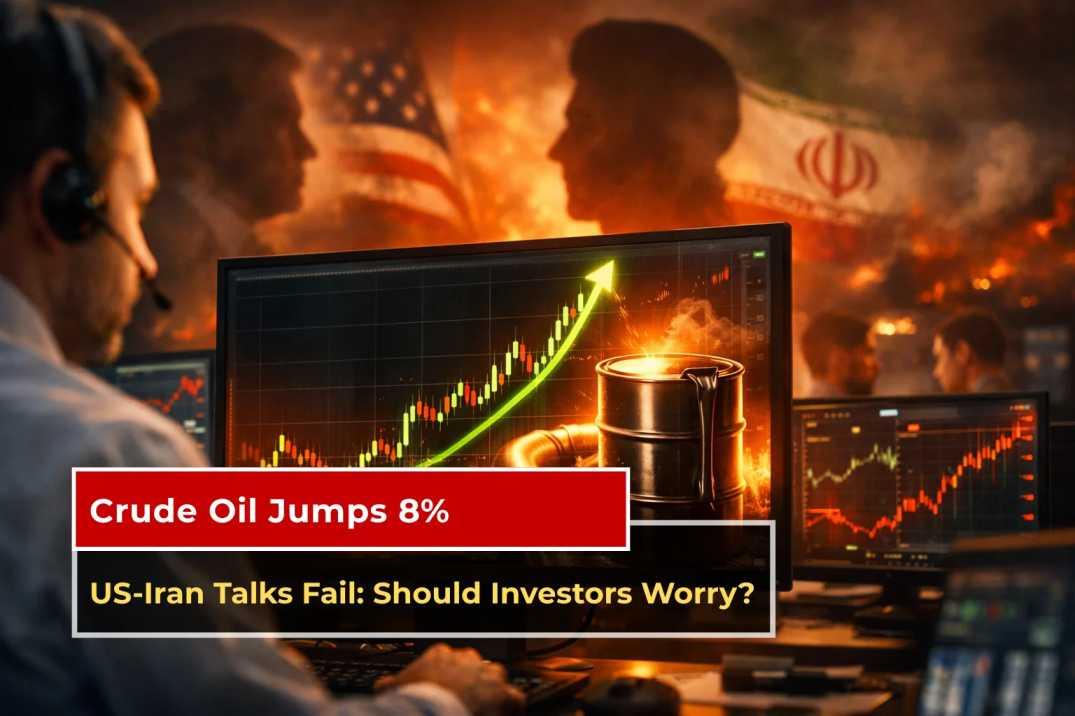
The global energy market faced a massive shock on Monday, April 13, 2026, as peace talks between the US and Iran collapsed. In a dramatic escalation, the US military announced a naval blockade of Iranian ports in the Strait of Hormuz, a vital artery for 20% of the world’s oil supply.
For Indian investors, this isn't just a headline—it's a direct threat to the wallet. With Brent crude jumping nearly 8% to cross the $102–$104 per barrel mark, the "geopolitical risk premium" is back with a vengeance. In this Finowings guide, we break down why this matters for your portfolio and how to navigate the coming volatility.
Why Did Oil Prices Jump So Fast?
The sudden surge is driven by fear of a prolonged supply disruption. The Strait of Hormuz is the narrow sea route through which nearly 21 million barrels of oil pass daily.
The blockade essentially halts Iranian maritime trade and puts other Gulf exports at risk of delays and skyrocketing insurance costs. When 20% of the world’s energy supply is "bottlenecked," prices have only one way to go: Up.
Impact on the Indian Stock Market Sectors
India imports roughly 90% of its crude oil. A sustained spike to $130/bbl could cut India’s GDP growth by up to 80 basis points (0.8%). Here’s how the heat spreads across the Dalal Street sectors:
|
Sector |
Likely Impact |
Reason |
|
Oil & Gas (ONGC, Oil India) |
Positive |
Upstream producers earn more as global selling prices rise. |
|
Airlines (InterGlobe, SpiceJet) |
Negative |
Fuel is 40% of costs; ticket prices will spike, dampening demand. |
|
Paints & Chemicals |
Negative |
Most raw materials are crude derivatives; margins will be squeezed. |
|
Automobiles |
Negative |
Rising petrol/diesel prices deter new buyers, especially in the entry-level segment. |
|
FMCG |
Moderate Negative |
Rising transport and packaging (plastic) costs hit bottom lines. |
The Inflation Link: Your Household Budget
There is a direct mathematical link between oil and your grocery bill. Every $10 rise in crude can add roughly 0.5% to 0.6% to India’s headline inflation.
-
Logistics: Higher diesel prices mean trucks charge more to transport vegetables, grains, and consumer goods.
-
Fertilizers: The Strait of Hormuz is also a hub for urea and fertilizer trade. Disruption here means higher farming costs, eventually leading to costlier food.
Oil Price Forecast: What to Expect in 2026-2027
According to recent analyst projections and the EIA Short-Term Energy Outlook:
-
Q2 2026 (Now): Expect Brent to average between $105 – $115 as the blockade is enforced.
-
Late 2026: If diplomatic channels reopen, prices could cool toward $90 – $100.
-
2027 Outlook: Long-term stabilization is expected around $76 – $85 per barrel.
What Should Mutual Fund Investors Do?
Volatility is the price of admission in the stock market. Here is the Finowings strategy for current MF holders:
-
Don’t Panic-Sell: Market corrections due to oil shocks are historically temporary. Once a "new normal" is established, markets recover.
-
Stick to Diversified Funds: Large-cap and Flexi-cap funds are better equipped to absorb sector-specific shocks (like the auto or paint sector slump).
-
Review Sectoral Exposure: If you are heavily over-weighted in "Oil-sensitive" sectors (Airlines/Tyres), consider rebalancing toward Energy or defensive sectors like IT and Pharma.
-
SIP is Your Best Friend: Use the current market dips to accumulate more units at a lower NAV (Rupee Cost Averaging).
Conclusion
The crude oil price surge us iran conflict has turned the 2026 energy landscape into a battlefield. While the 8% jump is alarming, India's macroeconomic fundamentals remain strong. Focus on your long-term goals, diversify into gold as a hedge, and keep a close eye on the Strait of Hormuz developments.
Pro Tip: In times of high energy inflation, companies with "pricing power"—those that can pass costs to consumers without losing business—are the true winners in your portfolio.
Disclaimer: Investing in the stock market involves risks. Geopolitical events can cause sudden shifts in asset prices. Please consult a financial advisor before making any investment decisions.
Категории
Больше
Introduction A dazzling smile can enhance your appearance and boost your confidence. Over time, teeth can become stained or discolored due to coffee, tea, smoking, aging, or medical reasons. Professional whitening treatments offer a safe, fast, and effective solution. Many individuals now choose Teeth whitening in Islamabad to restore their smile’s natural shine. Causes of Tooth...

Indian Premier League (IPL) is not just a normal cricket tournament and a time to commemorate excitement, joy and unforgettable moments for millions of viewers. Every season is packed with exciting matches that leave you breathless dramatic finales, thrilling and nail-biting performances by the top athletes. In addition marketing platforms like Reddy Anna have been gaining popularity among...

Le jeu en ligne connaît un succès constant grâce à la facilité d’accès offerte par les nouvelles technologies. En quelques minutes, il devient possible de découvrir de nombreux contenus interactifs depuis chez soi. Dans ce contexte moderne, le casino en ligne argent réel attire les utilisateurs qui souhaitent combiner divertissement,...

Introduction Premature ejaculation (PE) and erectile dysfunction may not only impact a man's sexual well-being but also his self-esteem and relationship satisfaction. Duratia 90 mg, which is a more potent version of dapoxetine, is frequently prescribed for men who have not yet obtained the desired effects using lower strengths such as Duratia 60 mg. Although. While medicines like Duratia 90 mg...
The global Aerospace Composites Market Size is witnessing rapid growth, fueled by increasing demand for lightweight, durable, and fuel-efficient materials in modern aircraft manufacturing. As the aerospace industry focuses on improving performance, reducing emissions, and enhancing structural efficiency, composite materials are becoming a critical component across commercial and...