From Concept to Reality: The End-to-End Internet Of Things Market Solution
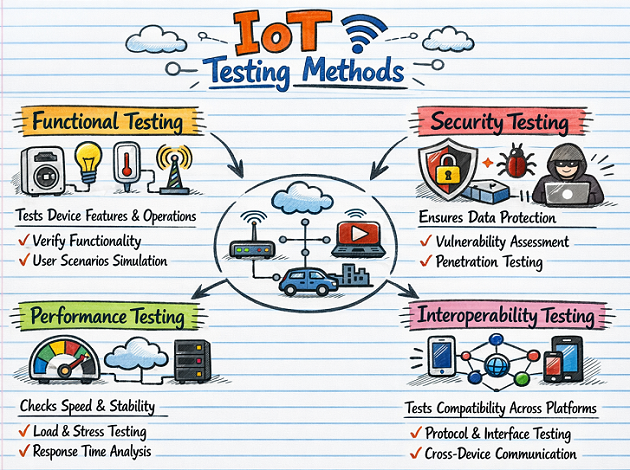
A successful Internet Of Things Market Solution is far more than just a collection of connected devices; it is a complete, end-to-end system designed to solve a specific and meaningful business or consumer problem. It encompasses the entire technology stack, from the physical sensors and gateways in the field, through the connectivity network, to the cloud platform for data analysis, and finally to the user-facing application that delivers the actionable insight. Thinking in terms of "solutions" rather than individual "products" is critical to understanding the true value and complexity of the IoT. A well-architected solution integrates each of these layers seamlessly to create a system that is secure, scalable, and delivers a clear return on investment or a tangible improvement in quality of life. Whether it's enhancing manufacturing efficiency, improving patient care, or making a city safer, the power of the IoT is realized when all its components work together in harmony to address a well-defined challenge.
A classic example of an industrial IoT (IIoT) solution is a predictive maintenance system for a manufacturing plant. This solution is designed to solve the multi-million-dollar problem of unplanned downtime. It starts with the installation of sensors—typically measuring vibration, temperature, and power consumption—on critical pieces of machinery like motors, pumps, and presses. These sensors are connected to an "edge gateway" on the factory floor, which performs some initial data filtering and aggregation. The gateway then securely transmits the relevant data over the factory's network to a cloud-based IoT platform. On the platform, machine learning algorithms, which have been trained on historical data, analyze the incoming sensor streams in real-time to detect subtle anomalies that are precursors to a failure. When the algorithm predicts a high probability of a future breakdown, it automatically triggers an alert on a dashboard and creates a work order in the maintenance team's management system, allowing them to schedule a repair during planned downtime, thus preventing a costly and disruptive catastrophic failure.
In the consumer realm, a comprehensive smart home security solution provides an excellent illustration. The problem being solved is the fundamental human need for safety and peace of mind. The solution begins at the edge of the property with a video doorbell and smart outdoor cameras, which provide remote visibility and deter intruders. Smart locks and door/window sensors secure all points of entry. Inside, motion sensors and indoor cameras provide another layer of monitoring. All these devices communicate wirelessly to a central hub or directly to the cloud via Wi-Fi. The cloud platform is the core of the solution, storing video footage, sending instant push notifications to the homeowner's smartphone when an event is detected (like motion at the front door), and allowing the user to remotely view live feeds, lock or unlock doors, and arm or disarm the system. A crucial part of the solution is often a professional monitoring service, where a third-party company's staff can respond to alerts 24/7 and dispatch emergency services, adding a valuable layer of human oversight to the automated system.
A powerful example in the public sector is an intelligent waste management solution for a smart city. This solution tackles the inefficiency and high cost of traditional, fixed-schedule garbage collection. It starts by retrofitting municipal trash bins with ultrasonic sensors that measure the fill level of each bin. These sensors are typically low-power devices that communicate their status once or twice a day over a long-range, low-power network (like LoRaWAN) to a central IoT platform. The platform software then visualizes the real-time fill level of every bin in the city on a map. More importantly, it uses an optimization algorithm to automatically generate the most efficient collection routes for the sanitation trucks, prioritizing the full bins and skipping the empty ones. This data-driven approach allows the city to reduce the number of truck routes, leading to massive savings in fuel, labor costs, and vehicle maintenance. It also reduces traffic congestion, lowers carbon emissions, and prevents bins from overflowing, resulting in a cleaner and more efficient city for its residents.
Explore More Like This in Our Reports:
Web3 In Entertainment & Media Market
Categorias
Leia mais
Polaris Market Research has introduced the latest market research report titled Perfumes & Deodorants Market Share, Size, Trends, Industry Analysis Report, By Type (Perfumes and Deodorants); By Distribution Channel; By Region; Segment Forecast, 2023 - 2032 that highlights the major revenue stream for the forecast period. The report contains clear, reliable, and thorough Perfumes and...

The Safety Voltage Detector Market was valued at USD 1.2 billion in 2024 and is projected to reach USD 2.5 billion by 2034, registering a CAGR of 7.5%. The latest report, titled ‘Global Safety Voltage Detector Market,’ comprises a profound analysis of the fundamental parameters contributing to the global Safety Voltage Detector market scenario. The research report provides the...

I'm a very funny girl,I love men and I love sex too but I'm not here all the time so please grab me when you can! All my Photos are 100% real guaranteed. I'm available for Outcall or Incall depends on hours you select so text me only if you are serious about meeting me. I'm available to take appointments in Dubai. I respect people who respect me and treat me well. Strictly no cam shows don't...

According to a new report from Intel Market Research, Global Smoke Alarm (Smoke Detector) market was valued at US$ 2,587 million in 2024 and is projected to reach US$ 3,660 million by 2032, growing at a CAGR of 5.8% during the forecast period (2025–2032). 📥 Download Sample Report: https://www.intelmarketresearch.com/download-free-sample/10969/smoke-alarm-2025-2032-704 This expansion is...

Judi Bola, which means football betting, is one of the most popular forms of online gambling in many parts of the world. It allows football fans to turn their knowledge and passion for the game into an exciting betting experience. With the rise of digital platforms, Judi Bola has moved from traditional betting shops into online environments, giving players access to matches, leagues, and...