Identity in the Digital Age: How Liveness Detection is Eliminating Dating App Scams
The digital dating world is currently facing a sophisticated crisis. In 2026, the rise of "agentic AI" and high-fidelity deepfakes has transformed romance scams into industrial-scale operations. Scammers no longer need to manually chat with victims or use stolen static photos. They now deploy autonomous bots that maintain dozens of personalized conversations simultaneously. This technological shift has made traditional verification methods nearly obsolete.
To combat these threats, Dating App Development has shifted its focus toward advanced biometric security. The most effective tool in this new arsenal is liveness detection. This technology ensures that the person behind the screen is a real, living human being and not a digital fabrication. For a modern Dating App Development Company, integrating these systems is no longer a luxury but a fundamental requirement for user safety.
The Evolution of the Digital Con
Romance scams have evolved far beyond the simple "catfishing" of the past decade. Today, fraudsters use generative AI to create human-quality output at machine speed. According to recent research from McAfee in early 2026, 75% of users have encountered profiles that appear AI-generated. Even more concerning, 1 in 7 people have lost money to these scams, with average losses reaching thousands of dollars per victim.
Traditional photo verification often fails because scammers can now create videos that smile, blink, and speak on command. These deepfakes disarm the natural skepticism of users. When a face moves and talks in real-time, the human brain is wired to trust it. This "authenticity crisis" is why the industry is moving toward more robust technical gatekeepers.
Understanding Liveness Detection Technology
Liveness detection is a specialized biometric process. It verifies that a biometric sample comes from a live person present at the time of capture. It distinguishes between a real human face and "presentation attacks." These attacks include high-resolution photos, pre-recorded videos, 3D masks, or deepfake overlays.
In the context of Dating App Development, this technology usually operates during the onboarding or profile verification phase. There are two primary technical approaches: active and passive detection.
1. Active Liveness Detection
Active detection requires the user to participate in a "challenge-response" test. The app prompts the user to perform specific, randomized actions.
-
Blinking or Smiling: The system detects the natural movement of eyelids or facial muscles.
-
Head Rotation: Users must turn their heads to show different angles, proving they are not a flat 2D image.
-
Random Prompts: The system might ask the user to read a specific sequence of numbers aloud.
While highly accurate, active detection adds "friction" to the user experience. Some users find these tasks repetitive or difficult in low-light settings.
2. Passive Liveness Detection
Passive detection is the gold standard for modern Dating App Development Services. It works entirely in the background without requiring user action. The AI analyzes a single frame or a micro-video for subtle "tells" of a real human presence.
-
Skin Texture Analysis: Algorithms look for the way light reflects off human skin versus a screen or a mask.
-
Micro-movements: The system detects involuntary muscle tremors and blood flow patterns (rPPG) in the face.
-
Depth Perception: AI checks for 3D volume to ensure the object is a real head rather than a photo held up to the camera.
Passive detection provides a seamless experience. Users simply look at the camera for a second, and the system verifies them instantly.
Why Liveness Detection is the Industry Standard
Dating platforms that fail to implement these tools face significant risks. Beyond the emotional toll on users, scams lead to high churn rates and brand damage. Implementing liveness detection through a professional Dating App Development Company offers three core technical advantages.
1. Eliminating Spoofing Attacks
Scammers often use "replay attacks" where they play a video of someone else on a secondary device. Liveness detection identifies the "moiré patterns" or screen flickers that occur when a camera films another screen. This prevents fraudsters from using stolen social media videos to pass verification.
2. Neutralizing Deepfakes
Modern deepfakes are visually stunning but often lack "micro-consistency." When a deepfake face moves, the pixels at the edges of the mouth or eyes may shift unnaturally. Liveness detection algorithms are trained to spot these digital artifacts that the human eye misses.
3. Scalable Moderation
Manual photo review is impossible for apps with millions of users. Liveness detection automates the first line of defense. According to industry data, automated biometric checks can flag up to 95% of fraudulent attempts before a human moderator even sees the profile.
The Integration Process for Developers
Building these systems requires a robust tech stack. Most development companies do not build biometric engines from scratch. Instead, they integrate specialized APIs that handle the complex computer vision tasks.
The Ideal Verification Workflow:
-
Image Capture: The app uses the front-facing camera to capture high-resolution biometric data.
-
Edge Processing: Initial checks occur on the device to ensure the face is centered and well-lit.
-
Cloud Analysis: The encrypted data travels to a secure server where AI models perform liveness and matching checks.
-
Tokenization: The system returns a "trust token" to the user's profile. This token signifies they are a verified human without storing sensitive biometric files permanently.
A dedicated Dating App Development Company ensures this process complies with global privacy laws like GDPR. Protecting biometric data is just as important as using it to stop scammers.
Impact on User Trust and Retention
Safety features are now a primary marketing tool for dating platforms. Users in 2026 are increasingly selective about where they share their data. They flock to "Verified-Only" ecosystems where they know every match has passed a liveness check.
-
Stat: Barclays research shows 78% of adults find AI-enabled scams harder to spot.
-
Fact: Apps that prominently feature biometric verification see a 20% to 30% increase in user retention.
-
Example: Platforms like Tinder and Bumble have pioneered "Video Verification" prompts. These prompts use liveness detection to ensure the person in the chat matches the person in the photos.
When users feel safe, they engage more. They are more likely to subscribe to premium features and spend more time on the platform.
Challenges and Technical Constraints
While liveness detection is powerful, it is not a "magic bullet." Developers must navigate several technical hurdles to ensure the system works for everyone.
-
Hardware Variability: Not every user has a high-end smartphone. Software must work on older cameras with lower resolution.
-
Environmental Factors: Poor lighting or busy backgrounds can trigger "false negatives," blocking legitimate users.
-
Bias in AI: Developers must ensure their algorithms are trained on diverse datasets. This prevents the software from failing for users with certain skin tones or facial features.
A skilled Dating App Development Company performs extensive "stress testing." They test the system against hundreds of different lighting conditions and facial types to ensure fairness and accuracy.
The Future: Hybrid Security Models
As we look toward the end of 2026, the industry is moving toward hybrid models. These systems combine liveness detection with "behavioral biometrics."
The software doesn't just check if you are a human during sign-up. It monitors how a user interacts with the app. If a "verified" user suddenly starts sending 100 messages per minute or asks for financial details immediately, the system triggers a secondary liveness check. This "continuous authentication" ensures that a real account hasn't been taken over by a bot or sold to a scammer.
Summary of Key Advantages
The implementation of liveness detection provides a multi-layered defense:
-
Presentation Attack Detection (PAD): Blocks photos, videos, and masks.
-
Deepfake Prevention: Spots synthetic facial overlays in real-time.
-
User Friction Reduction: Passive methods verify users in under five seconds.
-
Bot Elimination: Prevents automated scripts from creating mass accounts.
Conclusion
The digital age has made finding love more accessible, but it has also made deception more profitable. Scammers now use the same AI tools that power our favorite apps to exploit human emotions. However, technology also provides the solution.
By prioritizing Dating App Development that includes liveness detection, companies can effectively "break" the scammer's business model. It becomes too expensive and difficult for fraudsters to bypass these digital guards.
For any startup or established platform, the choice is clear. You can either invest in a specialized Dating App Development Company to build a secure, human-first environment, or you can risk becoming a playground for AI bots. In 2026, a "swipe" is only valuable if there is a real, verified person on the other side. Liveness detection ensures that the heart of the dating industry remains human.
Categories
Read More
" According to the latest report published by Data Bridge Market Research, the Steel Drums and Intermediate Bulk Container (IBC) Market The global steel drums and intermediate bulk container (IBC) market size was valued at USD 16.02 billion in 2024 and is expected to reach USD 22.70 billion by 2032, at a CAGR of 4.45% during the forecast period The persuasive Steel Drums and...

Spatial Genomics and Transcriptomics Market: Revolutionizing Precision Medicine Through Spatial Biology Market Overview The Spatial Genomics and Transcriptomics Market is rapidly emerging as one of the most innovative segments within the life sciences industry. Spatial genomics and transcriptomics technologies enable researchers to analyze gene expression and genomic information while...

As winter sets in, staying warm and comfortable becomes essential — especially if you’re heading outdoors for work, travel, or daily routines. An inner thermal for men is more than just another piece of clothing; it’s the foundation of your winter wardrobe. With the right base layer from XYXX, you’re not only protected from the cold but also positioned for all-day...

According to the latest report published by Data Bridge Market Research, the Biopharmaceuticals Manufacturing Consumables Testing Market The global biopharmaceuticals manufacturing consumables testing market size was valued at USD 714.47 million in 2025 and is expected to reach USD 1,800.84 million by 2033, at a CAGR of 12.25% during the...
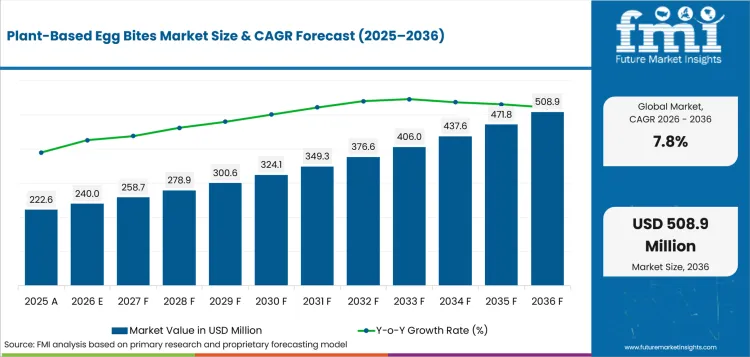
The global plant-based egg bites market is entering a strong growth phase as consumers increasingly shift toward alternative proteins, convenient breakfast solutions, and sustainable food options. According to market analysis, the sector is projected to grow from USD 240.0 million in 2026 to USD 508.9 million by 2036, registering a CAGR of 7.8% during the forecast period. Market expansion is...