


Enterprise Resource Planning Software: A Complete 2026 Guide for Businesses
What is Enterprise Resource Planning Software?
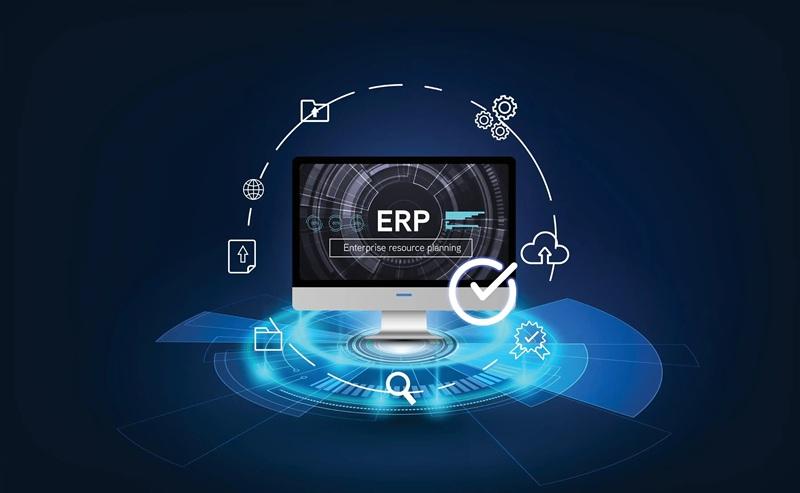
Enterprise Resource Planning Software (ERP) is a powerful system that integrates all core business functions—such as finance, operations, supply chain, human resources, and customer management—into a single platform.
👉 Simple understanding:
ERP = One system that connects your entire business
Instead of using separate tools for each department, ERP ensures seamless data flow across the organization.
Why ERP Software is Essential in 2026
In today’s competitive and data-driven world, businesses need real-time insights and automation to stay ahead.
Here’s why ERP software is a must-have:
- Eliminates data silos between departments
- Improves operational efficiency
- Enables real-time reporting and analytics
- Supports business scalability
- Reduces manual errors and costs
Key Features of Enterprise Resource Planning Software
1. Financial Management
Handles accounting, tax management, budgeting, and financial reporting.
2. Inventory & Supply Chain Management
Tracks stock levels, orders, suppliers, and logistics in real time.
3. Human Resource Management
Includes payroll, employee records, and recruitment tools.
4. Customer Relationship Management (CRM)
Manages customer data, sales pipelines, and support.
5. Business Intelligence & Reporting
Provides dashboards, analytics, and performance tracking.
6. Workflow Automation
Automates repetitive tasks and improves productivity.
Benefits of ERP Software for Businesses
✅ 1. Centralized Data Management
All business data is stored in one place for easy access.
✅ 2. Improved Productivity
Automation reduces manual tasks and saves time.
✅ 3. Better Decision-Making
Real-time insights help businesses make smarter choices.
✅ 4. Cost Reduction
Minimizes operational inefficiencies and errors.
✅ 5. Scalability & Flexibility
Supports business growth and expansion.
Types of ERP Systems
🔹 Cloud ERP
- Hosted online
- Accessible anytime, anywhere
- Lower upfront investment
🔹 On-Premise ERP
- Installed locally on company servers
- Greater control over data
- Higher initial cost
🔹 Hybrid ERP
- Mix of cloud and on-premise
- Flexible for growing businesses
Top Enterprise Resource Planning Software in 2026
Several ERP solutions dominate the market, depending on business size and needs:
- SAP ERP – Best for large enterprises
- Oracle ERP Cloud – Strong financial tools
- Microsoft Dynamics 365 – Easy integration with Microsoft ecosystem
- NetSuite ERP – Ideal for scaling businesses
- Odoo – Budget-friendly and modular
ERP vs Other Business Software
ERP vs CRM
- ERP manages the entire business
- CRM focuses only on customer relationships
ERP vs HRMS
- ERP includes HR as one module
- HRMS is dedicated only to employee management
👉 Conclusion: ERP is the most comprehensive system.
How to Choose the Right ERP Software
Choosing the right ERP system requires careful planning:
- Understand your business requirements
- Set a realistic budget
- Check scalability and flexibility
- Evaluate ease of use
- Ensure integration with existing tools
- Look for reliable customer support
👉 Tip: Always request a demo or free trial before purchasing.
Common Challenges in ERP Implementation
While ERP offers many benefits, implementation can be challenging:
- High initial investment
- Time-consuming setup
- Employee resistance to change
- Data migration complexities
However, proper planning and training can solve these issues.
Future Trends in ERP Software (2026)
ERP systems are evolving rapidly with new technologies:
- AI-powered automation
- Predictive analytics
- Cloud-first ERP solutions
- Mobile ERP applications
- Integration with IoT and big data
Final Thoughts
Enterprise Resource Planning Software is no longer optional—it’s a necessity for modern businesses. It helps streamline operations, improve efficiency, and support long-term growth.
Whether you're a startup or an enterprise, investing in the right ERP system can transform how your business operates.
FAQs
Q1. What does ERP stand for?
ERP stands for Enterprise Resource Planning.
Q2. Who should use ERP software?
Businesses of all sizes—startups, SMEs, and large enterprises—can benefit from ERP systems.
Q3. Is ERP software expensive?
It depends on the solution. Cloud ERP options are more affordable, while enterprise systems can be costly.
Q4. Can ERP be customized?
Yes, most ERP solutions offer customization based on business needs.
Q5. How secure is ERP software?
Modern ERP systems use advanced security measures like encryption and role-based access.
Κατηγορίες
Διαβάζω περισσότερα
Trong thời đại công nghệ phát triển mạnh mẽ, nhu cầu giải trí trực tuyến ngày càng tăng cao. UU666 nổi bật như một nền tảng cá cược trực tuyến uy tín, chuyên nghiệp và đáng tin cậy. Với hệ thống vận hành tối ưu cùng hiệu suất ổn định, nền tảng này mang đến trải nghiệm mượt mà, nhanh...

Polaris Market Research has introduced the latest market research report titled Glioblastoma Multiforme (GBM) Treatment Market Size, Share, Trends, & Industry Analysis Report By Treatment (Surgery, Radiation therapy, Chemotherapy), By Drug Class, By End Use, and By Region – Market Forecast, 2025–2034 that highlights the major revenue stream for the forecast period. The...

As businesses continue to embrace cloud computing, remote work, and digital transformation, traditional network security models are becoming increasingly difficult to manage. Organizations need a modern approach that combines networking and security into a unified framework. This is where SASE comes into play. If you are wondering what is SASE, it stands for Secure Access Service Edge, a...

The NHL fined players and $5,000 each for incidents that occurred during Game 2 of their first-round playoff series against the , . Those $5,000 fines are Jarrett Smith Jersey the highest allowed under the NHL's collective bargaining agreement.Marchand's incident occurred as he was heading to the goal with a little over two minutes left in the second period. The four-time All-Star had two...
The global water-soluble fertilizers (WSFs) market is witnessing robust growth, fueled by the increasing demand for high-efficiency fertilizers aligned with modern agricultural practices. Valued at approximately USD 17.1 billion in 2025, the market is projected to reach around USD 29.5 billion by 2033, exhibiting a compelling compound annual growth rate (CAGR) of 7.2% over the...