


Industrial PVDF Rod for Precision Machined Parts
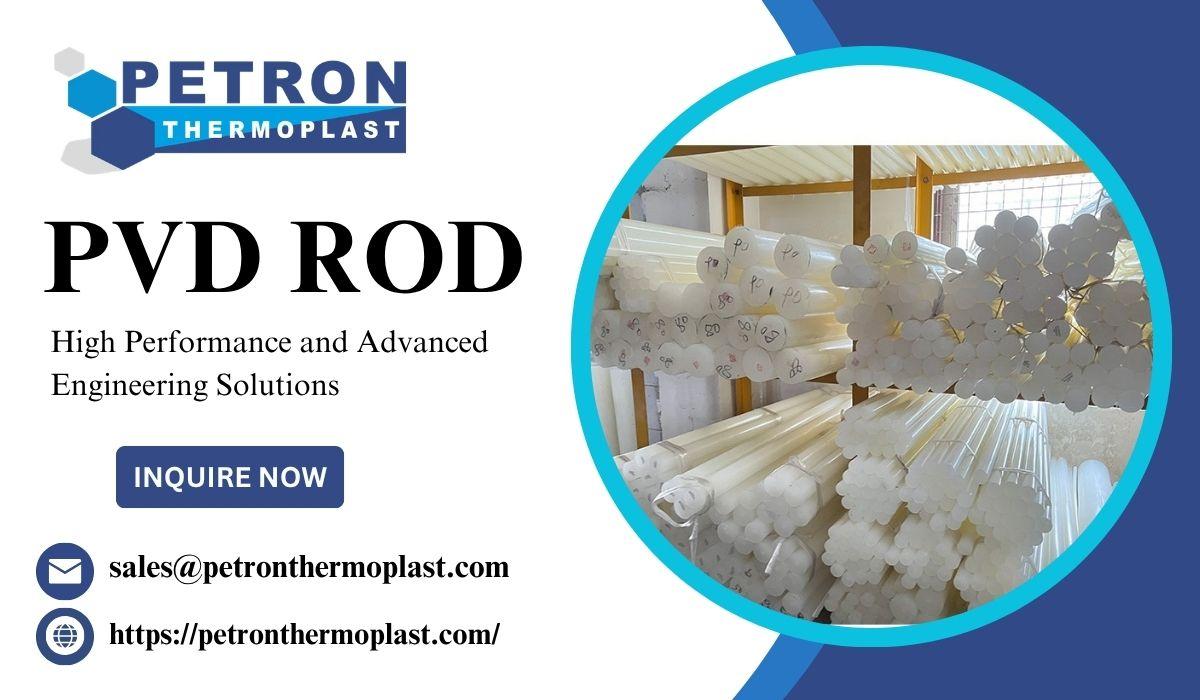
In advanced industrial environments, material selection directly influences performance, durability, and operational efficiency. Engineering industries require materials that can withstand aggressive chemicals, high temperatures, and continuous mechanical stress without compromising structural integrity. Among high-performance thermoplastics, PVDF rods have emerged as a reliable solution for precision machining and critical engineering applications.
A high performance PVDF (Polyvinylidene Fluoride) rod offers an optimal combination of chemical resistance, thermal stability, and mechanical strength, making it suitable for demanding industrial conditions. This article provides a comprehensive technical overview of PVDF rods, including their properties, machining characteristics, applications, and advantages in modern engineering systems.
What is a PVDF Rod?
A PVDF rod is a solid cylindrical engineering plastic product manufactured from polyvinylidene fluoride, a semi-crystalline fluoropolymer. These rods are widely used for:
- CNC machining of precision components
- Fabrication of industrial parts
- Structural and insulating applications
PVDF rods are available in a wide range of diameters and lengths, allowing flexibility for custom engineering requirements.
Key Material Properties of PVDF Rod
✔ Exceptional Chemical Resistance
PVDF is highly resistant to:
- Strong acids (e.g., sulfuric acid, hydrochloric acid)
- Halogens and oxidizing agents
- Organic solvents
This makes PVDF rods ideal for use in chemically aggressive environments where material degradation is a concern.
✔ High Thermal Stability
- Continuous operating temperature: up to ~140°C
- Maintains mechanical integrity under thermal stress
PVDF rods perform reliably in elevated temperature applications without deformation.
✔ Excellent Mechanical Strength
- High tensile strength
- Good impact resistance
- Superior dimensional stability
These properties ensure durability and accuracy in machined components.
✔ Low Moisture Absorption
PVDF absorbs very little moisture, which helps maintain:
- Dimensional precision
- Mechanical performance
This is critical for applications requiring tight tolerances.
✔ High Purity and Low Permeability
- Low extractables and leachables
- Minimal gas permeability
Suitable for high-purity and contamination-sensitive applications.
✔ UV and Weather Resistance
PVDF rods can be used in outdoor applications due to their resistance to UV radiation and environmental degradation.
Advantages of PVDF Rod in Engineering Applications
Corrosion-Free Performance
Unlike metals, PVDF does not corrode, making it suitable for harsh chemical environments.
Long Service Life
High resistance to wear, chemicals, and environmental factors ensures extended operational life.
Precision Machinability
PVDF rods can be machined into complex components with high accuracy and surface finish.
Low Maintenance
Durable properties reduce maintenance requirements and operational downtime.
Versatility
Suitable for a wide range of industries and applications.
Machining Characteristics of PVDF Rod
PVDF is considered a machinable engineering plastic and can be processed using standard machining techniques.
Recommended Machining Practices:
- Use sharp cutting tools (carbide or high-speed steel)
- Maintain moderate cutting speeds
- Avoid excessive heat generation
- Ensure proper clamping to prevent vibration
Machining Operations Include:
- Turning
- Milling
- Drilling
- Threading
Proper machining ensures high dimensional accuracy and smooth surface finish.
Industrial Applications of PVDF Rod
Chemical Processing Industry
PVDF rods are used to manufacture:
- Pump components
- Valve parts
- Seals and gaskets
They provide reliable performance in corrosive environments.
Semiconductor Industry
Used in:
- Ultra-pure water systems
- Chemical distribution systems
PVDF ensures contamination-free operations.
Pharmaceutical Industry
PVDF rods are ideal for:
- Cleanroom components
- Fluid handling systems
Their high purity and non-reactive nature ensure product safety.
Electrical and Electronics Industry
Used for:
- Insulating components
- Cable supports
Due to excellent dielectric properties.
Oil and Gas Industry
PVDF rods are used in:
- Corrosion-resistant components
- Offshore and onshore equipment
They withstand harsh environmental conditions.
Water Treatment Systems
Used in:
- Filtration components
- Chemical dosing systems
Ensuring durability and reliability.
PVDF Rod vs Other Engineering Plastics
|
Property |
PVDF |
PTFE |
Nylon |
HDPE |
|
Chemical Resistance |
Excellent |
Excellent |
Moderate |
Good |
|
Temperature Resistance |
High |
Very High |
Moderate |
Low |
|
Mechanical Strength |
High |
Low |
High |
Moderate |
|
Dimensional Stability |
Excellent |
Poor |
Moderate |
Moderate |
|
Machinability |
Good |
Difficult |
Good |
Easy |
Design Considerations for PVDF Rod Applications
Load Requirements
Ensure the rod can withstand mechanical stress in the application.
Temperature Conditions
Verify operating temperature falls within PVDF limits.
Chemical Exposure
Confirm compatibility with process chemicals.
Dimensional Tolerance
Consider machining allowances for precision parts.
Why High Performance PVDF Rod Matters?
In industrial systems, material failure can lead to:
- Equipment damage
- Production downtime
- Safety risks
- Increased maintenance costs
Using high-performance PVDF rods helps mitigate these risks by ensuring consistent and reliable operation.
Why Choose Petron Thermoplast?
For industries seeking high performance PVDF rods for industrial machining and engineering applications, Petron Thermoplast provides premium solutions tailored to industrial needs.
Key Strengths:
- High-grade PVDF raw materials
- Precision manufacturing and consistent quality
- Wide diameter and size availability
- Custom machining support
- Competitive pricing for bulk orders
- Timely delivery for project requirements
- Technical assistance for material selection
Petron Thermoplast focuses on delivering high-performance engineering plastics that meet international standards.
Maintenance and Handling Guidelines
- Store in a clean, dry environment
- Avoid excessive mechanical stress
- Inspect components regularly
- Clean surfaces to maintain performance
Future Trends in Engineering Plastics
The demand for PVDF rods is increasing due to:
- Growth in chemical and semiconductor industries
- Need for corrosion-resistant materials
- Expansion of high-purity applications
- Advancements in machining technologies
Conclusion
High performance PVDF rods are a critical material for modern industrial machining and engineering applications. Their superior chemical resistance, thermal stability, and mechanical strength make them ideal for demanding environments.
By selecting PVDF rods, industries can enhance system reliability, reduce maintenance costs, and achieve long-term performance. Petron Thermoplast offers premium PVDF rod solutions designed to meet the highest standards of quality and engineering precision.
Categories
Read More
Live cricket moves fast, especially during IPL matches where momentum changes within a single over. A dropped catch, sudden wicket, powerplay acceleration, or last-over finish can completely shift the direction of the game. In that environment, delayed platform access creates frustration and disconnects users from real-time action. That is why dafabet login speed has become one of the most...

The Ceramic Dielectric Ring Market is becoming increasingly significant as industries demand advanced components that deliver high-frequency performance, improved reliability, and efficient signal transmission. Ceramic dielectric rings are specialized electronic components manufactured using advanced ceramic materials that provide excellent dielectric characteristics, thermal stability, and...

Introduction The digital world has become increasingly focused on speed, convenience, and smooth accessibility. Modern users expect online platforms to provide simple navigation and comfortable interaction across smartphones and digital devices. Whether people are browsing websites, using applications, or exploring entertainment platforms, navigation quality strongly affects the overall user...

For patients seeking body contouring, understanding the different types of liposuction is essential. Those considering liposuction in Riyadh(عملية شفط الدهون في الرياض) should be aware of the various techniques available, how they work, and which method aligns best with their goals. Each approach offers unique benefits and considerations, making it crucial to select the right procedure for...

As trade tensions and climate challenges reshape global supply chains, once-overlooked components now underpin operational resilience. The Industrial Plug has emerged as a critical enabler of adaptable manufacturing, securing power connectivity amid escalating geopolitical and environmental volatility. These rugged interfaces empower factories to navigate trade barriers, technological...
