


Motorcycle MLA Projection Lighting: The 2026 Optics Guide
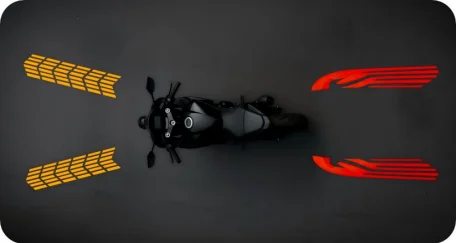
In the world of motorcycle safety and design, 2026 marks a pivotal shift. We are moving away from bulky, traditional headlights toward Motorcycle MLA Projection Lighting. This technology, once reserved for high-end luxury cars and AR/VR headsets, is now the gold standard for high-performance two-wheelers.
At ARVR Optical, we specialize in the micro-optics that make these systems possible. By leveraging Micro Lens Arrays (MLA), we are helping manufacturers create lighting that is smaller, brighter, and smarter than ever before.
What is Motorcycle MLA Projection Lighting?
Motorcycle MLA Projection Lighting is an advanced optical system that replaces a single large lens with an array of hundreds of microscopic lenses. These "lenslets" are typically smaller than 1mm and are arranged in a precise grid on a silicon or polymer substrate.
Instead of one bulb reflecting off a large mirror, an LED light source shines through this micro-array. Each tiny lens is responsible for a specific part of the beam pattern. When combined, they create a perfectly uniform, high-definition light projection on the road.
The Technical Advantages of MLA in 2026
Why are industry leaders switching to MLA? At ARVR Optical, we identify three core technical breakthroughs that make this technology superior:
1. Ultra-Slim Form Factor
Traditional projector headlights require significant depth to house the bulb and the glass globe. MLA systems are "flat optics." This allows designers to create incredibly slim, aggressive headlight shapes that were previously impossible, improving both aerodynamics and aesthetics.
2. Perfect Beam Uniformity (Zero Glare)
Traditional lights often have "hot spots" (areas that are too bright) and "dark spots." Because an MLA system controls light at a microscopic level, it distributes photons with mathematical precision. This ensures a wide, flat beam that illuminates the entire road width without blinding oncoming traffic.
3. Efficiency and "Light Utilization"
In standard headlights, a "shield" or "baffle" is often used to cut off the light to prevent glare (creating the low-beam line). This shield literally blocks and wastes light. ARVR Optical MLA modules don't need a shield; the lenses are shaped to only project light where it’s needed, increasing energy efficiency by up to 30%.
MLA vs. Traditional Projectors: A Comparison
For professional buyers and enthusiasts, the choice is clear when looking at the performance data for 2026.
| Feature | Standard Projector | MLA Projection Lighting |
| Module Depth | 100mm - 150mm | 10mm - 30mm |
| Optical Weight | Heavy (Glass) | Ultra-Light (Polymer/Silicon) |
| Light Control | Macro (Reflector/Shield) | Micro (Individual Lenslets) |
| Adaptive Capability | Mechanical Motors | Digital/Static Beam Shaping |
| Durability | Sensitive to Vibration | Solid-State/Vibration Resistant |
Adaptive Safety: The "Lean Angle" Solution
One of the biggest challenges for riders is "losing the line" in a curve. When a bike leans, a standard headlight points at the ground or into the trees.
Motorcycle MLA Projection Lighting solved this. At ARVR Optical, our MLA modules can be paired with lean-angle sensors (IMUs). Because the light is managed by an array, the system can digitally "steer" or activate specific sections of the micro-lens grid to keep the horizon level and the corner illuminated. This is done without moving parts, making the system much more reliable than mechanical adaptive lights.
How MLA Enhances the Brand Experience
For motorcycle brands, integrating MLA isn't just about light; it's about identity. Because MLA can project precise shapes, it allows for:
-
Signature DRLs: Daytime Running Lights with intricate, "honeycomb" or crystal-like textures.
-
Welcome Projections: Projecting the brand logo or a safety "buffer zone" onto the asphalt when the bike starts.
-
Digital Cut-offs: Razor-sharp lines that give the bike a premium, high-tech look at night.
Choosing the Right Substrate: Glass vs. Polymer
When sourcing Motorcycle MLA Projection Lighting from ARVR Optical, buyers often ask about materials.
-
Glass MLA: Best for high-heat environments or high-intensity laser-light sources. It offers the highest thermal stability.
-
Polymer MLA: Ideal for lightweight, cost-effective consumer applications. Our polymers are UV-stabilized to ensure they never yellow or degrade over time.
Conclusion
The transition to Motorcycle MLA Projection Lighting is the most significant upgrade to rider visibility in decades. By moving the complexity of light distribution from large mechanical parts to microscopic optical arrays, we have unlocked a new era of safety and design.
At ARVR Optical, we are proud to be the technical heartbeat of this revolution. Whether you are an OEM looking to integrate ultra-slim modules into your next flagship model, or a distributor seeking the highest-quality aftermarket upgrades, MLA is the answer. The future of motorcycle lighting isn't just brighter—it’s microscopic.
Categorias
Leia mais
For newcomers, playing a roulette online casino may seem daunting at first. A beginner’s guide provides a step-by-step overview of the game rules, betting options, and strategies for building confidence while learning. Starting with free or low-stakes games allows beginners to experiment without risking significant money. Understanding the basics of table layouts, inside and outside bets,...

Dubai Exch 247 is a prominent platform that provides traders with a safe and easy-to-use environment in the fast-paced world of online trading. Knowing how to use this platform safely is essential, regardless of your level of experience as a trader. With an emphasis on ID requirements, safe login procedures, and helpful advice for a safe trading experience, this post will walk you through the...

Birthday invitations have come a long way from simple printed cards with a date and address. Today, they’re mini storytelling tools—designed to reflect personality, theme, and the overall experience of the celebration. Whether it’s a child’s colorful party, a teen’s trendy gathering, or a sophisticated adult milestone, the invitation sets the tone before the first...

The sports and online gaming entertainment scene has witnessed a number of radical shifts in 2026. With the advent of AI, Winmatch 365 live-streaming integration and mobile optimization redefine the expectations of users, cross-functional apps are taking center stage. The leader in this field can be Winmatch 365, the all-in-one gaming system designed to deliver the best experience for modern...

According to the latest report published by Data Bridge Market Research, the Fluorescein Angiography Market CAGR Value Fluorescein Angiography Market business report estimates each segment of the global market in a very detailed pattern so that readers can be informed about future opportunities and high-growth areas of the industry. Besides, it provides a complete study of...
