


2026 FIFA World Cup: Everything You Need to Know About Knockout Stage Tie-Breakers
As the 2026 FIFA World Cup introduces an expanded 48-team format, fans can expect more thrilling knockout matches than ever before. Once the tournament reaches the knockout stage, every match must produce a winner, meaning draws are no longer an option after regulation time.
If a match is tied after the standard 90 minutes, it moves into 30 minutes of extra time, split into two 15-minute halves. During this period, both teams have one final opportunity to score and secure victory. Unlike previous football rules such as the golden goal, the full extra time is always played.
If the score remains level after extra time, the winner is decided through a penalty shootout. Each team takes five penalties, and the side scoring the most goals advances. If the teams are still tied after five kicks each, the shootout continues in sudden death until one team scores and the other misses.
FIFA also allows an additional substitution during extra time, giving coaches greater tactical flexibility. Managers often use fresh players to boost attacking options or introduce specialist penalty takers before the shootout.
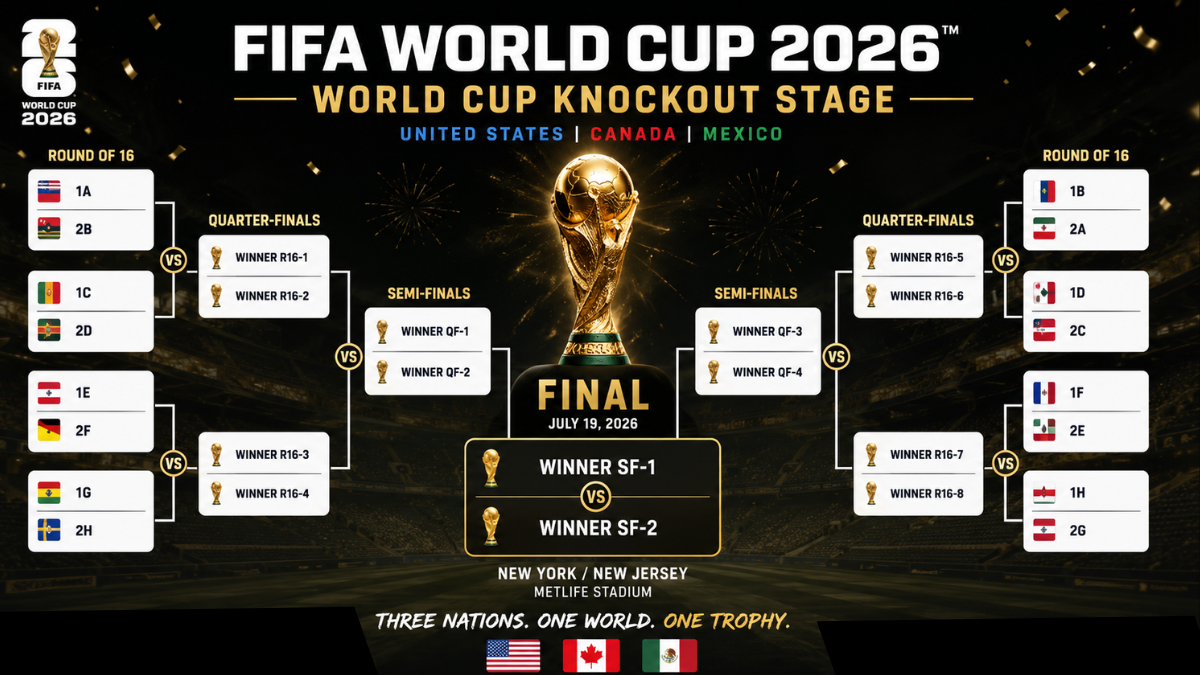
The knockout stage includes the Round of 32, Round of 16, Quarterfinals, Semifinals, Third-Place Playoff, and the Final, with every match following the same tie-breaker procedure.
Understanding these rules helps fans appreciate the drama and pressure of World Cup knockout football. Whether a match is decided by a late extra-time goal or a nerve-racking penalty shootout, every tie-breaker plays a crucial role in determining which nation continues its journey toward lifting football's most prestigious trophy.
https://bumppy.com/2026-world-cup-knockout-stage-tie-breakers-explained/
As the 2026 FIFA World Cup introduces an expanded 48-team format, fans can expect more thrilling knockout matches than ever before. Once the tournament reaches the knockout stage, every match must produce a winner, meaning draws are no longer an option after regulation time.
If a match is tied after the standard 90 minutes, it moves into 30 minutes of extra time, split into two 15-minute halves. During this period, both teams have one final opportunity to score and secure victory. Unlike previous football rules such as the golden goal, the full extra time is always played.
If the score remains level after extra time, the winner is decided through a penalty shootout. Each team takes five penalties, and the side scoring the most goals advances. If the teams are still tied after five kicks each, the shootout continues in sudden death until one team scores and the other misses.
FIFA also allows an additional substitution during extra time, giving coaches greater tactical flexibility. Managers often use fresh players to boost attacking options or introduce specialist penalty takers before the shootout.
The knockout stage includes the Round of 32, Round of 16, Quarterfinals, Semifinals, Third-Place Playoff, and the Final, with every match following the same tie-breaker procedure.
Understanding these rules helps fans appreciate the drama and pressure of World Cup knockout football. Whether a match is decided by a late extra-time goal or a nerve-racking penalty shootout, every tie-breaker plays a crucial role in determining which nation continues its journey toward lifting football's most prestigious trophy.
https://bumppy.com/2026-world-cup-knockout-stage-tie-breakers-explained/
2026 FIFA World Cup: Everything You Need to Know About Knockout Stage Tie-Breakers
As the 2026 FIFA World Cup introduces an expanded 48-team format, fans can expect more thrilling knockout matches than ever before. Once the tournament reaches the knockout stage, every match must produce a winner, meaning draws are no longer an option after regulation time.
If a match is tied after the standard 90 minutes, it moves into 30 minutes of extra time, split into two 15-minute halves. During this period, both teams have one final opportunity to score and secure victory. Unlike previous football rules such as the golden goal, the full extra time is always played.
If the score remains level after extra time, the winner is decided through a penalty shootout. Each team takes five penalties, and the side scoring the most goals advances. If the teams are still tied after five kicks each, the shootout continues in sudden death until one team scores and the other misses.
FIFA also allows an additional substitution during extra time, giving coaches greater tactical flexibility. Managers often use fresh players to boost attacking options or introduce specialist penalty takers before the shootout.
The knockout stage includes the Round of 32, Round of 16, Quarterfinals, Semifinals, Third-Place Playoff, and the Final, with every match following the same tie-breaker procedure.
Understanding these rules helps fans appreciate the drama and pressure of World Cup knockout football. Whether a match is decided by a late extra-time goal or a nerve-racking penalty shootout, every tie-breaker plays a crucial role in determining which nation continues its journey toward lifting football's most prestigious trophy.
https://bumppy.com/2026-world-cup-knockout-stage-tie-breakers-explained/
0 Kommentare
·0 Anteile
·781 Ansichten
·0 Vorschau