CE Certification in Sri Lanka
What is CE Certification?
CE Certification is a mandatory conformity marking required for products sold within the European Economic Area (EEA). The “CE” mark indicates that a product meets essential health, safety, and environmental protection standards set by European regulations. For businesses in Sri Lanka, obtaining CE certification allows them to export products to European markets and demonstrate compliance with international quality standards.
Importance of CE Certification in Sri Lanka
For Sri Lankan manufacturers and exporters, CE certification plays a crucial role in expanding global business opportunities. It is not just a regulatory requirement but also a mark of trust and quality. Companies that obtain CE certification gain easier access to European markets, reduce trade barriers, and enhance their brand reputation.
Additionally, CE certification helps businesses align with global safety and quality benchmarks. This increases customer confidence and gives Sri Lankan products a competitive edge in international markets.
Products That Require CE Certification
CE certification applies to a wide range of products, especially those that may impact safety, health, or the environment. Some common product categories include:
Electrical and electronic equipment
Machinery and industrial equipment
Medical devices
Construction products
Personal protective equipment (PPE)
Toys and consumer goods
Manufacturers in Sri Lanka producing these goods must comply with relevant EU directives before placing their products in the European market.
CE Certification Process in Sri Lanka
The process of obtaining CE certification involves several important steps:
1. Identify Applicable Directives
The first step is to determine which EU directives or regulations apply to your product. Different products fall under different compliance requirements.
2. Product Testing and Assessment
Products must be tested to ensure they meet the required safety and performance standards. This may involve laboratory testing and risk assessment.
3. Technical Documentation
Manufacturers must prepare detailed technical documentation, including product design, specifications, test reports, and risk analysis.
4. Declaration of Conformity
Once compliance is confirmed, the manufacturer issues a Declaration of Conformity, stating that the product meets all applicable EU requirements.
5. Affixing the CE Mark
After completing all requirements, the CE mark is affixed to the product, allowing it to be legally sold in the European market.
Benefits of CE Certification
Obtaining CE certification offers several advantages for Sri Lankan businesses:
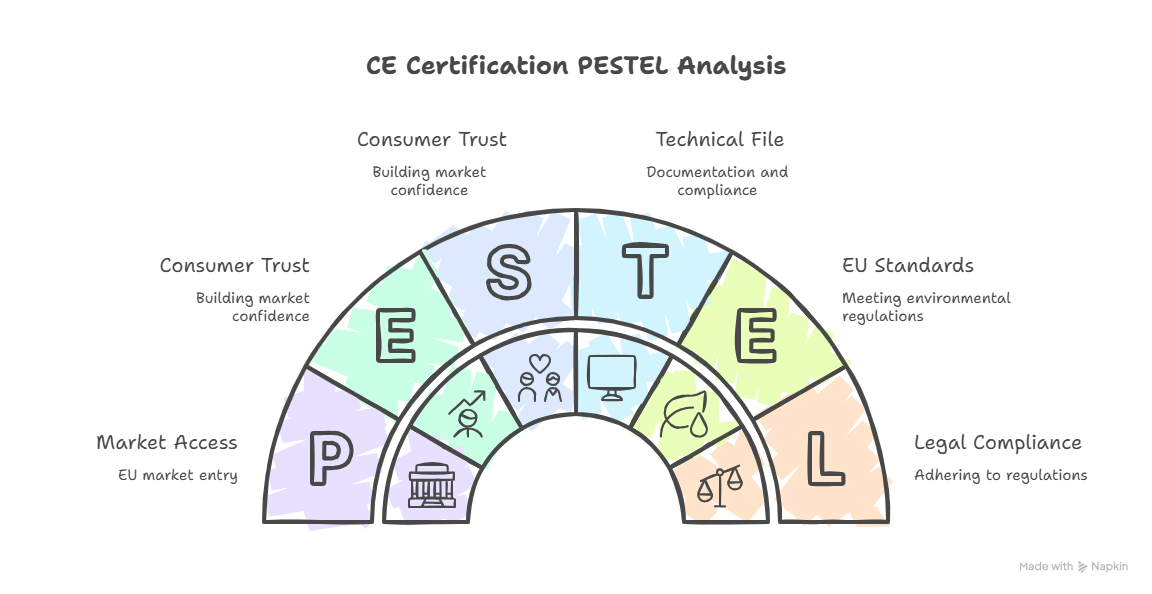
Market Access: Enables entry into European markets without additional restrictions
Increased Credibility: Demonstrates compliance with international safety standards
Competitive Advantage: Enhances brand image and customer trust
Legal Compliance: Helps avoid penalties and product recalls
Business Growth: Opens opportunities for global expansion
Challenges in CE Certification
While CE certification provides many benefits, businesses in Sri Lanka may face certain challenges:
Understanding complex EU regulations
High costs of testing and compliance
Preparing accurate technical documentation
Keeping up with changing standards
Working with experienced consultants can help overcome these challenges and streamline the certification process.
Choosing a CE Certification Consultant in Sri Lanka
Selecting the right certification partner is essential for a smooth process. A good consultant can guide you through regulatory requirements, documentation, and testing procedures. They help ensure faster certification and reduce the risk of non-compliance.
Look for consultants with proven experience, industry knowledge, and strong client support services.
Conclusion
CE certification is a valuable asset for Sri Lankan businesses aiming to enter the European market. It ensures that products meet high safety and quality standards while boosting international credibility. By understanding the certification process and working with the right experts, companies in Sri Lanka can successfully achieve CE compliance and expand their global presence.
website:
https://iasiso-asia.com/LK/ce-marking-certification-in-sri-lanka/CE Certification in Sri Lanka
What is CE Certification?
CE Certification is a mandatory conformity marking required for products sold within the European Economic Area (EEA). The “CE” mark indicates that a product meets essential health, safety, and environmental protection standards set by European regulations. For businesses in Sri Lanka, obtaining CE certification allows them to export products to European markets and demonstrate compliance with international quality standards.
Importance of CE Certification in Sri Lanka
For Sri Lankan manufacturers and exporters, CE certification plays a crucial role in expanding global business opportunities. It is not just a regulatory requirement but also a mark of trust and quality. Companies that obtain CE certification gain easier access to European markets, reduce trade barriers, and enhance their brand reputation.
Additionally, CE certification helps businesses align with global safety and quality benchmarks. This increases customer confidence and gives Sri Lankan products a competitive edge in international markets.
Products That Require CE Certification
CE certification applies to a wide range of products, especially those that may impact safety, health, or the environment. Some common product categories include:
Electrical and electronic equipment
Machinery and industrial equipment
Medical devices
Construction products
Personal protective equipment (PPE)
Toys and consumer goods
Manufacturers in Sri Lanka producing these goods must comply with relevant EU directives before placing their products in the European market.
CE Certification Process in Sri Lanka
The process of obtaining CE certification involves several important steps:
1. Identify Applicable Directives
The first step is to determine which EU directives or regulations apply to your product. Different products fall under different compliance requirements.
2. Product Testing and Assessment
Products must be tested to ensure they meet the required safety and performance standards. This may involve laboratory testing and risk assessment.
3. Technical Documentation
Manufacturers must prepare detailed technical documentation, including product design, specifications, test reports, and risk analysis.
4. Declaration of Conformity
Once compliance is confirmed, the manufacturer issues a Declaration of Conformity, stating that the product meets all applicable EU requirements.
5. Affixing the CE Mark
After completing all requirements, the CE mark is affixed to the product, allowing it to be legally sold in the European market.
Benefits of CE Certification
Obtaining CE certification offers several advantages for Sri Lankan businesses:
Market Access: Enables entry into European markets without additional restrictions
Increased Credibility: Demonstrates compliance with international safety standards
Competitive Advantage: Enhances brand image and customer trust
Legal Compliance: Helps avoid penalties and product recalls
Business Growth: Opens opportunities for global expansion
Challenges in CE Certification
While CE certification provides many benefits, businesses in Sri Lanka may face certain challenges:
Understanding complex EU regulations
High costs of testing and compliance
Preparing accurate technical documentation
Keeping up with changing standards
Working with experienced consultants can help overcome these challenges and streamline the certification process.
Choosing a CE Certification Consultant in Sri Lanka
Selecting the right certification partner is essential for a smooth process. A good consultant can guide you through regulatory requirements, documentation, and testing procedures. They help ensure faster certification and reduce the risk of non-compliance.
Look for consultants with proven experience, industry knowledge, and strong client support services.
Conclusion
CE certification is a valuable asset for Sri Lankan businesses aiming to enter the European market. It ensures that products meet high safety and quality standards while boosting international credibility. By understanding the certification process and working with the right experts, companies in Sri Lanka can successfully achieve CE compliance and expand their global presence.
website: https://iasiso-asia.com/LK/ce-marking-certification-in-sri-lanka/