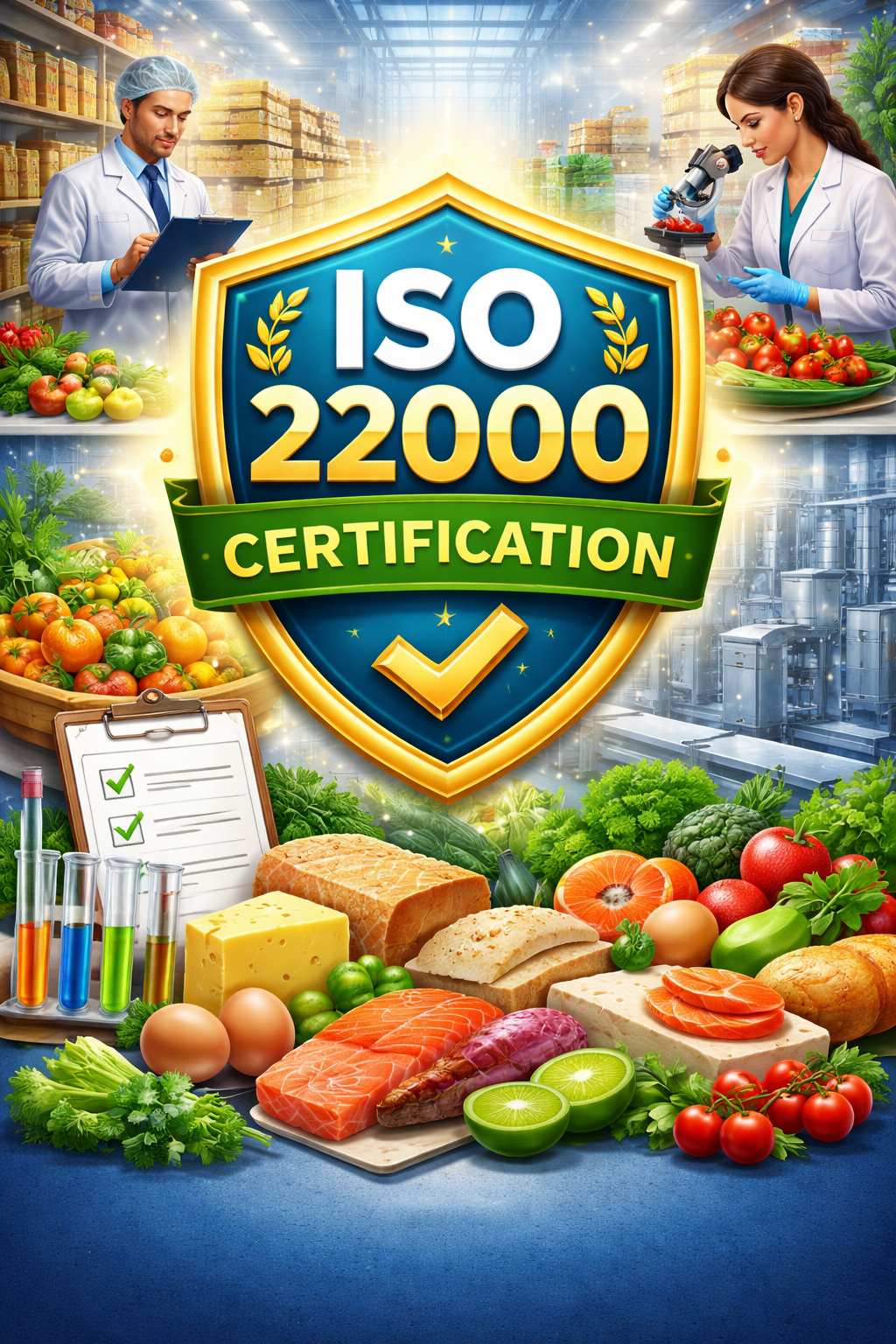
• ISO 22000 Certification: Ensuring Excellence in Food Safety Management
    What Is ISO 22000 Certification?

    ISO 22000 certification confirms that an organization has implemented a Food Safety Management System (FSMS) that complies with the requirements of ISO 22000. Developed by the International Organization for Standardization, this internationally recognized standard provides a structured framework for identifying, controlling, and preventing food safety hazards across the entire supply chain. It integrates the principles of Hazard Analysis and Critical Control Points (HACCP) with a management system approach, ensuring food safety is systematically managed rather than treated as a one-time inspection process. ISO 22000 applies to all organizations in the food chain, including producers, processors, manufacturers, transporters, packaging companies, storage providers, and retailers.

    Why ISO 22000 Certification Is Important

    Food safety is a global concern, and any failure can result in serious health risks, financial losses, and reputational damage. ISO 22000 certification demonstrates that a company has implemented preventive controls to manage biological, chemical, and physical hazards effectively. It builds trust among customers, regulators, suppliers, and business partners by showing a clear commitment to food safety and compliance. In many markets, certification enhances access to international trade opportunities and strengthens competitiveness. More importantly, it creates confidence that products are consistently produced and handled under controlled and safe conditions.

    Core Requirements of ISO 22000

    ISO 22000 requires organizations to establish a comprehensive food safety management system built on several key elements. These include interactive communication throughout the food chain, systematic management processes, prerequisite programs (PRPs), and a thorough hazard analysis. Organizations must identify potential hazards, evaluate associated risks, and implement control measures such as critical control points (CCPs). Clear documentation, defined responsibilities, employee training, and emergency preparedness are also mandatory components. The standard emphasizes risk-based thinking and continuous improvement, ensuring that food safety measures evolve in response to changing operational and regulatory conditions.

    The Certification Process

    The journey to ISO 22000 certification typically begins with a gap analysis to assess current food safety practices against the standard’s requirements. Organizations then develop policies, procedures, and monitoring systems aligned with ISO 22000. Staff training ensures employees understand food safety responsibilities and compliance expectations. Once the system is fully implemented, an accredited certification body conducts a two-stage audit. The first stage reviews documentation and preparedness, while the second stage evaluates on-site implementation and effectiveness. If all requirements are met, certification is granted. Surveillance audits are conducted annually to maintain compliance, with recertification required every three years.

    Benefits for Food Businesses

    ISO 22000 certification provides both operational and strategic advantages. It improves internal efficiency by standardizing processes and reducing the likelihood of contamination or product recalls. Traceability systems enhance transparency and accountability throughout the supply chain. Certification also strengthens brand reputation and increases customer confidence, particularly in highly regulated markets. Many retailers and distributors prefer suppliers with recognized food safety certifications, making ISO 22000 a valuable competitive asset.

    Supporting Sustainable Growth and Consumer Trust

    ISO 22000 certification is more than a regulatory requirement—it is a strategic investment in long-term business resilience. By embedding food safety into everyday operations, organizations protect public health while safeguarding their brand integrity. In a world where consumers demand transparency and accountability, ISO 22000 provides a reliable framework for consistent quality and safety. Ultimately, it supports sustainable growth, regulatory compliance, and enduring trust within the global food industry.

    Web: https://iasiso-europe.com/french/iso-22000-certification-en-france/
    ISO 22000 Certification: Ensuring Excellence in Food Safety Management What Is ISO 22000 Certification? ISO 22000 certification confirms that an organization has implemented a Food Safety Management System (FSMS) that complies with the requirements of ISO 22000. Developed by the International Organization for Standardization, this internationally recognized standard provides a structured framework for identifying, controlling, and preventing food safety hazards across the entire supply chain. It integrates the principles of Hazard Analysis and Critical Control Points (HACCP) with a management system approach, ensuring food safety is systematically managed rather than treated as a one-time inspection process. ISO 22000 applies to all organizations in the food chain, including producers, processors, manufacturers, transporters, packaging companies, storage providers, and retailers. Why ISO 22000 Certification Is Important Food safety is a global concern, and any failure can result in serious health risks, financial losses, and reputational damage. ISO 22000 certification demonstrates that a company has implemented preventive controls to manage biological, chemical, and physical hazards effectively. It builds trust among customers, regulators, suppliers, and business partners by showing a clear commitment to food safety and compliance. In many markets, certification enhances access to international trade opportunities and strengthens competitiveness. More importantly, it creates confidence that products are consistently produced and handled under controlled and safe conditions. Core Requirements of ISO 22000 ISO 22000 requires organizations to establish a comprehensive food safety management system built on several key elements. These include interactive communication throughout the food chain, systematic management processes, prerequisite programs (PRPs), and a thorough hazard analysis. Organizations must identify potential hazards, evaluate associated risks, and implement control measures such as critical control points (CCPs). Clear documentation, defined responsibilities, employee training, and emergency preparedness are also mandatory components. The standard emphasizes risk-based thinking and continuous improvement, ensuring that food safety measures evolve in response to changing operational and regulatory conditions. The Certification Process The journey to ISO 22000 certification typically begins with a gap analysis to assess current food safety practices against the standard’s requirements. Organizations then develop policies, procedures, and monitoring systems aligned with ISO 22000. Staff training ensures employees understand food safety responsibilities and compliance expectations. Once the system is fully implemented, an accredited certification body conducts a two-stage audit. The first stage reviews documentation and preparedness, while the second stage evaluates on-site implementation and effectiveness. If all requirements are met, certification is granted. Surveillance audits are conducted annually to maintain compliance, with recertification required every three years. Benefits for Food Businesses ISO 22000 certification provides both operational and strategic advantages. It improves internal efficiency by standardizing processes and reducing the likelihood of contamination or product recalls. Traceability systems enhance transparency and accountability throughout the supply chain. Certification also strengthens brand reputation and increases customer confidence, particularly in highly regulated markets. Many retailers and distributors prefer suppliers with recognized food safety certifications, making ISO 22000 a valuable competitive asset. Supporting Sustainable Growth and Consumer Trust ISO 22000 certification is more than a regulatory requirement—it is a strategic investment in long-term business resilience. By embedding food safety into everyday operations, organizations protect public health while safeguarding their brand integrity. In a world where consumers demand transparency and accountability, ISO 22000 provides a reliable framework for consistent quality and safety. Ultimately, it supports sustainable growth, regulatory compliance, and enduring trust within the global food industry. Web: https://iasiso-europe.com/french/iso-22000-certification-en-france/
    Certification ISO 22000 | Gestion de la sécurité alimentaire
    iasiso-europe.com
    Obtenez la certification ISO 22000 avec IAS en France pour produire des aliments sûrs et de haute qualité pour vos clients ! Postuler aujourd'hui!
    0 Σχόλια ·0 Μοιράστηκε ·1χλμ. Views ·0 Προεπισκόπηση
  • How Wholesale Organic Produce Distributors Support Foodservice Operations\

    The foodservice industry is evolving rapidly as consumer expectations shift toward healthier, fresher, and more sustainably sourced ingredients. Restaurants, hotels, caterers, and institutional kitchens are under constant pressure to deliver quality meals while managing tight margins and complex supply chains.

    The Growing Importance of Organic Produce in Foodservice

    Organic produce is no longer a niche offering. Health-conscious consumers increasingly expect menus to feature clean, chemical-free ingredients. As a result, foodservice operators must adapt quickly without disrupting daily operations. Sourcing organic vegetables and fruits independently can be costly and time-consuming, especially for high-volume kitchens..

    Reliable Supply Chains for Daily Operations

    Consistency is the backbone of any successful foodservice business. Menu planning, portion control, and customer satisfaction all depend on predictable ingredient availability.
    For wholesale local restaurants, having a dependable distributor means fewer last-minute substitutions and smoother kitchen workflows.

    Supporting Wholesale Local Restaurants

    Local restaurants often face unique challenges, including limited storage space, fluctuating demand, and tight budgets. Wholesale organic produce distributors support these businesses by offering flexible ordering options and scalable supply solutions.

    This support allows local eateries to compete with larger chains while maintaining their unique culinary identity.

    Cost Control Through Bulk Purchasing

    One of the biggest advantages of working with Wholesale Organic Produce Distributors is cost efficiency. Buying organic produce individually or directly from multiple farms often leads to higher prices and inconsistent supply.

    These efficiencies enable foodservice operators to offer organic menu options without significantly increasing food costs.

    Simplifying Procurement and Logistics

    Managing multiple suppliers can be complex and time-consuming. Wholesale distributors simplify procurement by acting as a single point of contact for a wide range of organic produce.

    This streamlined approach offers:

    One consolidated invoice

    Easier order management

    For busy foodservice operators, this efficiency translates into time savings and better operational focus.

    Ensuring Quality and Food Safety Standards

    Food safety and quality assurance are top priorities in foodservice operations. Reputable Wholesale Organic Produce Distributors follow strict handling and storage protocols to preserve freshness and comply with regulatory standards.

    These practices help restaurants and commercial kitchens serve high-quality meals while minimizing risk.

    Expanding Menu Flexibility and Creativity

    For wholesale local restaurants, this flexibility supports menu differentiation and enhances brand appeal.

    Supporting Sustainability Goals

    Sustainability is increasingly important to consumers and food businesses alike. Wholesale organic produce distributors contribute to sustainable food systems by:

    Supporting organic farming practices
    Reducing food miles through local sourcing
    Improving supply chain transparency

    Technology and Modern Distribution Systems

    Modern Wholesale Organic Produce Distributors leverage technology to improve service efficiency and accuracy. Digital tools help foodservice operators manage orders and inventory more effectively.

    These tools enable better planning, reduced waste, and smoother kitchen operations.

    Scalability for Growing Foodservice Businesses

    As foodservice businesses grow, their supply needs change. Wholesale distributors offer scalable solutions that adapt to increased volume, new locations, or expanded menus.

    Building Long-Term Supply Partnerships

    Beyond product delivery, wholesale organic produce distributors often serve as strategic partners. Their market insights help foodservice operators anticipate trends, manage seasonal fluctuations, and optimize purchasing strategies.

    Strong distributor relationships result in:

    Better pricing stability

    Priority access during shortages

    Conclusion

    In today’s competitive foodservice landscape, access to high-quality organic ingredients is no longer optional—it is a strategic necessity. Wholesale Organic Produce Distributors play a vital role in supporting foodservice operations by ensuring reliable supply, controlling costs, and simplifying procurement. Read more information : https://easternbridgefoods.com/


    How Wholesale Organic Produce Distributors Support Foodservice Operations\ The foodservice industry is evolving rapidly as consumer expectations shift toward healthier, fresher, and more sustainably sourced ingredients. Restaurants, hotels, caterers, and institutional kitchens are under constant pressure to deliver quality meals while managing tight margins and complex supply chains. The Growing Importance of Organic Produce in Foodservice Organic produce is no longer a niche offering. Health-conscious consumers increasingly expect menus to feature clean, chemical-free ingredients. As a result, foodservice operators must adapt quickly without disrupting daily operations. Sourcing organic vegetables and fruits independently can be costly and time-consuming, especially for high-volume kitchens.. Reliable Supply Chains for Daily Operations Consistency is the backbone of any successful foodservice business. Menu planning, portion control, and customer satisfaction all depend on predictable ingredient availability. For wholesale local restaurants, having a dependable distributor means fewer last-minute substitutions and smoother kitchen workflows. Supporting Wholesale Local Restaurants Local restaurants often face unique challenges, including limited storage space, fluctuating demand, and tight budgets. Wholesale organic produce distributors support these businesses by offering flexible ordering options and scalable supply solutions. This support allows local eateries to compete with larger chains while maintaining their unique culinary identity. Cost Control Through Bulk Purchasing One of the biggest advantages of working with Wholesale Organic Produce Distributors is cost efficiency. Buying organic produce individually or directly from multiple farms often leads to higher prices and inconsistent supply. These efficiencies enable foodservice operators to offer organic menu options without significantly increasing food costs. Simplifying Procurement and Logistics Managing multiple suppliers can be complex and time-consuming. Wholesale distributors simplify procurement by acting as a single point of contact for a wide range of organic produce. This streamlined approach offers: One consolidated invoice Easier order management For busy foodservice operators, this efficiency translates into time savings and better operational focus. Ensuring Quality and Food Safety Standards Food safety and quality assurance are top priorities in foodservice operations. Reputable Wholesale Organic Produce Distributors follow strict handling and storage protocols to preserve freshness and comply with regulatory standards. These practices help restaurants and commercial kitchens serve high-quality meals while minimizing risk. Expanding Menu Flexibility and Creativity For wholesale local restaurants, this flexibility supports menu differentiation and enhances brand appeal. Supporting Sustainability Goals Sustainability is increasingly important to consumers and food businesses alike. Wholesale organic produce distributors contribute to sustainable food systems by: Supporting organic farming practices Reducing food miles through local sourcing Improving supply chain transparency Technology and Modern Distribution Systems Modern Wholesale Organic Produce Distributors leverage technology to improve service efficiency and accuracy. Digital tools help foodservice operators manage orders and inventory more effectively. These tools enable better planning, reduced waste, and smoother kitchen operations. Scalability for Growing Foodservice Businesses As foodservice businesses grow, their supply needs change. Wholesale distributors offer scalable solutions that adapt to increased volume, new locations, or expanded menus. Building Long-Term Supply Partnerships Beyond product delivery, wholesale organic produce distributors often serve as strategic partners. Their market insights help foodservice operators anticipate trends, manage seasonal fluctuations, and optimize purchasing strategies. Strong distributor relationships result in: Better pricing stability Priority access during shortages Conclusion In today’s competitive foodservice landscape, access to high-quality organic ingredients is no longer optional—it is a strategic necessity. Wholesale Organic Produce Distributors play a vital role in supporting foodservice operations by ensuring reliable supply, controlling costs, and simplifying procurement. Read more information : https://easternbridgefoods.com/
    0 Σχόλια ·0 Μοιράστηκε ·975 Views ·0 Προεπισκόπηση
  • ISO certification is a mark of credibility that shows an organization meets internationally recognized standards for quality, safety, efficiency, or consistency.

    What Is ISO Certification?

    ISO certification is a mark of credibility that shows an organization meets internationally recognized standards for quality, safety, efficiency, or consistency. The term “ISO” stands for the International Organization for Standardization, an independent, non-governmental body that develops standards to ensure products, services, and systems are reliable and of good quality across the world.

    ISO itself does not certify companies. Instead, it creates standards, and independent certification bodies audit organizations to verify whether they comply with those standards. When a company successfully passes an audit, it is said to be “ISO certified” to a specific standard, such as ISO 9001 or ISO 14001.

    Purpose of ISO Standards

    The main purpose of ISO standards is to create consistency and trust in global markets. Businesses across different countries can follow the same guidelines, making international trade smoother and safer. ISO standards help organizations improve performance, reduce errors, manage risks, and increase customer satisfaction.

    These standards are developed by experts from industry, government, and consumer groups, ensuring they reflect real-world needs and best practices.

    Common Types of ISO Certification

    There are thousands of ISO standards, but some are more widely used than others:

    ISO 9001 (Quality Management System): Focuses on meeting customer requirements and enhancing customer satisfaction through continuous improvement.

    ISO 14001 (Environmental Management System): Helps organizations minimize environmental impact and comply with environmental regulations.

    ISO 45001 (Occupational Health and Safety): Aims to reduce workplace injuries and create safer working conditions.

    ISO 27001 (Information Security Management): Protects sensitive data and manages information security risks.

    ISO 22000 (Food Safety Management): Ensures food safety throughout the supply chain.

    Each certification addresses a specific area of management and can be applied to organizations of any size or industry.

    How ISO Certification Works

    The ISO certification process typically involves several steps. First, an organization selects the appropriate ISO standard based on its business goals. Next, it reviews current processes and makes necessary improvements to meet the standard’s requirements. Documentation, employee training, and internal audits are key parts of this stage.

    After preparation, an accredited certification body conducts an external audit. If the organization meets all requirements, it receives ISO certification. Certification is usually valid for three years, with regular surveillance audits to ensure continued compliance.

    Benefits of ISO Certification

    ISO certification offers many advantages. It improves operational efficiency by standardizing processes and reducing waste. Certified organizations often experience higher customer trust, as ISO certification signals commitment to quality and professionalism.

    Additionally, ISO certification can provide a competitive advantage. Many clients, especially government agencies and large corporations, prefer or require ISO-certified suppliers. It also helps organizations comply with legal and regulatory requirements and supports continuous improvement.

    Is ISO Certification Mandatory?

    ISO certification is generally voluntary, not mandatory. However, in certain industries or markets, it may be required to do business with specific clients or to enter international markets. Even when not required, many organizations pursue ISO certification to strengthen internal systems and enhance their reputation.

    Conclusion

    ISO certification is a powerful tool for organizations seeking to improve quality, safety, efficiency, and credibility. what is iso certification By adhering to internationally recognized standards, businesses demonstrate their commitment to excellence and continuous improvement. Whether a small startup or a large multinational company, ISO certification can play a key role in building trust, improving performance, and achieving long-term success

    https://iasiso-gulf.com/BH/blog/what-is-iso-certification/
    ISO certification is a mark of credibility that shows an organization meets internationally recognized standards for quality, safety, efficiency, or consistency. What Is ISO Certification? ISO certification is a mark of credibility that shows an organization meets internationally recognized standards for quality, safety, efficiency, or consistency. The term “ISO” stands for the International Organization for Standardization, an independent, non-governmental body that develops standards to ensure products, services, and systems are reliable and of good quality across the world. ISO itself does not certify companies. Instead, it creates standards, and independent certification bodies audit organizations to verify whether they comply with those standards. When a company successfully passes an audit, it is said to be “ISO certified” to a specific standard, such as ISO 9001 or ISO 14001. Purpose of ISO Standards The main purpose of ISO standards is to create consistency and trust in global markets. Businesses across different countries can follow the same guidelines, making international trade smoother and safer. ISO standards help organizations improve performance, reduce errors, manage risks, and increase customer satisfaction. These standards are developed by experts from industry, government, and consumer groups, ensuring they reflect real-world needs and best practices. Common Types of ISO Certification There are thousands of ISO standards, but some are more widely used than others: ISO 9001 (Quality Management System): Focuses on meeting customer requirements and enhancing customer satisfaction through continuous improvement. ISO 14001 (Environmental Management System): Helps organizations minimize environmental impact and comply with environmental regulations. ISO 45001 (Occupational Health and Safety): Aims to reduce workplace injuries and create safer working conditions. ISO 27001 (Information Security Management): Protects sensitive data and manages information security risks. ISO 22000 (Food Safety Management): Ensures food safety throughout the supply chain. Each certification addresses a specific area of management and can be applied to organizations of any size or industry. How ISO Certification Works The ISO certification process typically involves several steps. First, an organization selects the appropriate ISO standard based on its business goals. Next, it reviews current processes and makes necessary improvements to meet the standard’s requirements. Documentation, employee training, and internal audits are key parts of this stage. After preparation, an accredited certification body conducts an external audit. If the organization meets all requirements, it receives ISO certification. Certification is usually valid for three years, with regular surveillance audits to ensure continued compliance. Benefits of ISO Certification ISO certification offers many advantages. It improves operational efficiency by standardizing processes and reducing waste. Certified organizations often experience higher customer trust, as ISO certification signals commitment to quality and professionalism. Additionally, ISO certification can provide a competitive advantage. Many clients, especially government agencies and large corporations, prefer or require ISO-certified suppliers. It also helps organizations comply with legal and regulatory requirements and supports continuous improvement. Is ISO Certification Mandatory? ISO certification is generally voluntary, not mandatory. However, in certain industries or markets, it may be required to do business with specific clients or to enter international markets. Even when not required, many organizations pursue ISO certification to strengthen internal systems and enhance their reputation. Conclusion ISO certification is a powerful tool for organizations seeking to improve quality, safety, efficiency, and credibility. what is iso certification By adhering to internationally recognized standards, businesses demonstrate their commitment to excellence and continuous improvement. Whether a small startup or a large multinational company, ISO certification can play a key role in building trust, improving performance, and achieving long-term success https://iasiso-gulf.com/BH/blog/what-is-iso-certification/
    What Is ISO Certification? | A Beginner's Guide - IAS
    iasiso-gulf.com
    Wondering what ISO certification is? It verifies that a business has implemented a management system according to ISO standard requirements.
    0 Σχόλια ·0 Μοιράστηκε ·2χλμ. Views ·0 Προεπισκόπηση
  • Hey everyone! I m a consultant who specializes in food safety course singapore. This page will be dedicated to sharing my experiences and learning from others in this field. Please feel free to share your own stories and perspectives! Thanks for visiting!

    https://isoleadauditor.com/singapore/iso-22000-lead-auditor-training-in-singapore/
    Hey everyone! I m a consultant who specializes in food safety course singapore. This page will be dedicated to sharing my experiences and learning from others in this field. Please feel free to share your own stories and perspectives! Thanks for visiting! https://isoleadauditor.com/singapore/iso-22000-lead-auditor-training-in-singapore/
    0 Σχόλια ·0 Μοιράστηκε ·588 Views ·0 Προεπισκόπηση
  • Certificato FDA: Conformità e Accesso al Mercato Statunitense

    Introduzione al Certificato FDA

    Il certificato FDA si riferisce alla conformità ai requisiti della Food and Drug Administration (FDA), l’ente regolatorio degli Stati Uniti responsabile della tutela della salute pubblica. La registrazione o certificazione FDA è essenziale per le aziende che producono, trasformano o esportano prodotti come alimenti, bevande, dispositivi medici, cosmetici e farmaci destinati al mercato statunitense. Dimostrare la conformità FDA significa rispettare rigorosi standard di sicurezza, qualità e tracciabilità.

    Ambito di Applicazione

    Il certificato FDA si applica a diversi settori industriali. Nel settore alimentare, la FDA richiede la registrazione degli stabilimenti e l’adozione di sistemi di sicurezza come l’HACCP e il Food Safety Modernization Act (FSMA). Per dispositivi medici e farmaceutici, sono richiesti processi di controllo qualità, test clinici e documentazione tecnica dettagliata. Anche i cosmetici e gli integratori alimentari devono rispettare specifiche linee guida FDA prima di essere immessi sul mercato.

    Processo di Conformità FDA

    Il processo per ottenere la conformità FDA inizia con l’identificazione dei requisiti normativi applicabili al prodotto. Le aziende devono registrare gli stabilimenti, notificare i prodotti quando richiesto e implementare sistemi di controllo adeguati. La preparazione della documentazione, le procedure operative e la formazione del personale sono elementi fondamentali. In alcuni casi, la FDA può effettuare ispezioni per verificare la conformità alle normative vigenti.

    Vantaggi del Certificato FDA

    Ottenere il certificato FDA offre numerosi vantaggi strategici. Consente l’accesso al mercato statunitense, uno dei più grandi e competitivi al mondo. Migliora la credibilità dell’azienda e la fiducia dei consumatori, dimostrando l’impegno verso la sicurezza e la qualità. Inoltre, riduce il rischio di sanzioni, blocchi doganali e richiami di prodotto, favorendo una gestione più efficiente dei rischi normativi.

    Conformità Continua e Responsabilità

    La conformità FDA non è un requisito una tantum, ma un impegno continuo. Le aziende devono monitorare gli aggiornamenti normativi, mantenere la documentazione aggiornata e migliorare costantemente i processi. Attraverso il rispetto dei requisiti FDA, le organizzazioni dimostrano responsabilità, affidabilità e un orientamento alla qualità e alla sicurezza nel lungo periodo.

    Readmore: https://iasiso-europe.com/italy/certificazione-fda-in-italia/
    Certificato FDA: Conformità e Accesso al Mercato Statunitense Introduzione al Certificato FDA Il certificato FDA si riferisce alla conformità ai requisiti della Food and Drug Administration (FDA), l’ente regolatorio degli Stati Uniti responsabile della tutela della salute pubblica. La registrazione o certificazione FDA è essenziale per le aziende che producono, trasformano o esportano prodotti come alimenti, bevande, dispositivi medici, cosmetici e farmaci destinati al mercato statunitense. Dimostrare la conformità FDA significa rispettare rigorosi standard di sicurezza, qualità e tracciabilità. Ambito di Applicazione Il certificato FDA si applica a diversi settori industriali. Nel settore alimentare, la FDA richiede la registrazione degli stabilimenti e l’adozione di sistemi di sicurezza come l’HACCP e il Food Safety Modernization Act (FSMA). Per dispositivi medici e farmaceutici, sono richiesti processi di controllo qualità, test clinici e documentazione tecnica dettagliata. Anche i cosmetici e gli integratori alimentari devono rispettare specifiche linee guida FDA prima di essere immessi sul mercato. Processo di Conformità FDA Il processo per ottenere la conformità FDA inizia con l’identificazione dei requisiti normativi applicabili al prodotto. Le aziende devono registrare gli stabilimenti, notificare i prodotti quando richiesto e implementare sistemi di controllo adeguati. La preparazione della documentazione, le procedure operative e la formazione del personale sono elementi fondamentali. In alcuni casi, la FDA può effettuare ispezioni per verificare la conformità alle normative vigenti. Vantaggi del Certificato FDA Ottenere il certificato FDA offre numerosi vantaggi strategici. Consente l’accesso al mercato statunitense, uno dei più grandi e competitivi al mondo. Migliora la credibilità dell’azienda e la fiducia dei consumatori, dimostrando l’impegno verso la sicurezza e la qualità. Inoltre, riduce il rischio di sanzioni, blocchi doganali e richiami di prodotto, favorendo una gestione più efficiente dei rischi normativi. Conformità Continua e Responsabilità La conformità FDA non è un requisito una tantum, ma un impegno continuo. Le aziende devono monitorare gli aggiornamenti normativi, mantenere la documentazione aggiornata e migliorare costantemente i processi. Attraverso il rispetto dei requisiti FDA, le organizzazioni dimostrano responsabilità, affidabilità e un orientamento alla qualità e alla sicurezza nel lungo periodo. Readmore: https://iasiso-europe.com/italy/certificazione-fda-in-italia/
    Certificazione FDA - IAS Italia
    iasiso-europe.com
    Certificato FDA - Ottieni la certificazione FDA con IAS in Italia per garantire che i tuoi prodotti siano autorizzati alla vendita negli Stati Uniti!
    0 Σχόλια ·0 Μοιράστηκε ·807 Views ·0 Προεπισκόπηση
  • HACCP Certification: Building a Safer and More Trusted Food System

    Introduction to HACCP Certification

    HACCP (Hazard Analysis and Critical Control Points) certification is a globally recognized food safety system designed to identify, evaluate, and control hazards throughout the food production process. Rather than relying only on end-product testing, HACCP focuses on prevention, ensuring that biological, chemical, and physical risks are controlled at every critical stage. For food businesses of all sizes—restaurants, manufacturers, processors, and distributors—HACCP certification demonstrates a strong commitment to producing safe and high-quality food.

    Why HACCP Certification Matters

    Food safety is no longer optional; it is a legal and commercial requirement in many countries. HACCP certification helps organizations comply with national and international food safety regulations while reducing the risk of contamination, foodborne illnesses, and costly recalls. By implementing HACCP principles, businesses gain better process control, minimize waste, and protect their brand reputation. Most importantly, HACCP builds consumer trust by showing that food safety is managed systematically and responsibly.

    The Seven Principles of HACCP

    At the core of HACCP certification are seven structured principles. These include conducting a hazard analysis, identifying critical control points (CCPs), establishing critical limits, monitoring procedures, corrective actions, verification processes, and proper documentation. Together, these principles create a proactive food safety management system that addresses risks before they become serious problems. This structured approach makes HACCP adaptable to different types of food operations, from small kitchens to large industrial facilities.

    Who Needs HACCP Certification

    HACCP certification is essential for any organization involved in food handling, production, storage, or distribution. This includes food manufacturers, catering services, restaurants, hotels, supermarkets, and exporters. Many retailers and international buyers require HACCP certification as a minimum standard before entering into business agreements. For companies looking to expand into global markets, HACCP often acts as a gateway certification.

    Benefits of HACCP Certification for Businesses

    Achieving HACCP certification offers long-term benefits beyond compliance. It improves internal processes, enhances staff awareness of food safety responsibilities, and reduces operational risks. Certified organizations often experience fewer incidents, improved efficiency, and greater confidence during regulatory inspections. Additionally, HACCP certification strengthens a company’s competitive position by signaling reliability and professionalism to customers and partners.

    Conclusion

    HACCP certification is a powerful tool for ensuring food safety, regulatory compliance, and business credibility. By focusing on prevention and continuous control, it helps organizations protect consumers while improving operational performance. In an increasingly safety-conscious market, HACCP certification is not just a requirement—it is a strategic investment in trust, quality, and long-term success.

    Readmore: https://iasiso-europe.com/uk/haccp-certification-in-united-kingdom/
    HACCP Certification: Building a Safer and More Trusted Food System Introduction to HACCP Certification HACCP (Hazard Analysis and Critical Control Points) certification is a globally recognized food safety system designed to identify, evaluate, and control hazards throughout the food production process. Rather than relying only on end-product testing, HACCP focuses on prevention, ensuring that biological, chemical, and physical risks are controlled at every critical stage. For food businesses of all sizes—restaurants, manufacturers, processors, and distributors—HACCP certification demonstrates a strong commitment to producing safe and high-quality food. Why HACCP Certification Matters Food safety is no longer optional; it is a legal and commercial requirement in many countries. HACCP certification helps organizations comply with national and international food safety regulations while reducing the risk of contamination, foodborne illnesses, and costly recalls. By implementing HACCP principles, businesses gain better process control, minimize waste, and protect their brand reputation. Most importantly, HACCP builds consumer trust by showing that food safety is managed systematically and responsibly. The Seven Principles of HACCP At the core of HACCP certification are seven structured principles. These include conducting a hazard analysis, identifying critical control points (CCPs), establishing critical limits, monitoring procedures, corrective actions, verification processes, and proper documentation. Together, these principles create a proactive food safety management system that addresses risks before they become serious problems. This structured approach makes HACCP adaptable to different types of food operations, from small kitchens to large industrial facilities. Who Needs HACCP Certification HACCP certification is essential for any organization involved in food handling, production, storage, or distribution. This includes food manufacturers, catering services, restaurants, hotels, supermarkets, and exporters. Many retailers and international buyers require HACCP certification as a minimum standard before entering into business agreements. For companies looking to expand into global markets, HACCP often acts as a gateway certification. Benefits of HACCP Certification for Businesses Achieving HACCP certification offers long-term benefits beyond compliance. It improves internal processes, enhances staff awareness of food safety responsibilities, and reduces operational risks. Certified organizations often experience fewer incidents, improved efficiency, and greater confidence during regulatory inspections. Additionally, HACCP certification strengthens a company’s competitive position by signaling reliability and professionalism to customers and partners. Conclusion HACCP certification is a powerful tool for ensuring food safety, regulatory compliance, and business credibility. By focusing on prevention and continuous control, it helps organizations protect consumers while improving operational performance. In an increasingly safety-conscious market, HACCP certification is not just a requirement—it is a strategic investment in trust, quality, and long-term success. Readmore: https://iasiso-europe.com/uk/haccp-certification-in-united-kingdom/
    HACCP Certification - Integrated Assessment Services UK
    iasiso-europe.com
    HACCP certification ensures that a company's food processing procedures are safe from hazards. IAS provides the lowest HACCP certification cost in the UK.
    0 Σχόλια ·0 Μοιράστηκε ·3χλμ. Views ·0 Προεπισκόπηση
  • HACCP Certification: Ensuring Food Safety and Consumer Trust

    Structured Food Safety Management – HACCP certification provides a systematic approach to identifying, evaluating, and controlling hazards in food production and handling.

    Prevents Contamination and Health Risks – By monitoring critical control points, organizations can minimize biological, chemical, and physical risks in the food supply chain.

    Regulatory Compliance – Certification ensures that businesses comply with national and international food safety laws and standards, reducing the risk of fines or shutdowns.

    Enhances Customer Confidence – HACCP demonstrates a company’s commitment to food safety, boosting trust among consumers, retailers, and suppliers.

    Improves Operational Efficiency – Implementing HACCP processes promotes better workflow, clear responsibilities, and consistent quality, leading to fewer errors and safer products.

    Readmore: https://iasiso-europe.com/dutch/haccp-certificering-in-nederland/
    HACCP Certification: Ensuring Food Safety and Consumer Trust Structured Food Safety Management – HACCP certification provides a systematic approach to identifying, evaluating, and controlling hazards in food production and handling. Prevents Contamination and Health Risks – By monitoring critical control points, organizations can minimize biological, chemical, and physical risks in the food supply chain. Regulatory Compliance – Certification ensures that businesses comply with national and international food safety laws and standards, reducing the risk of fines or shutdowns. Enhances Customer Confidence – HACCP demonstrates a company’s commitment to food safety, boosting trust among consumers, retailers, and suppliers. Improves Operational Efficiency – Implementing HACCP processes promotes better workflow, clear responsibilities, and consistent quality, leading to fewer errors and safer products. Readmore: https://iasiso-europe.com/dutch/haccp-certificering-in-nederland/
    0 Σχόλια ·0 Μοιράστηκε ·1χλμ. Views ·0 Προεπισκόπηση
  • Certification ISO 22000: A Complete Framework for Safer and More Reliable Food Safety Management

    What ISO 22000 Certification Means

    The certification ISO 22000 is an internationally recognized standard designed to help organizations manage food safety hazards throughout the entire supply chain. It brings structure and reliability to processes by integrating principles of HACCP with broader management system requirements. Whether a company works in production, processing, packaging, distribution, or even food-related services, ISO 22000 provides a solid foundation for delivering safe products consistently and confidently.

    Why Food Businesses Pursue ISO 22000

    Companies seek certification ISO 22000 to demonstrate a clear commitment to food safety and regulatory compliance. With rising consumer expectations and stricter global regulations, businesses must prove that their products are safe from biological, chemical, and physical hazards. This certification enhances credibility, builds trust with retailers and consumers, and opens access to international markets. It also strengthens internal culture by encouraging teams to take food safety responsibilities more seriously.

    What the ISO 22000 Standard Covers

    The ISO 22000 framework touches on essential aspects such as risk analysis, operational controls, traceability, communication, and continual improvement. It requires organizations to identify potential hazards at every stage of the food chain and establish preventive measures. The standard also promotes better coordination across departments—production, quality, procurement, and logistics—ensuring everyone works toward the same food safety goals. With clear documentation and structured procedures, companies can manage risks more effectively.

    Key Benefits of ISO 22000 Certification

    Earning certification ISO 22000 brings noticeable benefits to any food-related business. It reduces the likelihood of contamination, recalls, and legal issues, protecting both the company and its customers. The certification improves overall process efficiency by minimizing errors and standardizing practices. It also boosts reputation, making it easier to collaborate with suppliers and gain trust from major distributors. For growing businesses, ISO 22000 becomes a strategic asset that differentiates them in a competitive sector.

    Conclusion

    The certification ISO 22000 is a powerful tool for any organization committed to delivering safe and high-quality food products. By adopting its structured approach to risk control and system management, companies strengthen both their operations and their brand. In a market where food safety is non-negotiable, ISO 22000 offers a reliable way to protect consumers, meet global expectations, and build a resilient business for the future.

    Readmore: https://iasiso-europe.com/french/iso-22000-certification-en-france/
    Certification ISO 22000: A Complete Framework for Safer and More Reliable Food Safety Management What ISO 22000 Certification Means The certification ISO 22000 is an internationally recognized standard designed to help organizations manage food safety hazards throughout the entire supply chain. It brings structure and reliability to processes by integrating principles of HACCP with broader management system requirements. Whether a company works in production, processing, packaging, distribution, or even food-related services, ISO 22000 provides a solid foundation for delivering safe products consistently and confidently. Why Food Businesses Pursue ISO 22000 Companies seek certification ISO 22000 to demonstrate a clear commitment to food safety and regulatory compliance. With rising consumer expectations and stricter global regulations, businesses must prove that their products are safe from biological, chemical, and physical hazards. This certification enhances credibility, builds trust with retailers and consumers, and opens access to international markets. It also strengthens internal culture by encouraging teams to take food safety responsibilities more seriously. What the ISO 22000 Standard Covers The ISO 22000 framework touches on essential aspects such as risk analysis, operational controls, traceability, communication, and continual improvement. It requires organizations to identify potential hazards at every stage of the food chain and establish preventive measures. The standard also promotes better coordination across departments—production, quality, procurement, and logistics—ensuring everyone works toward the same food safety goals. With clear documentation and structured procedures, companies can manage risks more effectively. Key Benefits of ISO 22000 Certification Earning certification ISO 22000 brings noticeable benefits to any food-related business. It reduces the likelihood of contamination, recalls, and legal issues, protecting both the company and its customers. The certification improves overall process efficiency by minimizing errors and standardizing practices. It also boosts reputation, making it easier to collaborate with suppliers and gain trust from major distributors. For growing businesses, ISO 22000 becomes a strategic asset that differentiates them in a competitive sector. Conclusion The certification ISO 22000 is a powerful tool for any organization committed to delivering safe and high-quality food products. By adopting its structured approach to risk control and system management, companies strengthen both their operations and their brand. In a market where food safety is non-negotiable, ISO 22000 offers a reliable way to protect consumers, meet global expectations, and build a resilient business for the future. Readmore: https://iasiso-europe.com/french/iso-22000-certification-en-france/
    Certification ISO 22000 | Gestion de la sécurité alimentaire
    iasiso-europe.com
    Obtenez la certification ISO 22000 avec IAS en France pour produire des aliments sûrs et de haute qualité pour vos clients ! Postuler aujourd'hui!
    0 Σχόλια ·0 Μοιράστηκε ·1χλμ. Views ·0 Προεπισκόπηση
  • Ensuring Food Safety Excellence with ISO 22000 Certification

    Introduction to ISO 22000 Certification

    ISO 22000 certification is the globally recognized standard for Food Safety Management Systems (FSMS). It provides a comprehensive framework that helps organizations across the food supply chain identify, control, and eliminate food safety hazards. Whether you are involved in food production, processing, distribution, or packaging, ISO 22000 ensures that your operations maintain safe practices from farm to fork. Achieving this certification demonstrates your commitment to delivering safe, high-quality food products to consumers worldwide.

    Why ISO 22000 Certification Is Important

    Food safety is a critical concern for consumers, regulators, and businesses. ISO 22000 certification helps organizations reduce risks associated with contamination, spoilage, and foodborne illnesses. It ensures compliance with international regulations and aligns with the principles of HACCP (Hazard Analysis and Critical Control Points). For businesses, ISO 22000 builds trust with customers, strengthens brand reputation, and facilitates access to global markets where high food safety standards are essential. Ultimately, it enhances operational efficiency and reduces costly food safety incidents.

    Key Requirements of ISO 22000

    The ISO 22000 standard integrates food safety management with a process-based approach, focusing on hazard analysis, prerequisite programs, and critical control points. It requires organizations to develop clear food safety policies, establish measurable objectives, and maintain detailed documentation. The standard also emphasizes communication across the food chain, competence of personnel, traceability systems, and emergency response procedures. These requirements help ensure that food safety risks are systematically identified, monitored, and controlled at every stage of production.

    Steps to Achieve ISO 22000 Certification

    The certification journey begins with understanding the requirements of the standard and conducting a gap analysis to identify areas for improvement. Organizations then develop or strengthen their FSMS, implement necessary controls, and train employees on food safety responsibilities. Internal audits are conducted to verify compliance before undergoing an external certification audit by an accredited body. After certification is granted, ongoing audits and continuous improvement activities are essential to maintain compliance and enhance system performance.

    Conclusion: A Strategic Advantage in the Food Industry

    ISO 22000 certification is more than a regulatory requirement—it is a competitive advantage for organizations committed to excellence in food safety. By adopting this standard, companies reduce risks, improve customer confidence, and operate more efficiently. Whether you are a food manufacturer, distributor, or service provider, ISO 22000 provides the foundation needed to deliver safe, reliable products and succeed in an increasingly regulated global marketplace.

    Readmore: https://iasiso-europe.com/french/iso-22000-certification-en-france/
    Ensuring Food Safety Excellence with ISO 22000 Certification Introduction to ISO 22000 Certification ISO 22000 certification is the globally recognized standard for Food Safety Management Systems (FSMS). It provides a comprehensive framework that helps organizations across the food supply chain identify, control, and eliminate food safety hazards. Whether you are involved in food production, processing, distribution, or packaging, ISO 22000 ensures that your operations maintain safe practices from farm to fork. Achieving this certification demonstrates your commitment to delivering safe, high-quality food products to consumers worldwide. Why ISO 22000 Certification Is Important Food safety is a critical concern for consumers, regulators, and businesses. ISO 22000 certification helps organizations reduce risks associated with contamination, spoilage, and foodborne illnesses. It ensures compliance with international regulations and aligns with the principles of HACCP (Hazard Analysis and Critical Control Points). For businesses, ISO 22000 builds trust with customers, strengthens brand reputation, and facilitates access to global markets where high food safety standards are essential. Ultimately, it enhances operational efficiency and reduces costly food safety incidents. Key Requirements of ISO 22000 The ISO 22000 standard integrates food safety management with a process-based approach, focusing on hazard analysis, prerequisite programs, and critical control points. It requires organizations to develop clear food safety policies, establish measurable objectives, and maintain detailed documentation. The standard also emphasizes communication across the food chain, competence of personnel, traceability systems, and emergency response procedures. These requirements help ensure that food safety risks are systematically identified, monitored, and controlled at every stage of production. Steps to Achieve ISO 22000 Certification The certification journey begins with understanding the requirements of the standard and conducting a gap analysis to identify areas for improvement. Organizations then develop or strengthen their FSMS, implement necessary controls, and train employees on food safety responsibilities. Internal audits are conducted to verify compliance before undergoing an external certification audit by an accredited body. After certification is granted, ongoing audits and continuous improvement activities are essential to maintain compliance and enhance system performance. Conclusion: A Strategic Advantage in the Food Industry ISO 22000 certification is more than a regulatory requirement—it is a competitive advantage for organizations committed to excellence in food safety. By adopting this standard, companies reduce risks, improve customer confidence, and operate more efficiently. Whether you are a food manufacturer, distributor, or service provider, ISO 22000 provides the foundation needed to deliver safe, reliable products and succeed in an increasingly regulated global marketplace. Readmore: https://iasiso-europe.com/french/iso-22000-certification-en-france/
    Certification ISO 22000 | Gestion de la sécurité alimentaire
    iasiso-europe.com
    Obtenez la certification ISO 22000 avec IAS en France pour produire des aliments sûrs et de haute qualité pour vos clients ! Postuler aujourd'hui!
    0 Σχόλια ·0 Μοιράστηκε ·1χλμ. Views ·0 Προεπισκόπηση
  • How Vacuum Sealing Enhances Hygiene & Safety in Food Packaging

    Discover how vacuum sealing preserves freshness, prevents contamination, and boosts food safety. A smart packaging choice for quality and hygiene. #VacuumSealing #FoodSafety #PackagingSolutions

    Learn More Now!
    https://www.diveboard.com/naseerbinfahad/posts/how-vacuum-sealing-improves-hygiene-and-safety-in-food-packaging-B2FXqQm
    How Vacuum Sealing Enhances Hygiene & Safety in Food Packaging Discover how vacuum sealing preserves freshness, prevents contamination, and boosts food safety. A smart packaging choice for quality and hygiene. #VacuumSealing #FoodSafety #PackagingSolutions Learn More Now! https://www.diveboard.com/naseerbinfahad/posts/how-vacuum-sealing-improves-hygiene-and-safety-in-food-packaging-B2FXqQm
    How Vacuum Sealing Improves Hygiene and Safety in Food Packaging
    www.diveboard.com
    Food safety has never been more critical than it is today. With growing consumer awareness about hygiene standards and increasingly stringent regulations, businesses across the food industry must adopt packaging methods that prioritize both safety...
    0 Σχόλια ·0 Μοιράστηκε ·4χλμ. Views ·0 Προεπισκόπηση
  • Food Processing Industry IT Solutions

    At Nest Software, we know how demanding the food processing industry can be. That’s why our food processing IT solutions are built with your unique needs in mind. From tracking production in real-time to ensuring compliance with strict food safety regulations, we’re here to simplify your operations. Our tools help you streamline processes, minimize waste, and maintain the highest quality standards, so you can focus on delivering excellence.

    https://nspl.co.in/food-processing-industry/
    #foodprocessingitsolutions
    Food Processing Industry IT Solutions At Nest Software, we know how demanding the food processing industry can be. That’s why our food processing IT solutions are built with your unique needs in mind. From tracking production in real-time to ensuring compliance with strict food safety regulations, we’re here to simplify your operations. Our tools help you streamline processes, minimize waste, and maintain the highest quality standards, so you can focus on delivering excellence. https://nspl.co.in/food-processing-industry/ #foodprocessingitsolutions
    0 Σχόλια ·0 Μοιράστηκε ·3χλμ. Views ·0 Προεπισκόπηση