• RoHS Certification: A Complete Guide


    RoHS certification is an essential requirement for manufacturers and exporters of electrical and electronic products. It ensures that products are free from hazardous substances and are safe for both consumers and the environment. Businesses aiming to enter global markets, especially in Europe, must comply with RoHS regulations to meet legal and environmental standards.

    What Is RoHS Certification?

    Restriction of Hazardous Substances Directive (RoHS) is a regulation introduced by the European Union that restricts the use of specific hazardous materials found in electrical and electronic equipment. RoHS certification confirms that a product complies with these restrictions and does not contain harmful substances beyond permitted limits.

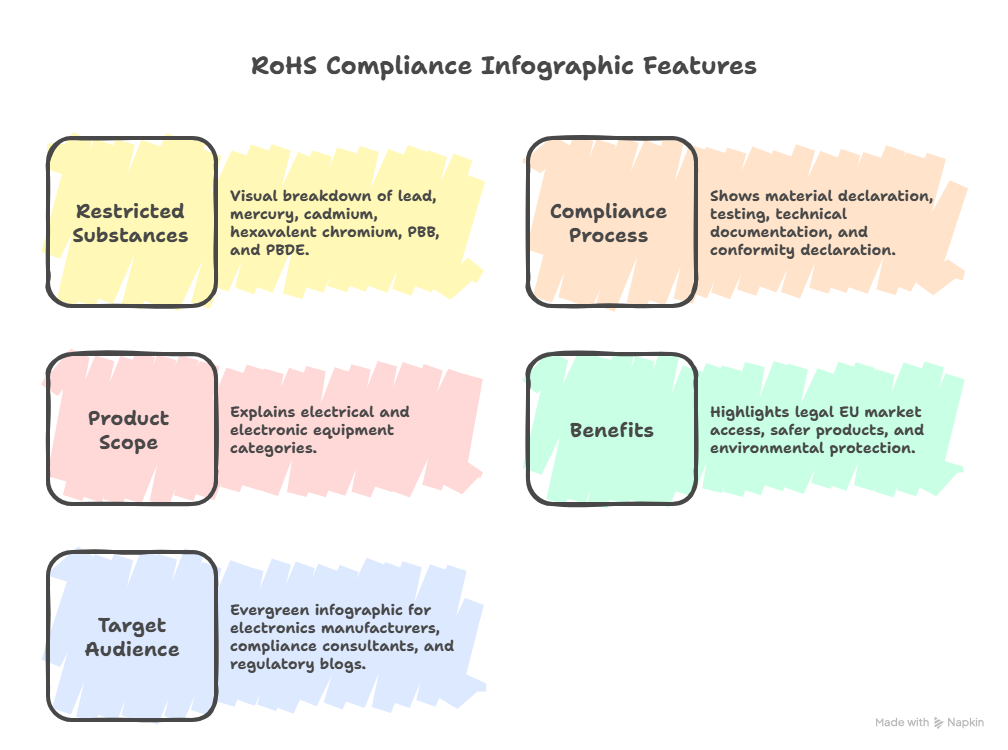
    The directive primarily limits substances such as lead (Pb), mercury (Hg), cadmium (Cd), hexavalent chromium (Cr6+), polybrominated biphenyls (PBB), and polybrominated diphenyl ethers (PBDE).

    Why RoHS Certification Is Important

    RoHS certification plays a crucial role in protecting human health and the environment. Hazardous substances used in electronics can pose serious risks during manufacturing, usage, and disposal. By complying with RoHS standards, companies reduce environmental pollution and improve product safety.

    Additionally, RoHS compliance is mandatory for selling electronic products in the European market. Without certification, businesses may face legal penalties, product recalls, or restrictions on market entry.

    Scope of RoHS Certification

    RoHS applies to a wide range of electrical and electronic equipment, including:

    Household appliances
    IT and telecommunications equipment
    Consumer electronics
    Lighting products
    Medical devices
    Monitoring and control instruments

    Manufacturers, importers, and distributors involved in these product categories must ensure compliance with RoHS requirements.

    RoHS Certification Process

    The process of obtaining RoHS certification involves several steps:

    Product Assessment: Identify materials and components used in the product.
    Testing and Analysis: Conduct laboratory testing to detect restricted substances.
    Documentation: Prepare technical files, including test reports and compliance declarations.
    Declaration of Conformity (DoC): Issue a formal statement confirming compliance.
    CE Marking: Affix the CE mark to indicate conformity with EU regulations.

    Working with accredited testing laboratories and certification bodies ensures a smooth certification process.

    Benefits of RoHS Certification

    Obtaining RoHS certification offers several advantages:

    Market Access: Enables entry into European and international markets
    Environmental Protection: Reduces harmful waste and pollution
    Brand Reputation: Builds trust with customers and stakeholders
    Legal Compliance: Avoids fines and regulatory issues
    Competitive Advantage: Demonstrates commitment to sustainability
    Who Needs RoHS Certification?

    RoHS certification is required for:

    Manufacturers of electrical and electronic equipment
    Exporters targeting European markets
    Importers and distributors handling electronic products
    Businesses aiming to improve environmental compliance
    Conclusion

    RoHS certification is a critical standard for ensuring the safety and sustainability of electronic products. By complying with the Restriction of Hazardous Substances Directive, businesses not only meet legal requirements but also contribute to a cleaner and safer environment. Investing in RoHS compliance enhances global market opportunities and strengthens a company’s commitment to responsible manufacturing.

    website: https://iasiso-africa.com/rohs-certification-in-nigeria/
    RoHS Certification: A Complete Guide RoHS certification is an essential requirement for manufacturers and exporters of electrical and electronic products. It ensures that products are free from hazardous substances and are safe for both consumers and the environment. Businesses aiming to enter global markets, especially in Europe, must comply with RoHS regulations to meet legal and environmental standards. What Is RoHS Certification? Restriction of Hazardous Substances Directive (RoHS) is a regulation introduced by the European Union that restricts the use of specific hazardous materials found in electrical and electronic equipment. RoHS certification confirms that a product complies with these restrictions and does not contain harmful substances beyond permitted limits. The directive primarily limits substances such as lead (Pb), mercury (Hg), cadmium (Cd), hexavalent chromium (Cr6+), polybrominated biphenyls (PBB), and polybrominated diphenyl ethers (PBDE). Why RoHS Certification Is Important RoHS certification plays a crucial role in protecting human health and the environment. Hazardous substances used in electronics can pose serious risks during manufacturing, usage, and disposal. By complying with RoHS standards, companies reduce environmental pollution and improve product safety. Additionally, RoHS compliance is mandatory for selling electronic products in the European market. Without certification, businesses may face legal penalties, product recalls, or restrictions on market entry. Scope of RoHS Certification RoHS applies to a wide range of electrical and electronic equipment, including: Household appliances IT and telecommunications equipment Consumer electronics Lighting products Medical devices Monitoring and control instruments Manufacturers, importers, and distributors involved in these product categories must ensure compliance with RoHS requirements. RoHS Certification Process The process of obtaining RoHS certification involves several steps: Product Assessment: Identify materials and components used in the product. Testing and Analysis: Conduct laboratory testing to detect restricted substances. Documentation: Prepare technical files, including test reports and compliance declarations. Declaration of Conformity (DoC): Issue a formal statement confirming compliance. CE Marking: Affix the CE mark to indicate conformity with EU regulations. Working with accredited testing laboratories and certification bodies ensures a smooth certification process. Benefits of RoHS Certification Obtaining RoHS certification offers several advantages: Market Access: Enables entry into European and international markets Environmental Protection: Reduces harmful waste and pollution Brand Reputation: Builds trust with customers and stakeholders Legal Compliance: Avoids fines and regulatory issues Competitive Advantage: Demonstrates commitment to sustainability Who Needs RoHS Certification? RoHS certification is required for: Manufacturers of electrical and electronic equipment Exporters targeting European markets Importers and distributors handling electronic products Businesses aiming to improve environmental compliance Conclusion RoHS certification is a critical standard for ensuring the safety and sustainability of electronic products. By complying with the Restriction of Hazardous Substances Directive, businesses not only meet legal requirements but also contribute to a cleaner and safer environment. Investing in RoHS compliance enhances global market opportunities and strengthens a company’s commitment to responsible manufacturing. website: https://iasiso-africa.com/rohs-certification-in-nigeria/
    RoHS Certification | RoHS Compliance - IAS Nigeria
    iasiso-africa.com
    Achieve RoHS Certification with IAS in Nigeria to ensure your products can be sold in Europe and meets the health and safety requirements. Apply today!
    0 Commenti ·0 condivisioni ·2K Views ·0 Anteprima
  • RoHS Certification: Ensuring Safer Electronics for Global Markets

    Introduction to RoHS Certification

    European Union introduced RoHS Certification to control the use of hazardous substances in electrical and electronic products. RoHS stands for Restriction of Hazardous Substances, and it plays a major role in improving environmental safety and protecting human health. The regulation restricts the use of dangerous materials such as lead, mercury, cadmium, hexavalent chromium, and certain flame retardants in electronic equipment.

    Today, RoHS Certification is recognized globally because many countries and international buyers expect manufacturers to comply with these environmental standards. Companies involved in electronics manufacturing, importing, exporting, assembly, and distribution often require RoHS compliance to access international markets and strengthen customer trust. From smartphones and laptops to industrial machinery and household appliances, RoHS impacts a wide range of products used every day.

    Importance of RoHS Certification for Businesses

    RoHS Certification helps businesses demonstrate their commitment to environmental responsibility and product safety. Modern consumers are increasingly aware of sustainability issues, and organizations that follow eco-friendly manufacturing practices gain a competitive advantage in the marketplace. Compliance with RoHS standards also helps reduce environmental pollution caused by electronic waste.

    For manufacturers, RoHS Certification supports smoother entry into global trade markets, especially in regions where environmental regulations are strict. Many retailers, distributors, and government agencies prefer working with suppliers that meet RoHS requirements. Without compliance, businesses may face shipment delays, legal penalties, product recalls, or restrictions on selling products internationally.

    Another important advantage is improved brand reputation. Companies that prioritize safe materials and environmentally responsible production often attract more customers and business partners. RoHS compliance also encourages better supply chain management because organizations must verify that raw materials and components meet regulatory standards.

    Industries That Need RoHS Certification

    RoHS Certification is highly relevant for industries connected to electronics and electrical equipment. Manufacturers of consumer electronics, medical devices, telecommunications equipment, automotive electronics, lighting products, and industrial machinery commonly require compliance. Companies producing cables, printed circuit boards, semiconductors, batteries, and electronic accessories also benefit from RoHS implementation.

    As global regulations continue to evolve, many industries now consider RoHS compliance a standard business requirement rather than an optional certification. Export-oriented businesses especially depend on RoHS Certification to maintain uninterrupted international trade operations.

    RoHS Certification Process

    The RoHS Certification process generally begins with evaluating the materials and components used in manufacturing. Organizations review their products to identify whether restricted hazardous substances are present above allowable limits. Testing laboratories may conduct chemical analysis to confirm compliance with RoHS standards.

    After testing and verification, businesses prepare technical documentation that demonstrates conformity with RoHS requirements. This documentation may include material declarations, supplier certifications, product specifications, and laboratory test reports. Once all requirements are satisfied, the organization can declare RoHS compliance for its products.

    Regular monitoring and supplier management are essential to maintaining certification. Businesses must ensure that future production batches continue to meet RoHS standards and that suppliers consistently provide compliant materials.

    Conclusion

    RoHS Certification has become an essential requirement in the modern electronics industry. It helps businesses improve environmental sustainability, enhance product safety, and strengthen access to international markets. By reducing hazardous substances in electronic products, RoHS contributes to a cleaner environment and safer consumer experiences. Organizations that achieve RoHS compliance not only meet regulatory expectations but also build long-term credibility and trust in the global marketplace.

    Web: https://ias-malaysia.com/rohs-certification-in-malaysia/
    RoHS Certification: Ensuring Safer Electronics for Global Markets Introduction to RoHS Certification European Union introduced RoHS Certification to control the use of hazardous substances in electrical and electronic products. RoHS stands for Restriction of Hazardous Substances, and it plays a major role in improving environmental safety and protecting human health. The regulation restricts the use of dangerous materials such as lead, mercury, cadmium, hexavalent chromium, and certain flame retardants in electronic equipment. Today, RoHS Certification is recognized globally because many countries and international buyers expect manufacturers to comply with these environmental standards. Companies involved in electronics manufacturing, importing, exporting, assembly, and distribution often require RoHS compliance to access international markets and strengthen customer trust. From smartphones and laptops to industrial machinery and household appliances, RoHS impacts a wide range of products used every day. Importance of RoHS Certification for Businesses RoHS Certification helps businesses demonstrate their commitment to environmental responsibility and product safety. Modern consumers are increasingly aware of sustainability issues, and organizations that follow eco-friendly manufacturing practices gain a competitive advantage in the marketplace. Compliance with RoHS standards also helps reduce environmental pollution caused by electronic waste. For manufacturers, RoHS Certification supports smoother entry into global trade markets, especially in regions where environmental regulations are strict. Many retailers, distributors, and government agencies prefer working with suppliers that meet RoHS requirements. Without compliance, businesses may face shipment delays, legal penalties, product recalls, or restrictions on selling products internationally. Another important advantage is improved brand reputation. Companies that prioritize safe materials and environmentally responsible production often attract more customers and business partners. RoHS compliance also encourages better supply chain management because organizations must verify that raw materials and components meet regulatory standards. Industries That Need RoHS Certification RoHS Certification is highly relevant for industries connected to electronics and electrical equipment. Manufacturers of consumer electronics, medical devices, telecommunications equipment, automotive electronics, lighting products, and industrial machinery commonly require compliance. Companies producing cables, printed circuit boards, semiconductors, batteries, and electronic accessories also benefit from RoHS implementation. As global regulations continue to evolve, many industries now consider RoHS compliance a standard business requirement rather than an optional certification. Export-oriented businesses especially depend on RoHS Certification to maintain uninterrupted international trade operations. RoHS Certification Process The RoHS Certification process generally begins with evaluating the materials and components used in manufacturing. Organizations review their products to identify whether restricted hazardous substances are present above allowable limits. Testing laboratories may conduct chemical analysis to confirm compliance with RoHS standards. After testing and verification, businesses prepare technical documentation that demonstrates conformity with RoHS requirements. This documentation may include material declarations, supplier certifications, product specifications, and laboratory test reports. Once all requirements are satisfied, the organization can declare RoHS compliance for its products. Regular monitoring and supplier management are essential to maintaining certification. Businesses must ensure that future production batches continue to meet RoHS standards and that suppliers consistently provide compliant materials. Conclusion RoHS Certification has become an essential requirement in the modern electronics industry. It helps businesses improve environmental sustainability, enhance product safety, and strengthen access to international markets. By reducing hazardous substances in electronic products, RoHS contributes to a cleaner environment and safer consumer experiences. Organizations that achieve RoHS compliance not only meet regulatory expectations but also build long-term credibility and trust in the global marketplace. Web: https://ias-malaysia.com/rohs-certification-in-malaysia/
    RoHS Certification
    ias-malaysia.com
    Companies that achieve ROHS Certification ensure that their products are compliant with the Restriction of Hazardous Substances EU Directive. Apply now!
    0 Commenti ·0 condivisioni ·3K Views ·0 Anteprima
  • RoHS certification is essential for manufacturers and businesses involved in the production and sale of electrical and electronic equipment. It ensures that products comply with regulations restricting the use of hazardous substances, making them safer for both consumers and the environment. This certification is especially important for companies aiming to access global markets, particularly in regions with strict environmental regulations. https://iasiso-asia.com/PH/rohs-certification-in-philippines/
    RoHS certification is essential for manufacturers and businesses involved in the production and sale of electrical and electronic equipment. It ensures that products comply with regulations restricting the use of hazardous substances, making them safer for both consumers and the environment. This certification is especially important for companies aiming to access global markets, particularly in regions with strict environmental regulations. https://iasiso-asia.com/PH/rohs-certification-in-philippines/
    0 Commenti ·0 condivisioni ·721 Views ·0 Anteprima
  • Certificazione RoHS: Compliance and Environmental Responsibility in Electronics Manufacturing

    Introduction to RoHS Certification

    Certificazione RoHS refers to compliance with the Restriction of Hazardous Substances Directive, a European Union regulation that limits the use of specific hazardous materials in electrical and electronic equipment (EEE). The primary objective of RoHS is to reduce environmental impact and protect human health by restricting substances such as lead, mercury, cadmium, hexavalent chromium, and certain brominated flame retardants. For manufacturers, importers, and distributors placing products on the European market, RoHS compliance is a legal obligation. Beyond regulatory necessity, achieving RoHS certification demonstrates a company’s commitment to environmental responsibility and sustainable production practices.

    Scope and Applicability of the RoHS Directive

    The RoHS Directive applies to a wide range of electrical and electronic products, including consumer electronics, IT equipment, lighting devices, medical instruments, industrial machinery, and telecommunications products. Any product that depends on electric currents or electromagnetic fields to function may fall within its scope.

    To achieve certificazione RoHS, organizations must carefully evaluate whether their products are covered under the directive. The regulation establishes maximum concentration values for restricted substances in homogeneous materials. This means that every component, part, or material within the product must meet the defined limits. As a result, compliance requires detailed analysis of product composition and close collaboration with suppliers.

    Steps to Achieve RoHS Compliance

    The process of obtaining certificazione RoHS begins with a thorough assessment of materials and components used in manufacturing. Companies must collect supplier declarations, review material data sheets, and, when necessary, conduct laboratory testing to verify substance concentrations. Testing is typically performed using specialized analytical techniques to ensure accuracy and reliability.

    Once compliance is confirmed, manufacturers must prepare technical documentation demonstrating conformity. This documentation includes product descriptions, design information, risk assessments, and test reports. A Declaration of Conformity (DoC) must then be issued, confirming that the product meets all applicable RoHS requirements. In many cases, the CE marking is affixed to the product to indicate compliance with relevant European directives, including RoHS.

    Although third-party certification is not always mandatory, many organizations choose independent verification to strengthen credibility and minimize compliance risks.

    Benefits of RoHS Certification

    Certificazione RoHS offers several strategic advantages. First, it ensures legal access to the European market, helping companies avoid penalties, product recalls, or trade restrictions. Compliance is often a prerequisite for partnerships with global distributors and retailers.

    Second, RoHS certification enhances corporate reputation. Consumers and business clients increasingly value environmentally responsible practices. Demonstrating compliance with environmental regulations reinforces trust and supports brand positioning in competitive markets.

    Operationally, RoHS encourages improved supply chain transparency. Companies must establish effective communication and documentation systems with suppliers to ensure ongoing conformity. This process often leads to stronger quality control and better risk management practices.

    Maintaining Ongoing Compliance

    RoHS compliance is not a one-time activity. Regulatory updates and changes in product design may require continuous monitoring and reassessment. Organizations must maintain accurate documentation and regularly review supplier information to ensure sustained conformity. Integrating RoHS management into broader quality or environmental management systems can streamline oversight and reduce compliance challenges.

    Conclusion

    Certificazione RoHS represents both a regulatory requirement and a strategic commitment to sustainable manufacturing. By restricting hazardous substances in electronic products, the directive promotes environmental protection and safer waste management practices. For organizations, achieving and maintaining RoHS compliance strengthens market access, enhances brand credibility, and supports long-term business sustainability in a globally regulated marketplace.

    Web: https://iasiso-europe.com/italy/certificazione-rohs-in-italia/
    Certificazione RoHS: Compliance and Environmental Responsibility in Electronics Manufacturing Introduction to RoHS Certification Certificazione RoHS refers to compliance with the Restriction of Hazardous Substances Directive, a European Union regulation that limits the use of specific hazardous materials in electrical and electronic equipment (EEE). The primary objective of RoHS is to reduce environmental impact and protect human health by restricting substances such as lead, mercury, cadmium, hexavalent chromium, and certain brominated flame retardants. For manufacturers, importers, and distributors placing products on the European market, RoHS compliance is a legal obligation. Beyond regulatory necessity, achieving RoHS certification demonstrates a company’s commitment to environmental responsibility and sustainable production practices. Scope and Applicability of the RoHS Directive The RoHS Directive applies to a wide range of electrical and electronic products, including consumer electronics, IT equipment, lighting devices, medical instruments, industrial machinery, and telecommunications products. Any product that depends on electric currents or electromagnetic fields to function may fall within its scope. To achieve certificazione RoHS, organizations must carefully evaluate whether their products are covered under the directive. The regulation establishes maximum concentration values for restricted substances in homogeneous materials. This means that every component, part, or material within the product must meet the defined limits. As a result, compliance requires detailed analysis of product composition and close collaboration with suppliers. Steps to Achieve RoHS Compliance The process of obtaining certificazione RoHS begins with a thorough assessment of materials and components used in manufacturing. Companies must collect supplier declarations, review material data sheets, and, when necessary, conduct laboratory testing to verify substance concentrations. Testing is typically performed using specialized analytical techniques to ensure accuracy and reliability. Once compliance is confirmed, manufacturers must prepare technical documentation demonstrating conformity. This documentation includes product descriptions, design information, risk assessments, and test reports. A Declaration of Conformity (DoC) must then be issued, confirming that the product meets all applicable RoHS requirements. In many cases, the CE marking is affixed to the product to indicate compliance with relevant European directives, including RoHS. Although third-party certification is not always mandatory, many organizations choose independent verification to strengthen credibility and minimize compliance risks. Benefits of RoHS Certification Certificazione RoHS offers several strategic advantages. First, it ensures legal access to the European market, helping companies avoid penalties, product recalls, or trade restrictions. Compliance is often a prerequisite for partnerships with global distributors and retailers. Second, RoHS certification enhances corporate reputation. Consumers and business clients increasingly value environmentally responsible practices. Demonstrating compliance with environmental regulations reinforces trust and supports brand positioning in competitive markets. Operationally, RoHS encourages improved supply chain transparency. Companies must establish effective communication and documentation systems with suppliers to ensure ongoing conformity. This process often leads to stronger quality control and better risk management practices. Maintaining Ongoing Compliance RoHS compliance is not a one-time activity. Regulatory updates and changes in product design may require continuous monitoring and reassessment. Organizations must maintain accurate documentation and regularly review supplier information to ensure sustained conformity. Integrating RoHS management into broader quality or environmental management systems can streamline oversight and reduce compliance challenges. Conclusion Certificazione RoHS represents both a regulatory requirement and a strategic commitment to sustainable manufacturing. By restricting hazardous substances in electronic products, the directive promotes environmental protection and safer waste management practices. For organizations, achieving and maintaining RoHS compliance strengthens market access, enhances brand credibility, and supports long-term business sustainability in a globally regulated marketplace. Web: https://iasiso-europe.com/italy/certificazione-rohs-in-italia/
    Certificazione RoHS | Conformità RoHS - IAS Italia
    iasiso-europe.com
    Ottieni la certificazione RoHS con IAS in Italia per garantire che i tuoi prodotti soddisfino i requisiti della Direttiva RoHS. Candidati oggi!
    0 Commenti ·0 condivisioni ·5K Views ·0 Anteprima
  • Certificazione RoHS: Conformità Ambientale per i Prodotti Elettronici

    Introduzione alla Certificazione RoHS
    La certificazione RoHS (Restriction of Hazardous Substances) è un requisito normativo fondamentale per i produttori e distributori di apparecchiature elettriche ed elettroniche. Introdotta dall’Unione Europea, la direttiva RoHS mira a limitare l’uso di determinate sostanze pericolose nei prodotti elettronici, riducendo l’impatto ambientale e proteggendo la salute umana. La conformità RoHS è essenziale per l’immissione sul mercato europeo di numerosi dispositivi elettrici ed elettronici.

    Obiettivi e Campo di Applicazione
    L’obiettivo principale della certificazione RoHS è prevenire l’inquinamento e favorire il riciclo sicuro dei rifiuti elettronici. La direttiva limita l’uso di sostanze come piombo, mercurio, cadmio, cromo esavalente, bifenili polibromurati (PBB) e eteri di difenile polibromurati (PBDE), oltre ad alcune sostanze aggiunte nelle versioni più recenti della normativa. Il campo di applicazione include una vasta gamma di prodotti, come apparecchiature IT, dispositivi di consumo, strumenti di illuminazione e apparecchi industriali.

    Requisiti Principali della Direttiva RoHS
    Per ottenere la conformità RoHS, i produttori devono dimostrare che i materiali e i componenti utilizzati rispettano i limiti di concentrazione stabiliti dalla direttiva. Ciò richiede una gestione accurata della catena di fornitura, la raccolta di dichiarazioni di conformità dei fornitori e, in alcuni casi, test di laboratorio sui materiali. È inoltre necessario predisporre documentazione tecnica adeguata e mantenere la tracciabilità dei prodotti.

    Vantaggi della Certificazione RoHS
    La certificazione RoHS offre numerosi vantaggi alle aziende. Consente l’accesso ai mercati europei, riducendo il rischio di sanzioni e blocchi commerciali. Migliora l’immagine aziendale dimostrando attenzione alla sostenibilità ambientale e alla sicurezza dei consumatori. Inoltre, promuove l’innovazione nei materiali e nei processi produttivi, favorendo soluzioni più sicure ed ecocompatibili.

    Processo di Conformità e Verifica
    Il processo di certificazione RoHS inizia con l’analisi dei prodotti e dei materiali utilizzati. Successivamente, vengono effettuate valutazioni di conformità, test e controlli documentali. Una volta dimostrata la conformità, l’azienda può redigere la Dichiarazione UE di Conformità e apporre la marcatura CE, quando applicabile.

    Conclusione
    La certificazione RoHS rappresenta un passo essenziale verso una produzione elettronica più responsabile. Garantendo la riduzione delle sostanze pericolose, le aziende contribuiscono alla tutela dell’ambiente, della salute pubblica e alla sostenibilità a lungo termine del settore elettronico.

    https://iasiso-europe.com/italy/certificazione-rohs-in-italia/
    Certificazione RoHS: Conformità Ambientale per i Prodotti Elettronici Introduzione alla Certificazione RoHS La certificazione RoHS (Restriction of Hazardous Substances) è un requisito normativo fondamentale per i produttori e distributori di apparecchiature elettriche ed elettroniche. Introdotta dall’Unione Europea, la direttiva RoHS mira a limitare l’uso di determinate sostanze pericolose nei prodotti elettronici, riducendo l’impatto ambientale e proteggendo la salute umana. La conformità RoHS è essenziale per l’immissione sul mercato europeo di numerosi dispositivi elettrici ed elettronici. Obiettivi e Campo di Applicazione L’obiettivo principale della certificazione RoHS è prevenire l’inquinamento e favorire il riciclo sicuro dei rifiuti elettronici. La direttiva limita l’uso di sostanze come piombo, mercurio, cadmio, cromo esavalente, bifenili polibromurati (PBB) e eteri di difenile polibromurati (PBDE), oltre ad alcune sostanze aggiunte nelle versioni più recenti della normativa. Il campo di applicazione include una vasta gamma di prodotti, come apparecchiature IT, dispositivi di consumo, strumenti di illuminazione e apparecchi industriali. Requisiti Principali della Direttiva RoHS Per ottenere la conformità RoHS, i produttori devono dimostrare che i materiali e i componenti utilizzati rispettano i limiti di concentrazione stabiliti dalla direttiva. Ciò richiede una gestione accurata della catena di fornitura, la raccolta di dichiarazioni di conformità dei fornitori e, in alcuni casi, test di laboratorio sui materiali. È inoltre necessario predisporre documentazione tecnica adeguata e mantenere la tracciabilità dei prodotti. Vantaggi della Certificazione RoHS La certificazione RoHS offre numerosi vantaggi alle aziende. Consente l’accesso ai mercati europei, riducendo il rischio di sanzioni e blocchi commerciali. Migliora l’immagine aziendale dimostrando attenzione alla sostenibilità ambientale e alla sicurezza dei consumatori. Inoltre, promuove l’innovazione nei materiali e nei processi produttivi, favorendo soluzioni più sicure ed ecocompatibili. Processo di Conformità e Verifica Il processo di certificazione RoHS inizia con l’analisi dei prodotti e dei materiali utilizzati. Successivamente, vengono effettuate valutazioni di conformità, test e controlli documentali. Una volta dimostrata la conformità, l’azienda può redigere la Dichiarazione UE di Conformità e apporre la marcatura CE, quando applicabile. Conclusione La certificazione RoHS rappresenta un passo essenziale verso una produzione elettronica più responsabile. Garantendo la riduzione delle sostanze pericolose, le aziende contribuiscono alla tutela dell’ambiente, della salute pubblica e alla sostenibilità a lungo termine del settore elettronico. https://iasiso-europe.com/italy/certificazione-rohs-in-italia/
    Certificazione RoHS | Conformità RoHS - IAS Italia
    iasiso-europe.com
    Ottieni la certificazione RoHS con IAS in Italia per garantire che i tuoi prodotti soddisfino i requisiti della Direttiva RoHS. Candidati oggi!
    0 Commenti ·0 condivisioni ·1K Views ·0 Anteprima