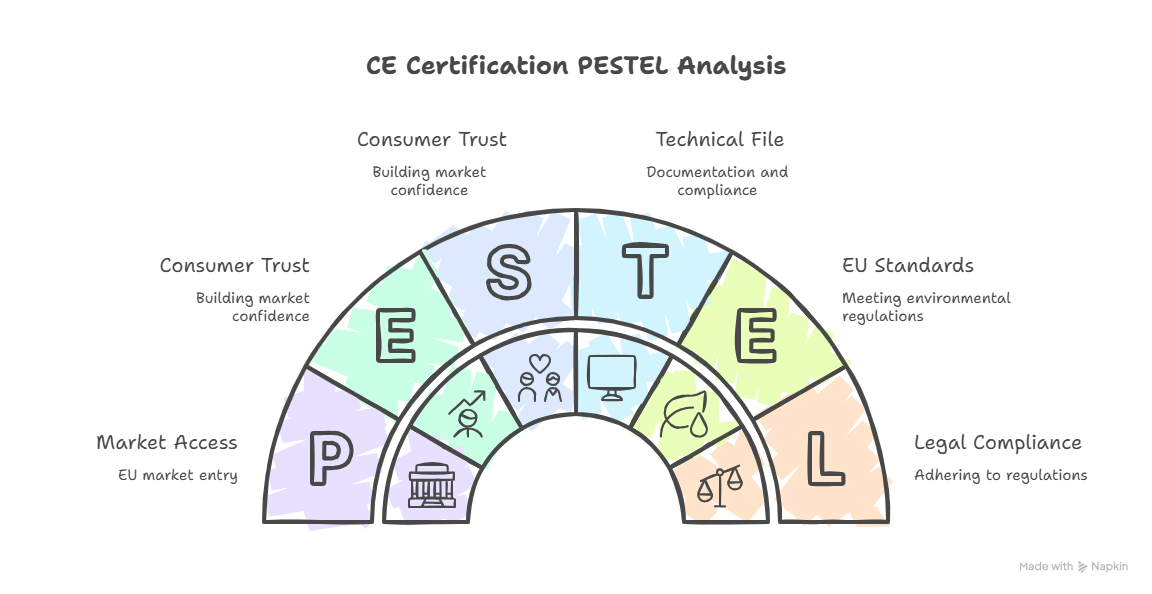
• CE Certification: Ensuring Product Safety and Compliance in the European Market

    CE Marking, often referred to as CE certification, is a mandatory conformity marking required for many products sold within the European Union and the European Economic Area. The CE mark indicates that a product meets the essential safety, health, and environmental protection requirements established by European regulations. Manufacturers use this marking to demonstrate that their products comply with applicable EU directives before they are placed on the European market.

    What is CE Certification?

    The CE Marking is not a quality mark but a declaration by the manufacturer that the product complies with all relevant European legislation. It allows products to move freely within the European market without additional national approvals.

    Products that commonly require CE certification include medical devices, electrical equipment, machinery, toys, construction products, and personal protective equipment. The CE mark ensures that these products meet strict safety and performance requirements before they reach consumers.

    Importance of CE Certification

    Obtaining CE Marking provides several important benefits for manufacturers and businesses. One of the primary advantages is access to the European market. Without the CE mark, many products cannot legally be sold in EU countries.

    Another benefit is increased consumer trust. The CE marking indicates that a product has been assessed for safety and compliance, giving customers confidence in its reliability. It also helps manufacturers demonstrate compliance with European regulations and avoid legal penalties or product recalls.

    CE certification also improves a company’s global reputation. Many businesses outside Europe seek CE marking because it shows that their products meet internationally recognized safety standards.

    CE Certification Process

    The process of obtaining CE Marking typically involves several steps. First, manufacturers must identify the applicable EU directives and standards related to their product. These directives define the safety and performance requirements that must be met.

    Next, the manufacturer conducts a conformity assessment to verify that the product meets the necessary requirements. This may include product testing, risk analysis, and preparation of technical documentation. In some cases, an independent testing organization called a Notified Body must evaluate the product before certification.

    Once compliance is confirmed, the manufacturer prepares a Declaration of Conformity and affixes the CE mark to the product. This declaration states that the product meets all relevant EU regulations.

    Industries That Require CE Certification

    Many industries require CE Marking to sell products in Europe. These include electronics, medical devices, construction materials, industrial machinery, telecommunications equipment, and consumer products. Companies in these sectors must ensure their products meet the necessary standards before entering the market.

    Conclusion

    CE Marking plays a crucial role in ensuring product safety and regulatory compliance within the European Union. By obtaining CE certification, manufacturers can legally market their products across European countries, improve customer trust, and demonstrate their commitment to meeting strict safety and environmental requirements. This certification is an essential step for businesses seeking to expand into international markets and maintain high product quality standards.

    website: https://iasiso-asia.com/VN/ce-marking-certification-in-vietnam/
    CE Certification: Ensuring Product Safety and Compliance in the European Market CE Marking, often referred to as CE certification, is a mandatory conformity marking required for many products sold within the European Union and the European Economic Area. The CE mark indicates that a product meets the essential safety, health, and environmental protection requirements established by European regulations. Manufacturers use this marking to demonstrate that their products comply with applicable EU directives before they are placed on the European market. What is CE Certification? The CE Marking is not a quality mark but a declaration by the manufacturer that the product complies with all relevant European legislation. It allows products to move freely within the European market without additional national approvals. Products that commonly require CE certification include medical devices, electrical equipment, machinery, toys, construction products, and personal protective equipment. The CE mark ensures that these products meet strict safety and performance requirements before they reach consumers. Importance of CE Certification Obtaining CE Marking provides several important benefits for manufacturers and businesses. One of the primary advantages is access to the European market. Without the CE mark, many products cannot legally be sold in EU countries. Another benefit is increased consumer trust. The CE marking indicates that a product has been assessed for safety and compliance, giving customers confidence in its reliability. It also helps manufacturers demonstrate compliance with European regulations and avoid legal penalties or product recalls. CE certification also improves a company’s global reputation. Many businesses outside Europe seek CE marking because it shows that their products meet internationally recognized safety standards. CE Certification Process The process of obtaining CE Marking typically involves several steps. First, manufacturers must identify the applicable EU directives and standards related to their product. These directives define the safety and performance requirements that must be met. Next, the manufacturer conducts a conformity assessment to verify that the product meets the necessary requirements. This may include product testing, risk analysis, and preparation of technical documentation. In some cases, an independent testing organization called a Notified Body must evaluate the product before certification. Once compliance is confirmed, the manufacturer prepares a Declaration of Conformity and affixes the CE mark to the product. This declaration states that the product meets all relevant EU regulations. Industries That Require CE Certification Many industries require CE Marking to sell products in Europe. These include electronics, medical devices, construction materials, industrial machinery, telecommunications equipment, and consumer products. Companies in these sectors must ensure their products meet the necessary standards before entering the market. Conclusion CE Marking plays a crucial role in ensuring product safety and regulatory compliance within the European Union. By obtaining CE certification, manufacturers can legally market their products across European countries, improve customer trust, and demonstrate their commitment to meeting strict safety and environmental requirements. This certification is an essential step for businesses seeking to expand into international markets and maintain high product quality standards. website: https://iasiso-asia.com/VN/ce-marking-certification-in-vietnam/
    CE Certification | CE Marking Certification - IAS Vietnam
    iasiso-asia.com
    CE Mark Certification is beneficial to organizations that want to market their products in Europe. Apply now with IAS and get a free consultation!
    0 Σχόλια ·0 Μοιράστηκε ·194 Views ·0 Προεπισκόπηση
  • ISO Certification in Iraq: Enhancing Business Standards and Global Recognition

    ISO certification in Iraq helps organizations improve their management systems, maintain consistent quality, and meet international business standards. Many companies across industries such as oil and gas, construction, manufacturing, healthcare, and food production pursue ISO certification to enhance operational efficiency and gain credibility in both local and international markets. Implementing ISO standards enables businesses to adopt structured processes, improve productivity, and build trust with customers and stakeholders.

    What is ISO Certification?

    ISO certification in iraq confirms that a company follows internationally recognized standards for managing processes, quality, safety, or information security. These standards provide guidelines for creating effective management systems that ensure consistent performance and continuous improvement. Organizations that achieve ISO certification demonstrate their commitment to delivering reliable products and services while maintaining compliance with global best practices.

    Popular ISO Standards in Iraq

    Several ISO standards are widely implemented by organizations in Iraq depending on their industry requirements:

    ISO 9001 – Quality Management System

    ISO 14001 – Environmental Management System

    ISO 45001 – Occupational Health and Safety Management System

    ISO 27001 – Information Security Management System

    ISO 22000 – Food Safety Management System

    These certifications help organizations standardize their processes, improve performance, and comply with international expectations.

    Benefits of ISO Certification in Iraq

    Obtaining ISO certification offers several advantages for Iraqi businesses.

    1. Improved Operational Efficiency
    ISO standards require companies to define processes, monitor performance, and eliminate inefficiencies, which helps improve productivity and reduce operational errors.

    2. Better Market Opportunities
    Many government and private sector tenders prefer or require ISO-certified companies, particularly in industries such as construction, infrastructure, and oil and gas.

    3. Increased Customer Confidence
    Certification demonstrates that a company follows recognized quality and safety standards, which strengthens trust among customers, partners, and investors.

    4. Access to International Markets
    ISO certification aligns companies with global standards, making it easier to collaborate with international clients and expand into new markets.

    5. Improved Risk Management
    ISO frameworks encourage organizations to identify potential risks and implement preventive measures, helping maintain stable operations.

    ISO Certification Process in Iraq

    The process for obtaining ISO certification usually includes the following steps:

    Gap Analysis – Evaluate existing processes and identify areas for improvement.

    System Implementation – Develop policies and procedures according to ISO requirements.

    Employee Training – Train staff to understand and follow the management system.

    Internal Audit – Conduct internal reviews to ensure compliance.

    Certification Audit – An accredited certification body performs an external audit.

    Certification Issued – The organization receives ISO certification after successful evaluation.

    Depending on the organization’s size and readiness, the certification process may take around 45–90 days.

    Conclusion

    ISO certification in Iraq plays an important role in helping organizations improve quality, enhance efficiency, and build international credibility. By implementing standards such as ISO 9001, ISO 14001, and ISO 45001, businesses can strengthen their management systems, gain customer trust, and compete effectively in both local and global markets.

    website:https://iasiso-gulf.com/iso-certification/
    ISO Certification in Iraq: Enhancing Business Standards and Global Recognition ISO certification in Iraq helps organizations improve their management systems, maintain consistent quality, and meet international business standards. Many companies across industries such as oil and gas, construction, manufacturing, healthcare, and food production pursue ISO certification to enhance operational efficiency and gain credibility in both local and international markets. Implementing ISO standards enables businesses to adopt structured processes, improve productivity, and build trust with customers and stakeholders. What is ISO Certification? ISO certification in iraq confirms that a company follows internationally recognized standards for managing processes, quality, safety, or information security. These standards provide guidelines for creating effective management systems that ensure consistent performance and continuous improvement. Organizations that achieve ISO certification demonstrate their commitment to delivering reliable products and services while maintaining compliance with global best practices. Popular ISO Standards in Iraq Several ISO standards are widely implemented by organizations in Iraq depending on their industry requirements: ISO 9001 – Quality Management System ISO 14001 – Environmental Management System ISO 45001 – Occupational Health and Safety Management System ISO 27001 – Information Security Management System ISO 22000 – Food Safety Management System These certifications help organizations standardize their processes, improve performance, and comply with international expectations. Benefits of ISO Certification in Iraq Obtaining ISO certification offers several advantages for Iraqi businesses. 1. Improved Operational Efficiency ISO standards require companies to define processes, monitor performance, and eliminate inefficiencies, which helps improve productivity and reduce operational errors. 2. Better Market Opportunities Many government and private sector tenders prefer or require ISO-certified companies, particularly in industries such as construction, infrastructure, and oil and gas. 3. Increased Customer Confidence Certification demonstrates that a company follows recognized quality and safety standards, which strengthens trust among customers, partners, and investors. 4. Access to International Markets ISO certification aligns companies with global standards, making it easier to collaborate with international clients and expand into new markets. 5. Improved Risk Management ISO frameworks encourage organizations to identify potential risks and implement preventive measures, helping maintain stable operations. ISO Certification Process in Iraq The process for obtaining ISO certification usually includes the following steps: Gap Analysis – Evaluate existing processes and identify areas for improvement. System Implementation – Develop policies and procedures according to ISO requirements. Employee Training – Train staff to understand and follow the management system. Internal Audit – Conduct internal reviews to ensure compliance. Certification Audit – An accredited certification body performs an external audit. Certification Issued – The organization receives ISO certification after successful evaluation. Depending on the organization’s size and readiness, the certification process may take around 45–90 days. Conclusion ISO certification in Iraq plays an important role in helping organizations improve quality, enhance efficiency, and build international credibility. By implementing standards such as ISO 9001, ISO 14001, and ISO 45001, businesses can strengthen their management systems, gain customer trust, and compete effectively in both local and global markets. website:https://iasiso-gulf.com/iso-certification/
    ISO Certification | ISO Certification In Iraq - IAS
    iasiso-gulf.com
    Achieve ISO certification with IAS! We offer the most affordable ISO Certification Services in the market! E-mail: enquiry@iascertification.com to apply!
    0 Σχόλια ·0 Μοιράστηκε ·610 Views ·0 Προεπισκόπηση
  • GMP Certificering: Ensuring Quality and Compliance in Manufacturing

    Introduction to GMP Certificering

    GMP certificering, or Good Manufacturing Practice certification, is a globally recognized system that ensures products are consistently produced and controlled according to established quality standards. GMP certificering is essential for industries where product quality and safety are critical, such as pharmaceuticals, food and beverages, cosmetics, medical devices, and dietary supplements. By implementing GMP requirements, organizations can minimize risks related to contamination, errors, and inconsistencies, ensuring that products meet regulatory and customer expectations.

    Purpose and Scope of GMP Certificering

    The main purpose of GMP certificering is to create a controlled manufacturing environment that guarantees product safety and quality. GMP focuses on preventive measures rather than relying solely on final product testing. GMP certificering applies to all stages of production, including raw material handling, processing, packaging, storage, and distribution. It provides a structured framework that helps organizations comply with national and international regulations while maintaining consistent manufacturing practices.

    Key Requirements of GMP Certificering

    GMP certificering is based on several core requirements that cover every aspect of the manufacturing process. These include appropriate facility design, equipment validation, and maintenance to prevent contamination and mix-ups. GMP certificering also emphasizes qualified and trained personnel, strict hygiene practices, and clear organizational responsibilities. Documentation is a critical element, requiring standard operating procedures (SOPs), batch records, and quality manuals. Effective quality control, traceability, complaint handling, and recall procedures are also mandatory under GMP certificering.

    Benefits of GMP Certificering

    GMP certificering offers significant advantages for organizations operating in regulated markets. By following GMP principles, companies can reduce product defects, rework, and waste, leading to improved efficiency and lower operational costs. GMP certificering enhances customer confidence and strengthens brand reputation by demonstrating a commitment to quality and safety. It also supports compliance with regulatory inspections and audits, reducing the risk of penalties, product recalls, and business disruptions. Furthermore, GMP certificering helps organizations gain access to international markets and partnerships.

    Who Needs GMP Certificering

    GMP certificering is essential for manufacturers in industries such as pharmaceuticals, biotechnology, food processing, cosmetics, and healthcare products. It is suitable for both small and large organizations, as GMP requirements can be scaled according to the size and complexity of operations. GMP certificering is often a mandatory requirement for companies seeking to export products or supply regulated markets.

    Conclusion

    GMP certificering is a fundamental standard for ensuring product quality, safety, and regulatory compliance. By achieving GMP certificering, organizations establish reliable manufacturing processes, protect consumer health, and demonstrate continuous commitment to quality improvement. GMP certificering not only supports compliance but also provides a strong foundation for sustainable growth and long-term success in competitive global industries.

    Web: https://iasiso-europe.com/dutch/cgmp-certificering-in-nederland/
    GMP Certificering: Ensuring Quality and Compliance in Manufacturing Introduction to GMP Certificering GMP certificering, or Good Manufacturing Practice certification, is a globally recognized system that ensures products are consistently produced and controlled according to established quality standards. GMP certificering is essential for industries where product quality and safety are critical, such as pharmaceuticals, food and beverages, cosmetics, medical devices, and dietary supplements. By implementing GMP requirements, organizations can minimize risks related to contamination, errors, and inconsistencies, ensuring that products meet regulatory and customer expectations. Purpose and Scope of GMP Certificering The main purpose of GMP certificering is to create a controlled manufacturing environment that guarantees product safety and quality. GMP focuses on preventive measures rather than relying solely on final product testing. GMP certificering applies to all stages of production, including raw material handling, processing, packaging, storage, and distribution. It provides a structured framework that helps organizations comply with national and international regulations while maintaining consistent manufacturing practices. Key Requirements of GMP Certificering GMP certificering is based on several core requirements that cover every aspect of the manufacturing process. These include appropriate facility design, equipment validation, and maintenance to prevent contamination and mix-ups. GMP certificering also emphasizes qualified and trained personnel, strict hygiene practices, and clear organizational responsibilities. Documentation is a critical element, requiring standard operating procedures (SOPs), batch records, and quality manuals. Effective quality control, traceability, complaint handling, and recall procedures are also mandatory under GMP certificering. Benefits of GMP Certificering GMP certificering offers significant advantages for organizations operating in regulated markets. By following GMP principles, companies can reduce product defects, rework, and waste, leading to improved efficiency and lower operational costs. GMP certificering enhances customer confidence and strengthens brand reputation by demonstrating a commitment to quality and safety. It also supports compliance with regulatory inspections and audits, reducing the risk of penalties, product recalls, and business disruptions. Furthermore, GMP certificering helps organizations gain access to international markets and partnerships. Who Needs GMP Certificering GMP certificering is essential for manufacturers in industries such as pharmaceuticals, biotechnology, food processing, cosmetics, and healthcare products. It is suitable for both small and large organizations, as GMP requirements can be scaled according to the size and complexity of operations. GMP certificering is often a mandatory requirement for companies seeking to export products or supply regulated markets. Conclusion GMP certificering is a fundamental standard for ensuring product quality, safety, and regulatory compliance. By achieving GMP certificering, organizations establish reliable manufacturing processes, protect consumer health, and demonstrate continuous commitment to quality improvement. GMP certificering not only supports compliance but also provides a strong foundation for sustainable growth and long-term success in competitive global industries. Web: https://iasiso-europe.com/dutch/cgmp-certificering-in-nederland/
    GMP certificaat | GMP certificering - IAS Nederland
    iasiso-europe.com
    GMP certificaat behalen bij IAS in Nederland om ervoor te zorgen dat u kwaliteitsproducten en -diensten aan klanten levert! Nu toepassen!
    0 Σχόλια ·0 Μοιράστηκε ·3χλμ. Views ·0 Προεπισκόπηση
  • Certification CE: The Essential Passport for Safe and Compliant Products in the European Market

    What CE Certification Really Means

    The Certification CE is a mandatory conformity mark that shows a product meets the essential safety, health, and environmental requirements set by the European Union. It’s often seen on electronics, toys, machinery, medical devices, and dozens of other product categories. Essentially, when a product carries the CE mark, it signals that it can be legally sold across all EU and EEA countries. For businesses, it works like a passport—simple to recognize but crucial for market access.

    Why Companies Need CE Certification

    Organizations seek Certification CE because it removes barriers to trade and ensures consumer confidence. Without it, many products simply cannot be placed on the European market. Beyond regulatory compliance, the CE mark communicates that a product has been assessed against strict EU directives. Companies that adopt this certification gain credibility, reduce the risk of recalls, and strengthen their professional reputation. It also reassures customers that the product they’re buying is safe and trustworthy.

    How CE Certification Works

    The process for Certification CE depends on the product type, but it usually starts with identifying the relevant EU directives—such as the Low Voltage Directive, Toy Safety Directive, or Machinery Directive. Manufacturers must assess risks, conduct technical testing, compile a technical file, and sometimes involve a Notified Body for third-party evaluation. After ensuring full compliance, the manufacturer issues a Declaration of Conformity and affixes the CE mark. It’s a structured, detailed process that ensures safety isn’t left to chance.

    Benefits of Carrying the CE Mark

    The advantages of Certification CE extend well beyond market access. It encourages better product design, reduces liability risks, and enhances consumer trust. Companies often notice improved internal quality control because the certification demands well-documented processes and technical records. The CE mark also simplifies selling across European borders, reducing administrative burdens. For growing businesses, it opens doors to new markets and supports long-term commercial stability.

    Conclusion

    The Certification CE is more than a label—it’s a commitment to safety, reliability, and compliance with some of the world’s strictest regulations. By securing this certification, companies strengthen their market position, protect consumers, and build products that meet high European standards. For any manufacturer aiming to expand into the EU, CE certification isn’t just important; it’s indispensable.

    Readmore: https://iasiso-europe.com/french/certification-marquage-ce-en-france/
    Certification CE: The Essential Passport for Safe and Compliant Products in the European Market What CE Certification Really Means The Certification CE is a mandatory conformity mark that shows a product meets the essential safety, health, and environmental requirements set by the European Union. It’s often seen on electronics, toys, machinery, medical devices, and dozens of other product categories. Essentially, when a product carries the CE mark, it signals that it can be legally sold across all EU and EEA countries. For businesses, it works like a passport—simple to recognize but crucial for market access. Why Companies Need CE Certification Organizations seek Certification CE because it removes barriers to trade and ensures consumer confidence. Without it, many products simply cannot be placed on the European market. Beyond regulatory compliance, the CE mark communicates that a product has been assessed against strict EU directives. Companies that adopt this certification gain credibility, reduce the risk of recalls, and strengthen their professional reputation. It also reassures customers that the product they’re buying is safe and trustworthy. How CE Certification Works The process for Certification CE depends on the product type, but it usually starts with identifying the relevant EU directives—such as the Low Voltage Directive, Toy Safety Directive, or Machinery Directive. Manufacturers must assess risks, conduct technical testing, compile a technical file, and sometimes involve a Notified Body for third-party evaluation. After ensuring full compliance, the manufacturer issues a Declaration of Conformity and affixes the CE mark. It’s a structured, detailed process that ensures safety isn’t left to chance. Benefits of Carrying the CE Mark The advantages of Certification CE extend well beyond market access. It encourages better product design, reduces liability risks, and enhances consumer trust. Companies often notice improved internal quality control because the certification demands well-documented processes and technical records. The CE mark also simplifies selling across European borders, reducing administrative burdens. For growing businesses, it opens doors to new markets and supports long-term commercial stability. Conclusion The Certification CE is more than a label—it’s a commitment to safety, reliability, and compliance with some of the world’s strictest regulations. By securing this certification, companies strengthen their market position, protect consumers, and build products that meet high European standards. For any manufacturer aiming to expand into the EU, CE certification isn’t just important; it’s indispensable. Readmore: https://iasiso-europe.com/french/certification-marquage-ce-en-france/
    Certification CE | Conformité Européenne - IAS France
    iasiso-europe.com
    La certification CE fournit un sceau d'approbation pour un produit destiné à la vente sur le marché européen. Postulez maintenant avec IAS en France!
    0 Σχόλια ·0 Μοιράστηκε ·2χλμ. Views ·0 Προεπισκόπηση