• ISO 45001 Lead Auditor Course: Building Expertise in Occupational Health and Safety Auditing

    ISO 45001 Lead Auditor Course: Building Expertise in Occupational Health and Safety Auditing

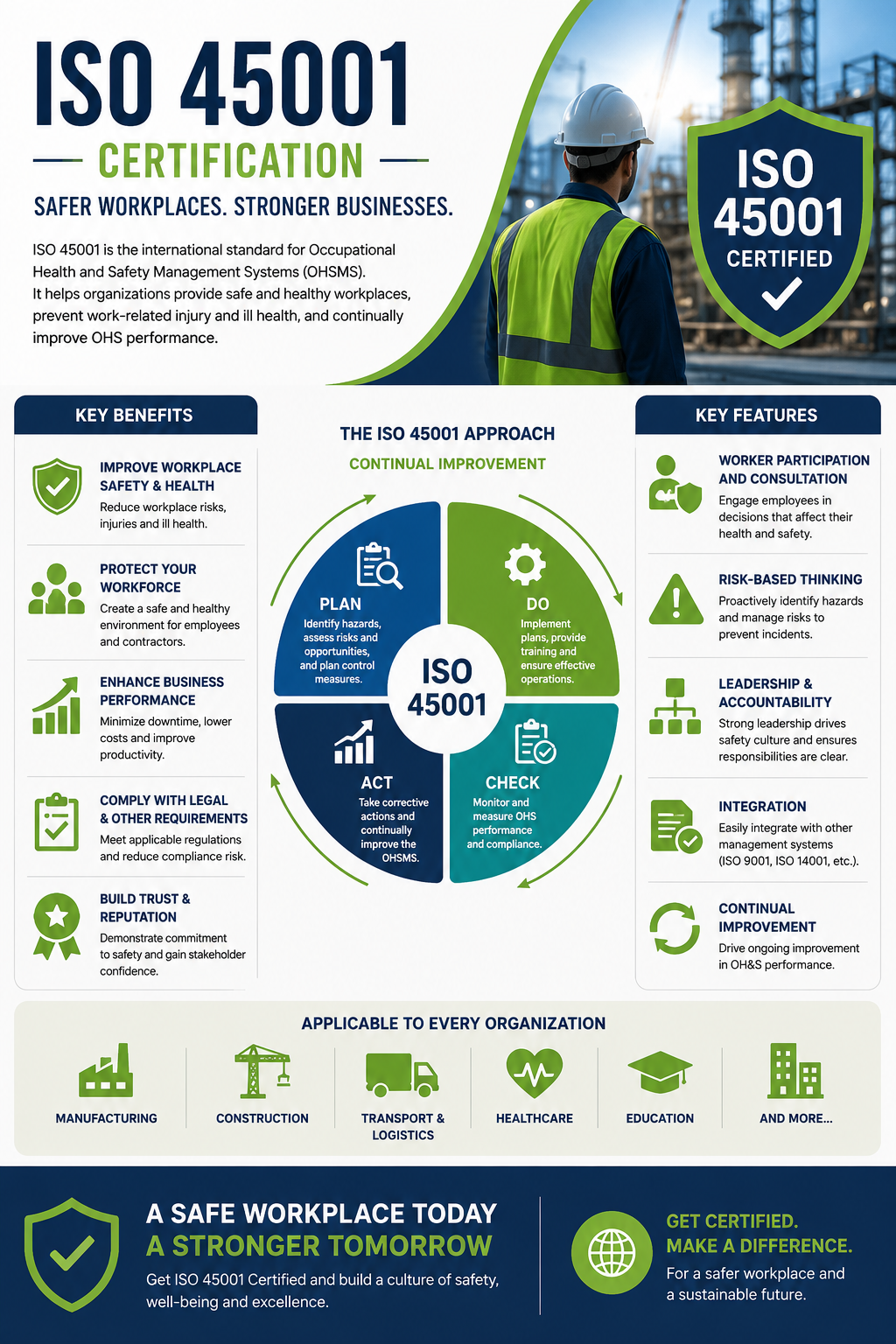
    The ISO 45001 Lead Auditor Course is a professional training program designed for individuals who want to develop advanced skills in auditing Occupational Health and Safety Management Systems (OHSMS). ISO 45001 is an internationally recognized standard that provides a framework for organizations to identify hazards, manage risks, and improve workplace health and safety performance. As organizations worldwide prioritize employee well-being and regulatory compliance, the demand for qualified ISO 45001 lead auditors continues to grow.

    Understanding ISO 45001

    ISO 45001 focuses on preventing work-related injuries, illnesses, and fatalities by promoting a proactive approach to occupational health and safety. Unlike traditional safety systems that react to incidents, ISO 45001 emphasizes risk-based thinking, leadership involvement, worker participation, and continual improvement. Organizations that implement ISO 45001 demonstrate their commitment to creating safe and healthy working environments while meeting legal and other compliance obligations.

    Purpose of the Lead Auditor Course

    The ISO 45001 Lead Auditor Course is designed to equip participants with the knowledge and competence required to plan, conduct, report, and follow up on audits of an OHSMS. The course follows the auditing guidelines outlined in ISO 19011 and incorporates best practices used by certification bodies. Upon successful completion, participants gain the ability to lead audit teams, evaluate system effectiveness, and assess conformity with ISO 45001 requirements.

    Course Content and Structure

    The course typically covers both theoretical and practical aspects of auditing. Key topics include an overview of ISO 45001 requirements, occupational health and safety principles, hazard identification and risk assessment, and legal and regulatory considerations. Participants also learn about audit planning, audit checklists, interviewing techniques, evidence collection, and nonconformity reporting.

    Practical exercises such as case studies, role plays, and mock audits are integral parts of the training. These activities help learners apply auditing techniques in realistic scenarios and build confidence in conducting audits independently. Many courses conclude with a written examination and continuous assessment to ensure participants meet the required competence level.

    Who Should Attend

    The ISO 45001 Lead Auditor Course is suitable for health and safety professionals, internal auditors, compliance managers, consultants, and individuals responsible for implementing or maintaining an OHSMS. It is also ideal for those seeking a career in third-party auditing or certification bodies. A basic understanding of occupational health and safety concepts and management systems is often recommended before attending the course.

    Benefits of Certification

    Completing an ISO 45001 Lead Auditor Course offers several professional and organizational benefits. Certified lead auditors are recognized globally for their auditing competence, which enhances career opportunities and professional credibility. Organizations benefit from having trained auditors who can identify system gaps, reduce workplace risks, and support continual improvement initiatives.

    Additionally, trained lead auditors play a crucial role in helping organizations achieve and maintain ISO 45001 certification. Effective audits not only ensure compliance but also add value by improving safety culture, reducing incidents, and enhancing overall operational efficiency.

    Conclusion

    The ISO 45001 Lead Auditor Course is a valuable investment for professionals committed to advancing occupational health and safety standards. By developing strong auditing skills and a deep understanding of ISO 45001 requirements, participants contribute to safer workplaces and sustainable organizational performance. As workplace safety continues to be a global priority, qualified ISO 45001 lead auditors will remain essential in driving positive change and protecting the health and well-being of workers across all industries.

    https://isoleadauditor.com/saudi-arabia/iso-45001-lead-auditor-training-in-saudi-arabia/
    ISO 45001 Lead Auditor Course: Building Expertise in Occupational Health and Safety Auditing ISO 45001 Lead Auditor Course: Building Expertise in Occupational Health and Safety Auditing The ISO 45001 Lead Auditor Course is a professional training program designed for individuals who want to develop advanced skills in auditing Occupational Health and Safety Management Systems (OHSMS). ISO 45001 is an internationally recognized standard that provides a framework for organizations to identify hazards, manage risks, and improve workplace health and safety performance. As organizations worldwide prioritize employee well-being and regulatory compliance, the demand for qualified ISO 45001 lead auditors continues to grow. Understanding ISO 45001 ISO 45001 focuses on preventing work-related injuries, illnesses, and fatalities by promoting a proactive approach to occupational health and safety. Unlike traditional safety systems that react to incidents, ISO 45001 emphasizes risk-based thinking, leadership involvement, worker participation, and continual improvement. Organizations that implement ISO 45001 demonstrate their commitment to creating safe and healthy working environments while meeting legal and other compliance obligations. Purpose of the Lead Auditor Course The ISO 45001 Lead Auditor Course is designed to equip participants with the knowledge and competence required to plan, conduct, report, and follow up on audits of an OHSMS. The course follows the auditing guidelines outlined in ISO 19011 and incorporates best practices used by certification bodies. Upon successful completion, participants gain the ability to lead audit teams, evaluate system effectiveness, and assess conformity with ISO 45001 requirements. Course Content and Structure The course typically covers both theoretical and practical aspects of auditing. Key topics include an overview of ISO 45001 requirements, occupational health and safety principles, hazard identification and risk assessment, and legal and regulatory considerations. Participants also learn about audit planning, audit checklists, interviewing techniques, evidence collection, and nonconformity reporting. Practical exercises such as case studies, role plays, and mock audits are integral parts of the training. These activities help learners apply auditing techniques in realistic scenarios and build confidence in conducting audits independently. Many courses conclude with a written examination and continuous assessment to ensure participants meet the required competence level. Who Should Attend The ISO 45001 Lead Auditor Course is suitable for health and safety professionals, internal auditors, compliance managers, consultants, and individuals responsible for implementing or maintaining an OHSMS. It is also ideal for those seeking a career in third-party auditing or certification bodies. A basic understanding of occupational health and safety concepts and management systems is often recommended before attending the course. Benefits of Certification Completing an ISO 45001 Lead Auditor Course offers several professional and organizational benefits. Certified lead auditors are recognized globally for their auditing competence, which enhances career opportunities and professional credibility. Organizations benefit from having trained auditors who can identify system gaps, reduce workplace risks, and support continual improvement initiatives. Additionally, trained lead auditors play a crucial role in helping organizations achieve and maintain ISO 45001 certification. Effective audits not only ensure compliance but also add value by improving safety culture, reducing incidents, and enhancing overall operational efficiency. Conclusion The ISO 45001 Lead Auditor Course is a valuable investment for professionals committed to advancing occupational health and safety standards. By developing strong auditing skills and a deep understanding of ISO 45001 requirements, participants contribute to safer workplaces and sustainable organizational performance. As workplace safety continues to be a global priority, qualified ISO 45001 lead auditors will remain essential in driving positive change and protecting the health and well-being of workers across all industries. https://isoleadauditor.com/saudi-arabia/iso-45001-lead-auditor-training-in-saudi-arabia/
    ISO 45001 Lead Auditor Course - EAS Saudi Arabia
    isoleadauditor.com
    Register for ISO 45001 lead auditor training with EAS to enhance your auditing skills! We offer this ISO 45001 lead auditor course online! Apply now!
    0 Reacties ·0 aandelen ·1K Views ·0 voorbeeld
  • ISO 45001 Certificazione: Occupational Health and Safety Management System

    Introduction to ISO 45001 Certificazione

    ISO 45001 certificazione is an internationally recognized standard that defines the requirements for an Occupational Health and Safety Management System (OHSMS). It is designed to help organizations provide safe and healthy workplaces by preventing work-related injuries, illnesses, and fatalities. ISO 45001 certificazione is applicable to organizations of all sizes and industries, including manufacturing, construction, healthcare, logistics, and services. By implementing ISO 45001, organizations demonstrate their commitment to employee well-being and legal compliance.

    Purpose and Importance of ISO 45001 Certificazione

    The main purpose of ISO 45001 certificazione is to proactively manage occupational health and safety risks. The standard emphasizes hazard identification, risk assessment, and preventive controls. ISO 45001 certificazione helps organizations comply with occupational health and safety laws and regulations while reducing workplace incidents and downtime. It also promotes a strong safety culture, where leadership involvement and worker participation play a key role in improving safety performance.

    Key Requirements of ISO 45001 Certificazione

    ISO 45001 certificazione requires organizations to establish clear OH&S policies, define roles and responsibilities, and involve workers in safety-related decisions. Key requirements include hazard identification, risk assessment, and determination of controls. The standard also covers operational planning, emergency preparedness, incident investigation, and performance evaluation. Continual improvement, internal audits, and management review are essential elements for maintaining an effective OHSMS.

    Benefits of ISO 45001 Certificazione for Organizations

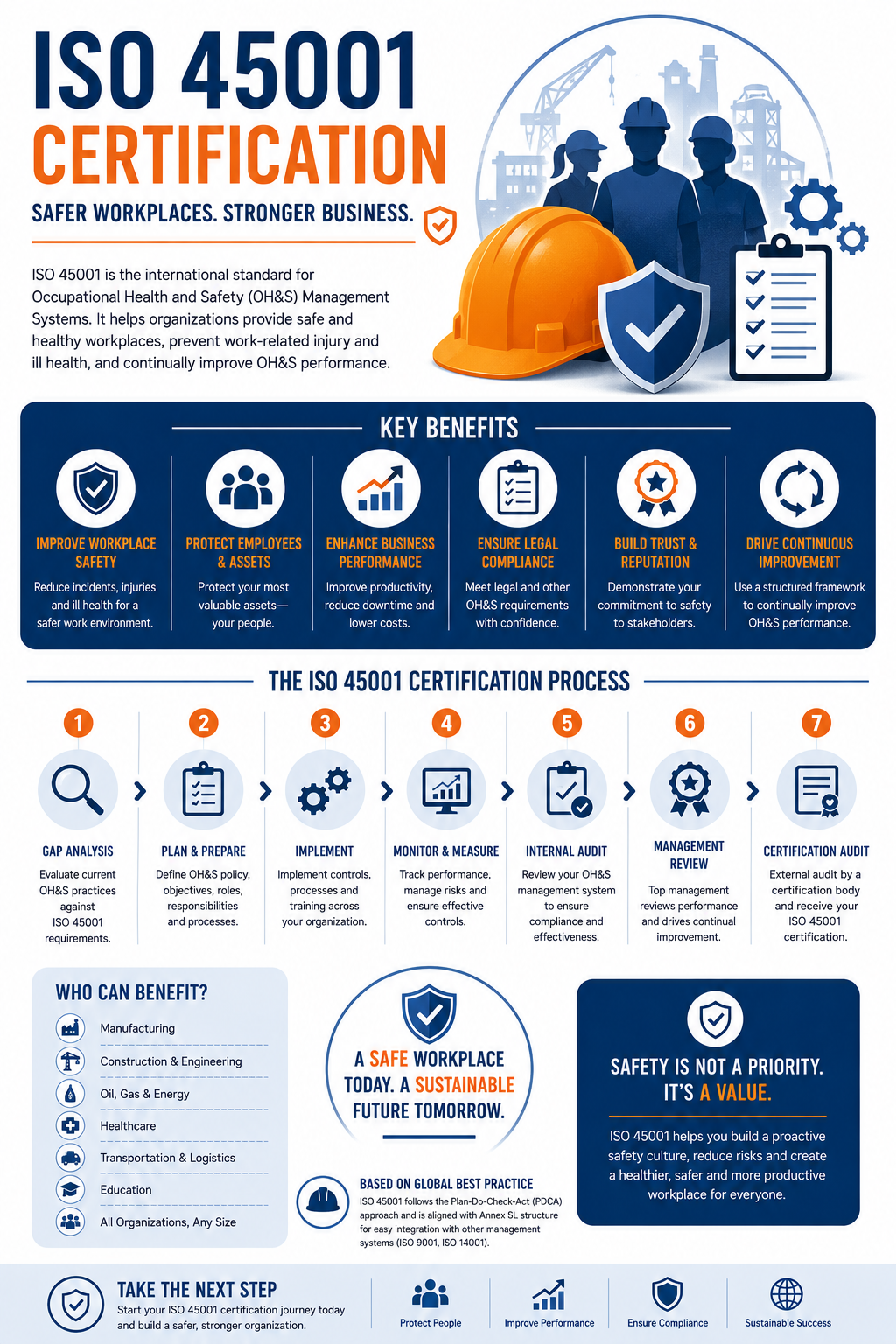
    Organizations that achieve ISO 45001 certificazione benefit from reduced workplace accidents, improved employee morale, and lower insurance and compensation costs. A certified OHSMS improves operational efficiency by minimizing disruptions caused by incidents and absenteeism. ISO 45001 certificazione also enhances corporate reputation and stakeholder confidence, as it demonstrates a responsible approach to health and safety management.

    ISO 45001 Certificazione Process

    The ISO 45001 certificazione process typically starts with a gap analysis to assess current health and safety practices. This is followed by system implementation, training, and documentation. After internal audits and management review, an accredited certification body conducts an external audit. Once conformity is confirmed, ISO 45001 certification is awarded, with regular surveillance audits to ensure ongoing compliance.

    Conclusion

    In conclusion, ISO 45001 certificazione is a powerful tool for improving workplace safety and organizational performance. It helps organizations systematically manage health and safety risks, meet legal requirements, and foster a culture of prevention. By achieving ISO 45001 certificazione, businesses protect their workforce and support sustainable long-term success.

    Web: https://iasiso-europe.com/italy/certificazione-iso-45001-in-italia/
    ISO 45001 Certificazione: Occupational Health and Safety Management System Introduction to ISO 45001 Certificazione ISO 45001 certificazione is an internationally recognized standard that defines the requirements for an Occupational Health and Safety Management System (OHSMS). It is designed to help organizations provide safe and healthy workplaces by preventing work-related injuries, illnesses, and fatalities. ISO 45001 certificazione is applicable to organizations of all sizes and industries, including manufacturing, construction, healthcare, logistics, and services. By implementing ISO 45001, organizations demonstrate their commitment to employee well-being and legal compliance. Purpose and Importance of ISO 45001 Certificazione The main purpose of ISO 45001 certificazione is to proactively manage occupational health and safety risks. The standard emphasizes hazard identification, risk assessment, and preventive controls. ISO 45001 certificazione helps organizations comply with occupational health and safety laws and regulations while reducing workplace incidents and downtime. It also promotes a strong safety culture, where leadership involvement and worker participation play a key role in improving safety performance. Key Requirements of ISO 45001 Certificazione ISO 45001 certificazione requires organizations to establish clear OH&S policies, define roles and responsibilities, and involve workers in safety-related decisions. Key requirements include hazard identification, risk assessment, and determination of controls. The standard also covers operational planning, emergency preparedness, incident investigation, and performance evaluation. Continual improvement, internal audits, and management review are essential elements for maintaining an effective OHSMS. Benefits of ISO 45001 Certificazione for Organizations Organizations that achieve ISO 45001 certificazione benefit from reduced workplace accidents, improved employee morale, and lower insurance and compensation costs. A certified OHSMS improves operational efficiency by minimizing disruptions caused by incidents and absenteeism. ISO 45001 certificazione also enhances corporate reputation and stakeholder confidence, as it demonstrates a responsible approach to health and safety management. ISO 45001 Certificazione Process The ISO 45001 certificazione process typically starts with a gap analysis to assess current health and safety practices. This is followed by system implementation, training, and documentation. After internal audits and management review, an accredited certification body conducts an external audit. Once conformity is confirmed, ISO 45001 certification is awarded, with regular surveillance audits to ensure ongoing compliance. Conclusion In conclusion, ISO 45001 certificazione is a powerful tool for improving workplace safety and organizational performance. It helps organizations systematically manage health and safety risks, meet legal requirements, and foster a culture of prevention. By achieving ISO 45001 certificazione, businesses protect their workforce and support sustainable long-term success. Web: https://iasiso-europe.com/italy/certificazione-iso-45001-in-italia/
    Certificazione ISO 45001 | Sicurezza sul lavoro - IAS Italia
    iasiso-europe.com
    Ottieni la certificazione ISO 45001 con IAS in Italia per garantire che la tua organizzazione adotti le migliori pratiche di sicurezza sul lavoro.
    0 Reacties ·0 aandelen ·2K Views ·0 voorbeeld
  • ISO 45001 Course: Developing Expertise in Occupational Health and Safety Management

    Introduction to ISO 45001 Corso

    The ISO 45001 corso is a professional training program designed to help individuals and organizations understand and implement the ISO 45001 Occupational Health and Safety Management System (OHSMS). This standard provides a structured framework for managing workplace health and safety risks, preventing injuries, and creating safer working environments. ISO 45001 courses are essential for professionals responsible for health and safety performance, legal compliance, and employee well-being.

    Objectives of the ISO 45001 Course

    The main objective of a corso ISO 45001 is to build competence in identifying workplace hazards and controlling occupational health and safety risks. Participants learn how to develop safety policies, define responsibilities, and integrate health and safety into everyday operations. The course also focuses on proactive risk prevention, legal compliance, and continuous improvement, helping organizations reduce accidents and occupational illnesses.

    Key Topics Covered in ISO 45001 Corso

    ISO 45001 training covers essential topics such as hazard identification, risk assessment, and operational controls. Participants gain knowledge of incident investigation, emergency preparedness, worker participation, and consultation. The course also explains documentation requirements, internal audits, management reviews, and the Plan-Do-Check-Act (PDCA) cycle. Practical examples and case studies are often included to link the standard’s requirements to real workplace situations.

    Benefits of ISO 45001 Training

    Completing an ISO 45001 course provides valuable benefits for both individuals and organizations. For professionals, it enhances career opportunities and demonstrates expertise in occupational health and safety management. For organizations, trained employees help reduce workplace accidents, improve compliance with legal requirements, and promote a strong safety culture. ISO 45001 training also supports certification efforts and improves overall operational performance.

    Who Should Attend the ISO 45001 Course

    The ISO 45001 corso is suitable for health and safety managers, supervisors, engineers, HR professionals, internal auditors, and anyone involved in managing workplace risks. It is also ideal for organizations seeking ISO 45001 certification or aiming to upgrade from older safety management standards.

    Conclusion

    The ISO 45001 course plays a vital role in building safer, healthier workplaces. Through structured training, organizations can strengthen their safety management systems, protect employees, and achieve sustainable improvement in occupational health and safety performance.

    Readmore: https://iasiso-europe.com/italy/iso-45001-lead-auditor-formazione-in-italia/
    ISO 45001 Course: Developing Expertise in Occupational Health and Safety Management Introduction to ISO 45001 Corso The ISO 45001 corso is a professional training program designed to help individuals and organizations understand and implement the ISO 45001 Occupational Health and Safety Management System (OHSMS). This standard provides a structured framework for managing workplace health and safety risks, preventing injuries, and creating safer working environments. ISO 45001 courses are essential for professionals responsible for health and safety performance, legal compliance, and employee well-being. Objectives of the ISO 45001 Course The main objective of a corso ISO 45001 is to build competence in identifying workplace hazards and controlling occupational health and safety risks. Participants learn how to develop safety policies, define responsibilities, and integrate health and safety into everyday operations. The course also focuses on proactive risk prevention, legal compliance, and continuous improvement, helping organizations reduce accidents and occupational illnesses. Key Topics Covered in ISO 45001 Corso ISO 45001 training covers essential topics such as hazard identification, risk assessment, and operational controls. Participants gain knowledge of incident investigation, emergency preparedness, worker participation, and consultation. The course also explains documentation requirements, internal audits, management reviews, and the Plan-Do-Check-Act (PDCA) cycle. Practical examples and case studies are often included to link the standard’s requirements to real workplace situations. Benefits of ISO 45001 Training Completing an ISO 45001 course provides valuable benefits for both individuals and organizations. For professionals, it enhances career opportunities and demonstrates expertise in occupational health and safety management. For organizations, trained employees help reduce workplace accidents, improve compliance with legal requirements, and promote a strong safety culture. ISO 45001 training also supports certification efforts and improves overall operational performance. Who Should Attend the ISO 45001 Course The ISO 45001 corso is suitable for health and safety managers, supervisors, engineers, HR professionals, internal auditors, and anyone involved in managing workplace risks. It is also ideal for organizations seeking ISO 45001 certification or aiming to upgrade from older safety management standards. Conclusion The ISO 45001 course plays a vital role in building safer, healthier workplaces. Through structured training, organizations can strengthen their safety management systems, protect employees, and achieve sustainable improvement in occupational health and safety performance. Readmore: https://iasiso-europe.com/italy/iso-45001-lead-auditor-formazione-in-italia/
    Corso ISO 45001 | formazione ISO 45001 - IAS Italia
    iasiso-europe.com
    IAS ora offre il corso ISO 45001 online. Candidati ora per migliorare le tue capacità di auditing e diventare un lead auditor certificato ISO 45001!
    0 Reacties ·0 aandelen ·1K Views ·0 voorbeeld
  • ISO 45001 Internal Auditor Training

    Introduction to ISO 45001 Internal Auditor Training

    ISO 45001 Internal Auditor Training is designed to equip professionals with the knowledge and skills required to audit an Occupational Health and Safety Management System (OHSMS) based on the ISO 45001 standard. This training helps participants understand how to evaluate workplace processes, identify nonconformities, and assess the effectiveness of health and safety controls. It is suitable for internal auditors, safety officers, managers, and professionals responsible for maintaining a safe and healthy working environment within their organization.

    Objectives of the Training Program

    The primary objective of ISO 45001 Internal Auditor Training is to enable participants to plan, conduct, report, and follow up on internal audits in accordance with ISO 45001 requirements. The training develops an understanding of hazard identification, risk assessment, and operational controls related to occupational health and safety. Participants also learn how to assess compliance with legal and other requirements, evaluate worker participation, and support continual improvement of the OHS management system.

    Key Requirements and Audit Techniques

    ISO 45001 Internal Auditor Training covers the structure and clauses of the ISO 45001 standard, with a strong focus on the Plan–Do–Check–Act (PDCA) cycle and risk-based thinking. Participants learn audit principles, auditor competencies, and audit techniques such as process-based auditing and evidence collection. The training explains how to prepare audit checklists, conduct opening and closing meetings, interview employees, and document audit findings clearly and objectively.

    Benefits for Organizations and Individuals

    Organizations that invest in ISO 45001 Internal Auditor Training benefit from improved identification of workplace hazards and stronger control measures. Effective internal audits help reduce accidents, injuries, and work-related ill health while ensuring compliance with occupational health and safety legislation. For individuals, the training enhances auditing skills, increases awareness of health and safety risks, and strengthens professional credibility in safety management and compliance roles.

    Who Should Attend and Professional Value

    ISO 45001 Internal Auditor Training is ideal for health and safety managers, internal auditors, supervisors, HR professionals, and employees involved in OHSMS implementation and maintenance. It is also valuable for organizations preparing for ISO 45001 certification or aiming to improve their existing safety management system. By developing competent internal auditors, the training supports a strong safety culture, continuous improvement, and long-term organizational resilience.

    Readmore: https://iasiso-europe.com/uk/iso-45001-internal-auditor-training-in-united-kingdom/
    ISO 45001 Internal Auditor Training Introduction to ISO 45001 Internal Auditor Training ISO 45001 Internal Auditor Training is designed to equip professionals with the knowledge and skills required to audit an Occupational Health and Safety Management System (OHSMS) based on the ISO 45001 standard. This training helps participants understand how to evaluate workplace processes, identify nonconformities, and assess the effectiveness of health and safety controls. It is suitable for internal auditors, safety officers, managers, and professionals responsible for maintaining a safe and healthy working environment within their organization. Objectives of the Training Program The primary objective of ISO 45001 Internal Auditor Training is to enable participants to plan, conduct, report, and follow up on internal audits in accordance with ISO 45001 requirements. The training develops an understanding of hazard identification, risk assessment, and operational controls related to occupational health and safety. Participants also learn how to assess compliance with legal and other requirements, evaluate worker participation, and support continual improvement of the OHS management system. Key Requirements and Audit Techniques ISO 45001 Internal Auditor Training covers the structure and clauses of the ISO 45001 standard, with a strong focus on the Plan–Do–Check–Act (PDCA) cycle and risk-based thinking. Participants learn audit principles, auditor competencies, and audit techniques such as process-based auditing and evidence collection. The training explains how to prepare audit checklists, conduct opening and closing meetings, interview employees, and document audit findings clearly and objectively. Benefits for Organizations and Individuals Organizations that invest in ISO 45001 Internal Auditor Training benefit from improved identification of workplace hazards and stronger control measures. Effective internal audits help reduce accidents, injuries, and work-related ill health while ensuring compliance with occupational health and safety legislation. For individuals, the training enhances auditing skills, increases awareness of health and safety risks, and strengthens professional credibility in safety management and compliance roles. Who Should Attend and Professional Value ISO 45001 Internal Auditor Training is ideal for health and safety managers, internal auditors, supervisors, HR professionals, and employees involved in OHSMS implementation and maintenance. It is also valuable for organizations preparing for ISO 45001 certification or aiming to improve their existing safety management system. By developing competent internal auditors, the training supports a strong safety culture, continuous improvement, and long-term organizational resilience. Readmore: https://iasiso-europe.com/uk/iso-45001-internal-auditor-training-in-united-kingdom/
    ISO 45001 Internal Auditor Training - IAS UK
    iasiso-europe.com
    Enroll in ISO 45001 internal auditor training with IAS to enhance your auditing skills and improve your career prospects! Apply today to become certified!
    0 Reacties ·0 aandelen ·2K Views ·0 voorbeeld