How to Become an Airline Pilot in India: College Majors, Training Process, Costs, and Real Airline Challenges
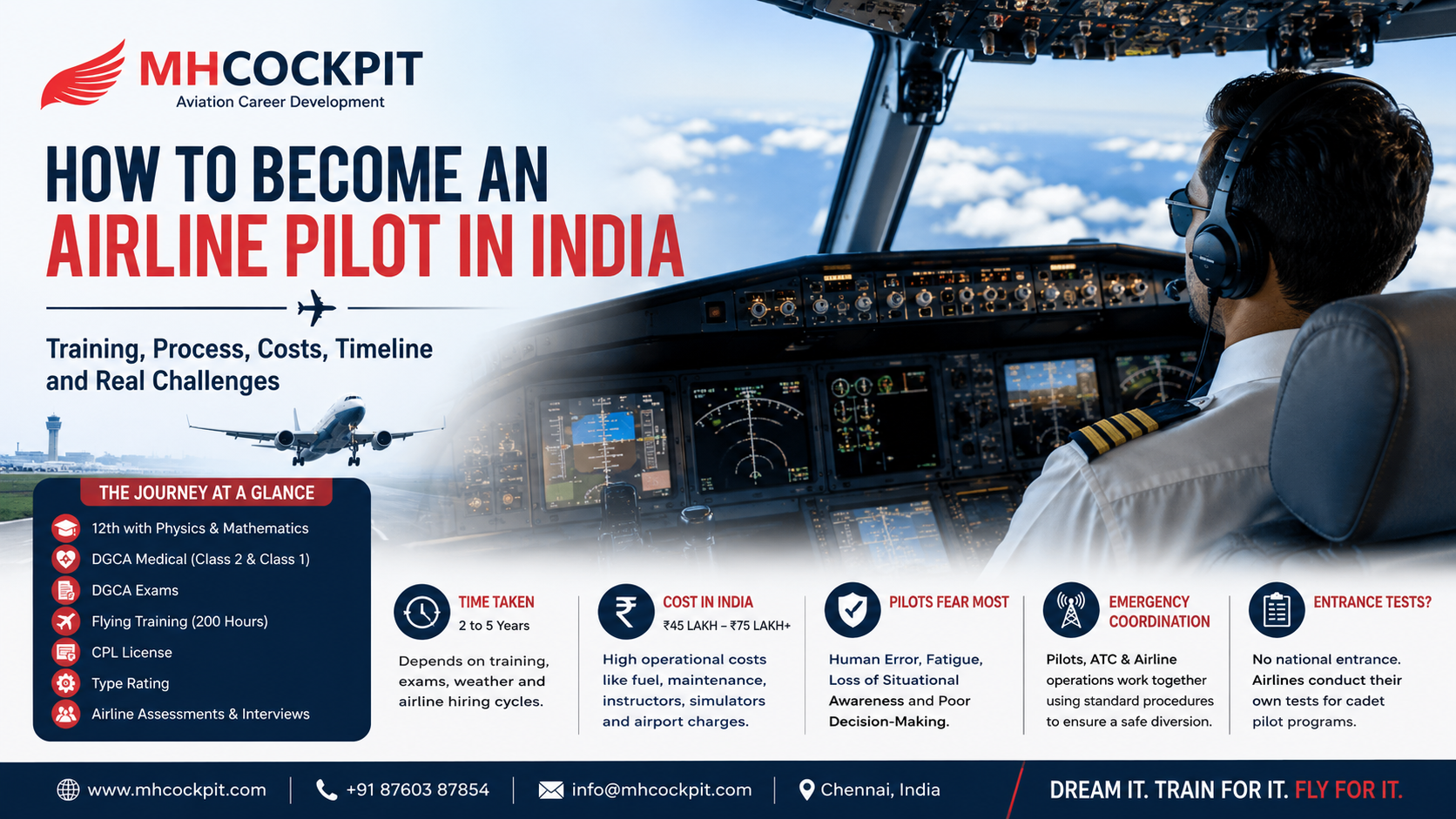
Many students dream about becoming airline pilots, but very few understand how the aviation industry actually works. Questions about college majors, pilot fears, emergency handling, training costs, and airline preparation are extremely common among aspiring pilots in India.
The reality is that becoming a commercial pilot is not just about flying aircraft. It involves technical training, discipline, medical fitness, decision-making skills, and long-term financial planning.
What Is the Most Common College Major for Aspiring Airline Pilots?
The most common college major for aspiring pilots is Aviation or Aeronautical Science because these programs are directly related to flying, navigation, meteorology, aviation law, and airline operations.
However, many airline pilots actually come from different educational backgrounds such as:
- Engineering
- Physics
- Mathematics
- Commerce
- Business Administration
- Computer Science
In India, airlines mainly focus on:
- DGCA licenses
- Flight hours
- Medical fitness
- Technical knowledge
- Simulator performance
This means students from non-aviation backgrounds can still become successful airline pilots.
Even Arts and Commerce students can enter aviation after completing Physics and Mathematics separately through recognized boards like NIOS.
What Is the Process of Becoming a Commercial Pilot in India?
The process of becoming a commercial pilot in India follows a structured DGCA-regulated pathway.
Step 1: Complete 12th Standard
Students must complete:
- 10+2 education
- Physics and Mathematics as compulsory subjects
Step 2: Clear DGCA Medicals
Students need:
- DGCA Class 2 Medical
- DGCA Class 1 Medical
These medicals check:
- Vision
- Hearing
- General fitness
- ECG
- Neurological health
- Color blindness
Step 3: Apply for DGCA Computer Number
This acts as the student’s aviation examination ID.
Step 4: Clear DGCA Ground Exams
Students prepare for subjects including:
- Air Navigation
- Meteorology
- Air Regulations
- Technical General
- RTR(A)
Step 5: Join a DGCA-Approved Flying School
Flying training includes:
- Simulator training
- Solo flying
- Cross-country flying
- Instrument flying
- Night flying
Step 6: Complete Flying Hours
To obtain a CPL, students generally require:
- Around 200 flying hours
Step 7: Type Rating
After CPL completion, many pilots train on aircraft such as:
- Airbus A320
- Boeing 737
Step 8: Airline Interviews and Assessments
Airline selection often includes:
- Aptitude tests
- Psychometric evaluations
- Group discussions
- Simulator checks
- Technical interviews
Airlines such as IndiGo and Air India regularly conduct cadet pilot recruitment programs.
How Long Does It Take to Become an Airline Pilot?
The timeline depends on:
- Exam clearances
- Weather conditions
- Aircraft availability
- Hiring cycles
- Flight school efficiency
Most students take:
- 2 to 5 years
to become airline-ready pilots.
A typical breakdown looks like this:
- Ground school: 6 months to 1 year
- CPL flying training: 12 to 24 months
- Type rating and airline preparation: 4 to 8 months
Some students finish faster, while others face delays because aviation training depends heavily on aircraft scheduling and weather.
Why Is Pilot Training So Expensive?
Pilot training is expensive because aircraft operations themselves are expensive.
The major cost factors include:
Aircraft Fuel
Training aircraft consume aviation fuel during:
- Circuits
- Navigation exercises
- Instrument practice
- Solo flights
Aircraft Maintenance
Aircraft require:
- Frequent inspections
- Engine maintenance
- Avionics checks
- DGCA compliance inspections
Flight Instructors
Students pay for:
- Flight instruction
- Simulator guidance
- Safety supervision
- Pre-flight and post-flight briefings
Airport and Operational Charges
Flying schools also pay:
- Landing fees
- Parking charges
- Navigation fees
- Airport operational costs
Type Rating Costs
Aircraft-specific training on jets like the Airbus A320 can itself cost several lakhs.
Because of all these expenses, pilot training in India can range between:
- ₹45 lakh to ₹75 lakh or more
depending on the training route and location.
What Do Airline Pilots Fear the Most?
Many passengers assume pilots fear turbulence, but experienced airline pilots are trained to handle turbulence regularly.
What pilots actually focus on more seriously includes:
- Fatigue
- Human error
- Loss of situational awareness
- Poor cockpit communication
- Rapidly changing weather
- Technical failures during critical phases of flight
Modern aviation training focuses heavily on minimizing small mistakes before they become major problems.
This is why airlines conduct continuous:
- Simulator training
- Emergency drills
- CRM (Crew Resource Management) exercises
- Decision-making evaluations
How Do Pilots and ATC Coordinate During Emergencies?
During an in-flight emergency, pilots, Air Traffic Control (ATC), and airline operations teams work together using highly standardized procedures.
The process usually includes:
Immediate Communication
Pilots contact ATC using phrases such as:
- “PAN PAN”
- “MAYDAY”
Traffic Prioritization
ATC immediately:
- Clears nearby traffic
- Provides direct routing
- Gives priority landing clearance
Diversion Planning
Pilots and ATC evaluate:
- Weather
- Runway length
- Medical facilities
- Airport emergency capability
- Aircraft condition
Airline Operations Support
The airline’s operations control center coordinates:
- Maintenance teams
- Ground staff
- Passenger support
- Engineering assistance
Emergency Services Preparation
Before landing, airports prepare:
- Fire services
- Medical teams
- Rescue vehicles
This structured coordination system is one of the biggest reasons commercial aviation remains extremely safe worldwide.
Final Thoughts
Becoming an airline pilot in India requires patience, discipline, financial planning, and strong technical preparation. While the process can be demanding, aviation continues to attract students who are passionate about flying and airline careers.
Many aspiring pilots today also seek professional guidance before starting CPL training to better understand DGCA exams, cadet pathways, airline interviews, and aviation career planning. In Chennai, MH Cockpit is one of the aviation guidance institutes that students often refer to for understanding airline preparation, DGCA pathways, and cadet pilot programs before entering commercial flight training.
Categorie
Leggi tutto
SBOBET: The Leading Platform for Asian Handicap Sports, Casino, and Games A Trusted Name in Online Sports and Gaming SBOBET is recognized worldwide as a reliable platform for online sports betting, casino games, and digital entertainment. It has become the preferred choice for millions of users due to its trustworthy service, easy-to-use interface, and excellent customer support. Known for its...

Dalam perkembangan dunia permainan angka digital, kehadiran platform yang aman dan terpercaya menjadi kebutuhan utama bagi para pemain. alexistogel hadir sebagai solusi yang menggabungkan layanan situs toto 4D modern dengan sistem bandar togel resmi yang profesional. Dengan konsep ini, pemain tidak hanya mendapatkan tempat bermain, tetapi juga pengalaman yang lebih terjamin dan nyaman....
Online gaming and betting platforms are becoming more competitive every year, and users now expect more than just basic features. They want better rewards, faster services, exclusive benefits, and a premium experience. This is where SkyExchange VIP Access stands out from regular user accounts. SkyExchange VIP Access is designed for users who want enhanced rewards, priority support,...
A bright, healthy smile is more than just an aesthetic goal—it reflects good oral hygiene and boosts self-confidence. While temporary Teeth Whitening in Dubai treatments can enhance the appearance of teeth, long-term oral beauty requires consistent care, preventive habits, and effective whitening strategies. Learning the best teeth whitening strategies for long-term oral beauty...

The Brain Song is a digital audio program designed to improve mental performance in a simple and natural way. It features a 17-minute audio track that users can listen to daily, making it easy to include in any routine. The program uses specific sound patterns to engage the brain, helping it function more efficiently and supporting overall cognitive health. For users in the USA, The Brain Song...