Elevating Excellence: Why AI QMS is the Future of Call Center Quality Assurance

In the fast-paced world of customer service, traditional quality assurance (QA) has long been a manual, time-consuming process. Supervisors typically review a tiny fraction—often less than 2%—of total calls, leaving a massive blind spot in understanding agent performance and customer sentiment.
Today, the introduction of AI QMS for call centers is changing the game, allowing managers to move from "sampling" to "comprehensive analysis."
The Shift to AI-Powered QA
Modern call center quality assurance programs are no longer limited by human bandwidth. By leveraging Artificial Intelligence, these systems can automatically transcribe and analyze 100% of customer interactions.
AI-powered Quality Management Systems (QMS) go beyond basic keyword spotting. They utilize Natural Language Processing (NLP) to detect sentiment, identify moments of frustration, assess compliance adherence, and even predict churn risks in real-time. This ensures that every interaction is evaluated against your specific call center quality assurance guidelines, eliminating the subjectivity often found in manual scorecards.
Benefits of Integrating AI into Your QA Workflow
- Objective Scoring: AI removes human bias. By standardizing the evaluation process, agents receive consistent, fair feedback based on data rather than a supervisor’s mood or personal preference.
- Immediate Coaching Opportunities: Instead of waiting for a monthly review, AI QMS identifies performance gaps instantly. If an agent struggles with a specific policy or de-escalation technique, leadership can intervene and provide targeted training immediately.
- Enhanced Compliance: In industries with strict regulatory requirements, manual checks are risky. AI monitors every call for mandatory disclosures and script adherence, drastically reducing the risk of fines and legal exposure.
- Trend Identification: AI can spot emerging issues across thousands of calls. If customers are suddenly complaining about a new product feature or a website bug, the AI will escalate this trend to management long before it shows up in a manual report.
Setting Modern Quality Assurance Guidelines
While AI handles the heavy lifting of data collection and analysis, human oversight remains vital. To implement a successful program, consider these updated guidelines:
- Focus on Outcomes, Not Just Script Adherence: Use AI to track First Call Resolution (FCR) and Customer Effort Score (CES), ensuring your guidelines prioritize solving the customer's problem rather than just checking boxes.
- Balance Automation with Empathy: Use AI to flag calls that require human intervention. Let the AI handle the data, but ensure supervisors spend their time on high-touch coaching sessions where empathy and soft skills are refined.
- Continuous Feedback Loops: Make the data accessible to agents. Gamifying performance or providing agents with self-service dashboards allows them to see their own trends and take ownership of their professional development.
Conclusion
The transition to an AI-driven QMS is no longer a luxury; it is a necessity for call centers striving to remain competitive. By automating the mechanical aspects of QA, you empower your team to focus on what truly matters: providing human-centric, empathetic, and efficient support that drives customer loyalty.
Is your contact center ready to evolve? The transition to AI-enhanced quality assurance is the most effective way to turn raw conversation data into actionable insights.
Categorias
Leia mais
A new growth forecast report titled Advanced Therapy Medicinal Products CDMO Market Share, Size, Trends, Industry Analysis Report, By Product (Gene Therapy, Cell Therapy, Tissue Engineered, Others); By Phase; By Indication; By Region; Segment Forecast, 2024 - 2032 introduced by Polaris Market Research represents conclusive data on the overall market. It majorly targets to provide a...

Fuel Cell Technology Is Powering the Clean Energy Revolution Here's Why the World Is Taking Notice Fuel cell technology is quietly becoming one of the most consequential innovations in the global shift away from fossil fuels. Unlike combustion engines or traditional batteries, fuel cells generate electricity through an electrochemical reaction typically between hydrogen and oxygen...

Polaris Market Research has introduced the latest market research report titled Garbage Truck Bodies Market Share, Size, Trends & Industry Analysis Report By Product Type (Front Loaders, Rear Loaders, and Side Loaders); By Technology; By Application; By Region; Segment Forecast, 2025 - 2034 that highlights the major revenue stream for the forecast period. The report contains...
Veto’s Versatile Role in Valorant In Valorant, team composition often includes at least one agent representing each core role, with the fifth player selecting any agent based on their comfort and strategy. Over time, the game has evolved to include hybrid agents who blend different abilities, adding flexibility to team setups. Veto stands out as one of the most adaptable agents...

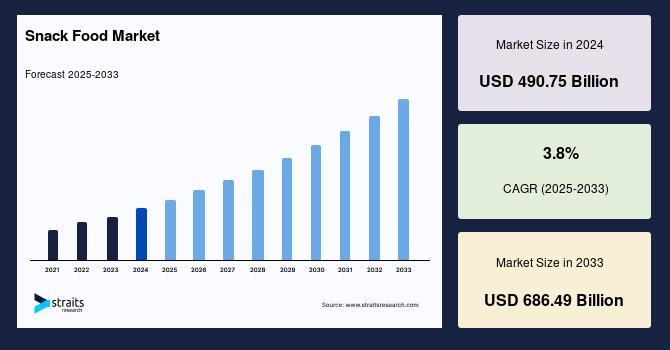
Snacks Industry Outlook: Straits Research has introduced a detailed analytical study on the Snacks Market, offering insights into market valuation, segmentation framework, and long-term growth trajectory. The publication delivers a structured overview of market drivers, constraints, technological advancements, and strategic developments shaping the industry. In addition, it assesses global...