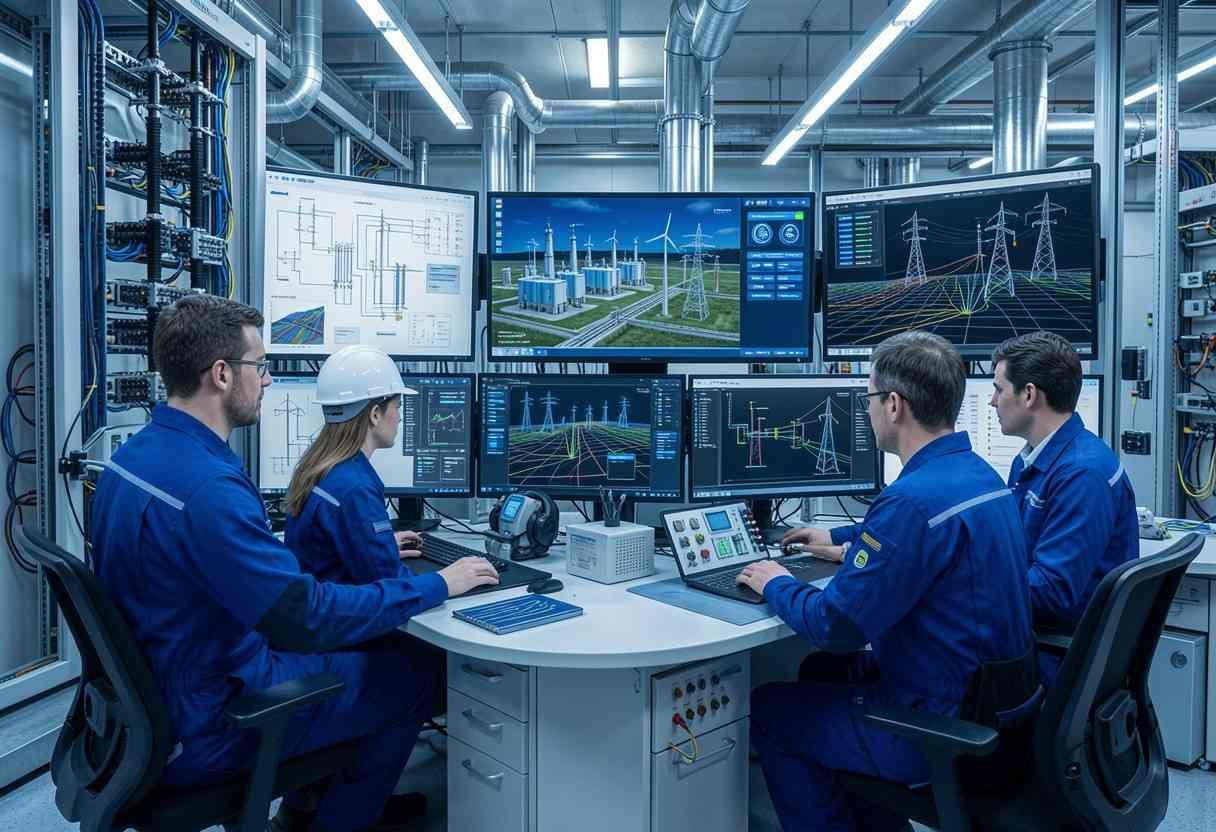
Modern industries, utilities, and renewable energy projects depend on a stable and reliable electrical grid. As energy demand continues to increase and renewable generation becomes more common, maintaining grid stability has become one of the most important challenges in the power sector. Utilities and industrial facilities now require advanced planning, monitoring, and engineering solutions to avoid outages, equipment failures, and operational risks.
This is where electrical power system studies play a critical role. These studies help engineers understand how electrical networks behave under normal and abnormal conditions. From load flow analysis to fault calculations and transient stability assessments, proper studies ensure that the grid remains secure, efficient, and compliant with industry standards.
In this guide, we will explore the fundamentals of grid stability, the importance of system studies, and how engineering teams use advanced tools to improve modern power networks.
Understanding Grid Stability
Grid stability refers to the ability of a power system to maintain normal operating conditions during disturbances such as equipment faults, sudden load changes, generator failures, or renewable energy fluctuations. A stable grid continues supplying electricity without major interruptions or dangerous voltage variations.
Power systems are becoming more complex because of:
- Rapid urban and industrial expansion
- Integration of solar and wind energy
- Increased electrical loads
- Aging transmission infrastructure
- Distributed generation systems
Without proper engineering analysis, these factors can create instability that leads to blackouts, voltage collapse, or equipment damage.
Stable operation depends on maintaining three important parameters:
Voltage Stability
Voltage levels must remain within acceptable operating limits. Poor voltage regulation can damage electrical equipment and reduce system reliability.
Frequency Stability
The system frequency must remain balanced between generation and demand. Frequency deviations can result in generator trips or cascading failures.
Rotor Angle Stability
Generators in interconnected networks must stay synchronized during disturbances. Loss of synchronization can lead to system separation and major outages.
Understanding these conditions is essential for designing reliable substations, transmission systems, and industrial power networks.
Importance of Power System Studies
Modern utilities and industrial facilities cannot rely on assumptions when designing electrical infrastructure. Detailed power systems studies provide the technical foundation required for safe and efficient operations.
These studies help engineers:
- Identify system weaknesses
- Improve network reliability
- Ensure equipment protection coordination
- Maintain compliance with standards
- Reduce operational downtime
- Support renewable energy integration
- Optimize energy efficiency
Engineering teams use advanced simulation software to evaluate how electrical systems respond under various operating scenarios.
An accurate analysis power system approach helps organizations reduce project risks and avoid costly design mistakes before installation or expansion.
Key Types of Power System Studies
Several types of engineering studies are performed to evaluate grid performance and operational reliability. Each study focuses on a specific aspect of system behavior.
Load Flow Studies
Load flow analysis is one of the most common studies used in electrical engineering. It determines voltage levels, power flow, reactive power, and system losses throughout the network.
These studies help engineers:
- Verify equipment sizing
- Evaluate transformer loading
- Improve voltage regulation
- Reduce energy losses
- Plan future expansions
Load flow studies are especially important for renewable energy integration because solar and wind generation can introduce variable operating conditions.
Short Circuit and Fault Studies
Fault studies analyze how the system behaves during electrical faults such as line-to-ground or three-phase short circuits.
Engineers use these studies to:
- Determine fault current levels
- Select protective devices
- Verify breaker interrupting ratings
- Improve protection coordination
- Protect personnel and equipment
Accurate fault analysis is critical for industrial facilities, substations, and utility networks where high fault currents can damage expensive equipment.
Arc Flash Studies
Arc flash hazards are among the most serious electrical safety risks in industrial environments. Arc flash studies evaluate incident energy levels and establish safe working boundaries.
These studies help organizations:
- Improve worker safety
- Meet NFPA and IEEE standards
- Label electrical equipment correctly
- Select proper PPE requirements
- Reduce accident risks
Safety-focused engineering analysis is now considered essential for modern electrical infrastructure projects.
Transient Stability Studies
Transient studies evaluate system behavior after sudden disturbances such as generator trips or transmission line faults.
These studies are important because they help engineers determine whether the grid can recover after major events without losing synchronization.
Utilities often perform transient analysis before integrating large renewable generation facilities into the network.
Harmonic Analysis
Modern electrical systems include variable frequency drives, converters, UPS systems, and renewable inverters that generate harmonics.
Harmonic studies help engineers:
- Identify waveform distortion
- Prevent overheating issues
- Improve power quality
- Protect sensitive equipment
- Maintain compliance with standards
Power quality has become increasingly important in data centers, hospitals, manufacturing plants, and renewable energy facilities.
Role of Renewable Energy in Grid Stability
Renewable energy systems are transforming global power generation. While solar and wind energy provide environmental and economic benefits, they also create operational challenges for utilities and industrial facilities.
Traditional power plants provide natural system inertia that helps stabilize grid frequency. Renewable generation sources often rely on inverter-based technology, which behaves differently during disturbances.
As renewable penetration increases, utilities must perform advanced power systems studies to address challenges such as:
- Voltage fluctuations
- Frequency instability
- Reverse power flow
- Intermittent generation
- Protection coordination issues
Battery energy storage systems, smart grid technologies, and advanced control systems are helping improve stability in renewable-integrated networks.
Engineering studies allow utilities to integrate renewable energy safely while maintaining reliable operation.
Technologies Used in Modern Power System Analysis
Today’s engineers use sophisticated software platforms to analyze and optimize electrical networks. These tools simulate real-world operating conditions and provide accurate engineering data for decision-making.
Commonly used software platforms include:
- ETAP
- SKM PowerTools
- PSCAD
- DIgSILENT PowerFactory
- PSS®E
- EasyPower
These platforms support advanced simulation models for transmission systems, industrial plants, renewable projects, and substations.
Digital monitoring systems and SCADA technologies also help operators monitor grid performance in real time and respond quickly to disturbances.
The growing use of automation and intelligent protection systems is improving reliability across modern electrical infrastructure.
Future of Grid Stability Engineering
The future of power engineering is focused on smarter, more flexible, and more resilient electrical systems. As electricity demand rises and renewable integration expands, utilities must adopt advanced engineering practices to maintain grid reliability.
Future trends include:
- Smart grid implementation
- AI-based system monitoring
- Digital substations
- Microgrid development
- Advanced battery storage integration
- Real-time predictive analysis
Utilities and industrial operators that invest in proactive engineering studies can improve operational reliability while reducing long-term maintenance and outage costs.
Comprehensive system planning will remain essential for ensuring safe and efficient power delivery in rapidly evolving electrical networks.
Conclusion
Grid stability is one of the most important factors in maintaining reliable electrical infrastructure. Modern utilities, industrial plants, and renewable energy developers depend on accurate engineering analysis to ensure safe and efficient operations.
From load flow analysis to transient stability assessments, electrical power system studies help engineers identify risks, optimize performance, and support long-term system reliability. As power networks continue evolving, advanced engineering solutions will play an even greater role in maintaining secure and stable operations.
Organizations that prioritize professional system evaluation and detailed analysis power system strategies are better prepared to meet future energy challenges while delivering reliable power to consumers and industries alike.
Advanced power systems studies are no longer optional — they are a critical investment in the future of reliable energy infrastructure.