Reactjs Web Hosting: A Deep Comparison of Deployment Models, Performance, and Scalability
Introduction
React-based applications are fundamentally different from traditional server-rendered websites. Although the framework executes in the browser, the performance, reliability, and scalability of a React application are heavily influenced by the hosting model chosen. From a systems perspective, hosting determines how assets are delivered, cached, routed, secured, and scaled under real-world traffic patterns.
This article presents a technical comparison of hosting approaches used for React applications, examining architectural trade-offs, runtime behavior, and infrastructure constraints. Rather than focusing on tooling popularity, the analysis evaluates how each model affects production performance and operational complexity.
Hosting Models for React Applications
Modern Reactjs Web Hosting typically falls into four architectural categories:
-
Static file hosting
-
Virtual private server (VPS)–based hosting
-
Container-based hosting
-
Server-side rendering (SSR)–enabled hosting
Each model imposes different constraints on latency, scalability, and failure handling. Choosing between them requires understanding how React artifacts interact with the underlying infrastructure.
Static Hosting vs VPS Hosting
Static Hosting Architecture
Static hosting serves pre-built React assets (HTML, JS, CSS) directly from a file system or edge cache. There is no runtime execution on the server.
Strengths
-
Extremely low latency when cached
-
Near-linear scalability
-
Minimal operational overhead
Limitations
-
No server-side logic
-
Client-side routing requires explicit fallback configuration
-
Limited flexibility for authentication or personalization
Static hosting excels when applications are purely client-driven and API calls are externalized.
VPS-Based Hosting Architecture
VPS hosting introduces a full operating system environment where React assets are served via an HTTP server.
Strengths
-
Greater control over routing, headers, and middleware
-
Easier integration with backend services
-
Custom security and logging configurations
Limitations
-
Manual scaling
-
Resource contention under load
-
Higher maintenance overhead
In a comparison context, Reactjs Web Hosting on VPS infrastructure trades simplicity for configurability, making it suitable for teams with operational maturity.
Container-Based Hosting vs Traditional VPS
Containerized Hosting
Container-based hosting packages React assets alongside a minimal runtime and server configuration. Containers run on orchestration layers that manage scaling and health.
Advantages
-
Predictable runtime behavior
-
Horizontal scaling via replicas
-
Immutable deployments reduce configuration drift
Trade-offs
-
Requires orchestration knowledge
-
Networking and storage abstraction adds complexity
-
Cold-start latency in some configurations
Compared to VPS environments, containerized Reactjs Web Hosting offers better consistency and scaling, but increases architectural complexity.
Static Rendering vs Server-Side Rendering (SSR)
Client-Side Rendering (CSR)
CSR delivers a minimal HTML shell and relies on JavaScript execution in the browser.
Benefits
-
Reduced server complexity
-
Excellent caching behavior
-
Lower infrastructure costs
Drawbacks
-
Slower first contentful paint on low-end devices
-
SEO requires additional handling
-
Dependent on client CPU and memory
Server-Side Rendering (SSR)
SSR generates HTML on the server before sending it to the client.
Benefits
-
Faster initial render
-
Improved crawlability
-
More predictable UX on slow devices
Drawbacks
-
Higher server load
-
Complex caching strategies
-
Tight coupling between frontend and backend
From a comparison standpoint, SSR-based Reactjs Web Hosting shifts computational cost from the client to the server, improving perceived performance at the expense of infrastructure complexity.
Performance Comparison: Latency and Throughput
Latency Characteristics
-
Static hosting minimizes latency through edge caching
-
VPS hosting latency depends on geographic proximity and server load
-
Container-based hosting adds orchestration overhead
-
SSR hosting increases TTFB due to server computation
Network research consistently shows that minimizing round trips and server-side computation is the most effective way to reduce latency, favoring static delivery models for read-heavy workloads.
Throughput Behavior
-
Static hosting scales almost infinitely
-
VPS throughput is constrained by CPU and memory
-
Containers scale horizontally but require orchestration tuning
-
SSR throughput is limited by rendering capacity
In high-traffic scenarios, static Reactjs Web Hosting consistently outperforms dynamic models in raw throughput.
Reliability and Failure Modes
Each hosting model fails differently:
-
Static hosting fails gracefully through cache fallback
-
VPS hosting fails at the instance level
-
Container hosting fails at the pod or node level
-
SSR hosting fails when rendering queues saturate
Understanding these failure patterns is critical for selecting a hosting strategy aligned with uptime requirements.
Security and Isolation Comparison
Security posture varies significantly:
-
Static hosting has minimal attack surface
-
VPS hosting requires OS-level hardening
-
Containers rely on isolation boundaries
-
SSR hosting exposes rendering endpoints
From a threat-modeling perspective, simpler Reactjs Web Hosting architectures reduce exploit vectors and operational risk.
Cost and Operational Complexity
|
Model |
Cost Predictability |
Operational Overhead |
|
Static |
High |
Very Low |
|
VPS |
Medium |
Medium |
|
Container |
Medium |
High |
|
SSR |
Low |
Very High |
As complexity increases, operational costs rise non-linearly due to monitoring, scaling, and debugging requirements.
When to Choose Each Model
-
Choose static hosting for content-heavy, API-driven apps
-
Choose VPS hosting for moderate customization needs
-
Choose containers for multi-environment consistency
-
Choose SSR only when first-render performance is mission-critical
There is no universally optimal solution; each Reactjs Web Hosting model serves different architectural priorities.
Conclusion
Comparing React hosting approaches reveals a clear trade-off between simplicity and control. Static models maximize scalability and reliability, while dynamic models enable richer runtime behavior at the cost of complexity.
A well-informed decision requires evaluating traffic patterns, latency sensitivity, team expertise, and long-term maintenance costs. Treating Reactjs Web Hosting as an architectural choice—rather than a deployment afterthought—results in more stable, performant, and predictable frontend systems.
Catégories
Lire la suite
Getting reliable sources for kamagra uk products matters a lot for pharmacies and bulk medicine buyers across the United Kingdom. Quite a few businesses now end up searching for trusted kamagra uk suppliers, that can deal with European distribution needs and also keep product availability steady. People who are comparing kamagra uk options usually want verified sourcing, nice quality packaging,...

When planning a long trip, choosing the right travel bag can make or break your journey. The best travel bags for long trips aren’t just about style — they’re about practicality, durability, and comfort. Whether you’re heading on an international adventure or an extended road trip, your bag will be your ultimate travel companion. At JEEM Travel, we’ve rounded...

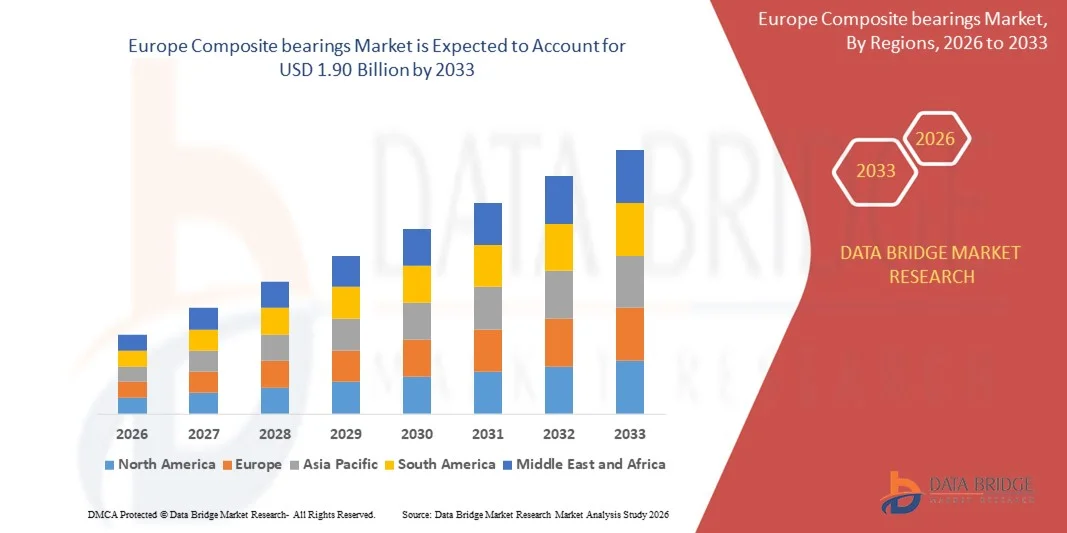
"Europe Composite bearings Market Summary: According to the latest report published by Data Bridge Market Research, the Europe Composite bearings Market The Europe composite bearings market size was valued at USD 1.21 billion in 2025 and is expected to reach USD 1.90 billion by 2033, at a CAGR of 5.8% during the forecast period A top notch Europe...
The North America Cell Viability Assays Market continues to hold a significant position in the global life sciences industry, supported by robust pharmaceutical and biotechnology research activities, advanced healthcare infrastructure, and increasing investments in biomedical innovation. The region is witnessing growing adoption of cell viability assays across academic research institutes,...

China’s financial markets are undergoing one of the most profound transformations in global economic history. As the world’s second-largest economy continues to integrate with international financial systems, its capital exchange ecosystem has emerged as a cornerstone of national development, corporate expansion, and global investment flows. The China Capital Exchange Ecosystem...