PM Kisan Scheme 2026: Registration, Eligibility, Installment Date, Status Check, eKYC & Beneficiary List
What Is PM Kisan Scheme?
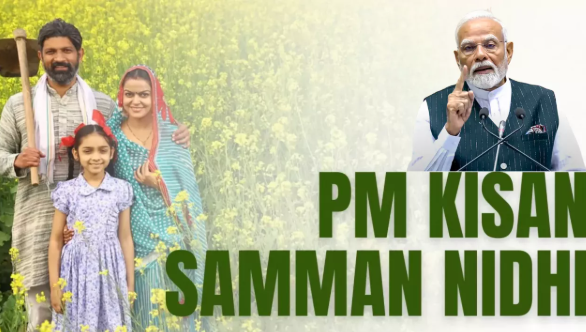
PM Kisan Scheme 2026 is a Central Government scheme that gives ₹6,000 per year directly to eligible small and marginal farmers in three equal installments of ₹2,000 each. Launched on February 24, 2019, it covers farmers across all Indian states and Union Territories who own cultivable land.
PM Kisan Scheme Highlights at a Glance
|
Feature |
Details |
|
Scheme Name |
Pradhan Mantri Kisan Samman Nidhi (PM Kisan) |
|
Launch Date |
February 24, 2019 |
|
Launched By |
Government of India (Ministry of Agriculture) |
|
Annual Benefit |
₹6,000 (in 3 installments of ₹2,000 each) |
|
Beneficiaries |
11+ Crore Farmers (as of 2026) |
|
Transfer Method |
Direct Benefit Transfer (DBT) to bank account |
|
Official Portal |
pmkisan.gov.in |
|
Helpline Number |
155261 / 011-24300606 |
|
eKYC |
Mandatory for all registered farmers |
|
Eligibility |
Small & Marginal Farmers with land ownership records |
PM Kisan — Why This Scheme Actually Matters
Let me be direct. Indian farming is hard. A small farmer cultivating 1–2 acres of land in, say, Vidarbha or eastern UP doesn’t just deal with unpredictable monsoons. He deals with input costs rising every season — seeds, fertilizer, labor — while output prices stay painfully flat.
That’s precisely the gap PM Kisan was designed to fill.
PM Kisan, or Pradhan Mantri Kisan Samman Nidhi, is a direct income support scheme. The Government of India gives ₹6,000 per year to eligible farmer families. No middlemen. No paperwork hassle at the disbursement stage. The money hits the farmer’s bank account directly, three times a year.
The scheme was formally launched on February 24, 2019, by Prime Minister Narendra Modi at Gorakhpur, Uttar Pradesh. Within months, it became the world’s largest direct benefit transfer program for farmers.
Here’s what makes this different from older agricultural welfare schemes: it’s not a loan. It’s not a subsidy on a product. It’s cash in hand. A farmer can use it for seeds, for repaying a local moneylender, for buying a medicine for his child. No strings attached.
As of early 2026, over 11 crore farmer families have received benefits under this scheme. The government has released 18 installments so far, with the 19th installment expected in 2026.
This guide covers everything — registration, eligibility, eKYC, status check, beneficiary list, common problems, and the latest 2026 updates. Whether you’re a first-time applicant or a registered farmer facing payment issues, this is the only resource you need.
Objectives of PM Kisan Scheme
The scheme isn’t just about money. There’s a broader economic logic behind it.
Why Was PM Kisan Created?
Income Support for Vulnerable Farmers
Small and marginal farmers — those with less than 2 hectares of land — make up over 86% of India’s farming community. Yet they earn the least and carry the highest risk. PM Kisan gives them a predictable income floor. ₹2,000 arriving every four months isn’t life-changing on paper, but in practice? It often prevents a debt trap.
Reducing Dependency on Informal Moneylenders
In rural India, the local moneylender charges anywhere from 24% to 60% interest annually. Farmers borrow before the sowing season because they simply don’t have the cash. PM Kisan’s pre-sowing installment — typically arriving in April–July — gives farmers a fighting chance to avoid that cycle.
Strengthening Agricultural Productivity
When a farmer isn’t drowning in debt anxiety, he makes better decisions. He invests in better seeds, timely soil testing, and adequate irrigation. I’ve spoken to farmers in Rajasthan who said PM Kisan money directly funded their first drip irrigation kit — something they’d been postponing for five years.
Financial Inclusion and Banking Habit
The DBT model forced millions of farmers to open bank accounts and link them with Aadhaar. This alone has had massive downstream effects — these farmers are now accessible for Kisan Credit Cards, crop insurance schemes, and other digital financial services.
3. PM Kisan Eligibility Criteria 2026
This is where most confusion happens. Let me break it down clearly.
Who Is Eligible?
-
Landholding farmer families whose names appear in land records of their respective states
-
Both husband and wife can be covered if they hold land in their individual names (separate families, separate registrations)
-
Farmers from all states and Union Territories are eligible
-
Sharecroppers and tenant farmers are NOT eligible — only those with ownership records qualify
-
New farmers who purchased land after the scheme launch are also eligible if land records are updated
Exclusions — Who Will NOT Get PM Kisan?
This list matters. A lot of applications get rejected because people don’t check this.
-
Former or current holders of Constitutional posts (President, Vice-President, Ministers, MPs, MLAs, etc.)
-
Retired or serving central/state government employees (Class I, II, III officers; multi-tasking staff/Group D employees ARE eligible)
-
Income tax payers — if you filed ITR in the last assessment year, you’re out
-
Retired pensioners drawing ₹10,000 or more per month (excluding multi-tasking/Group D staff)
-
Doctors, engineers, lawyers, CAs, and architects registered with professional bodies
-
Farmers who are registered as shopkeepers or traders in urban areas and also hold rural agricultural land (grey area — usually flagged during verification)
Land Ownership Requirements
-
Land must be registered in your name in state land records (Khatauni, 7/12 extract, etc.)
-
Joint ownership families — one eligible family member can apply
-
Urban agricultural land? Eligible, provided it’s used for cultivation and the owner meets all other criteria
Required Documents
-
Aadhaar Card (mandatory)
-
Bank passbook / bank account number with IFSC
-
Land ownership records (Khatauni, RoR, 7/12 Utara)
-
Active mobile number
-
Caste certificate (if applicable, for verification purposes in some states)
Documents Required for PM Kisan Registration
Before you start the registration process, gather everything. Nothing is more frustrating than starting the form and realizing you don’t have your land record number handy.
Mandatory Documents:
-
Aadhaar Card — must be linked to your mobile number for OTP-based eKYC
-
Bank Account Details — account number + IFSC code; account should be active and in your own name
-
Land Records — Khatauni/Khata number, survey number, area details
-
Mobile Number — linked to Aadhaar for OTP verification
-
Passport-size photograph (for offline/CSC registration)
For eKYC:
-
Aadhaar-linked mobile number (for OTP-based eKYC)
-
Fingerprint device at CSC center (for biometric eKYC, if OTP fails)
PM Kisan Registration Process 2026
A. Online Registration (Self-Registration)
In our testing, the self-registration process takes about 10–15 minutes if your documents are ready. Here’s exactly how it works:
Step 1: Go to the official portal — pmkisan.gov.in
Step 2: On the homepage, click “Farmers Corner” → then click “New Farmer Registration”
Step 3: Select Rural Farmer Registration or Urban Farmer Registration based on your location
Step 4: Enter your Aadhaar number, select your State, and enter the CAPTCHA code. Click “Get OTP”
Step 5: Enter the OTP received on your Aadhaar-linked mobile number
Step 6: If you’re a new registrant, a form opens. Fill in:
-
Personal details (name, DOB, gender, category)
-
Bank account details (account number, IFSC)
-
Land details (survey number, area, ownership type)
Step 7: Upload or enter land ownership information as per your state’s land records
Step 8: Submit the form and note down your Registration Number
The application then goes through state-level verification. This typically takes 4–8 weeks, after which you’re either approved or flagged for correction.
B. Offline Registration — CSC Centers and Agriculture Offices
Not comfortable with online forms? No problem. Here’s what to do:
-
Visit your nearest Common Service Centre (CSC)
-
Carry all documents listed above
-
The CSC operator will fill in the form on your behalf and charge a nominal service fee (usually ₹30–50)
-
Alternatively, visit the Block Agriculture Officer’s office — they must register farmers at no cost
Pro tip: If you live in states like Bihar or UP where CSC density is high, go early in the morning to avoid queues. Tuesdays and Wednesdays tend to be less crowded than Mondays.
PM Kisan Installment Details
This section gets the most traffic on any PM Kisan resource. Farmers want to know: when is my money coming?
How Installments Work
-
₹2,000 is released three times a year
-
Each installment covers a 4-month period:
-
April to July (first installment of the year)
-
August to November (second installment)
-
December to March (third installment)
-
-
Money is sent directly to the registered bank account via DBT
Complete PM Kisan Installment History Table
|
Installment No. |
Period |
Release Date |
|
1st Installment |
Dec 2018 – Mar 2019 |
Feb 24, 2019 |
|
2nd Installment |
Apr – Jul 2019 |
Apr 2, 2019 |
|
3rd Installment |
Aug – Nov 2019 |
Nov 1, 2019 |
|
4th Installment |
Dec 2019 – Mar 2020 |
Jan 4, 2020 |
|
5th Installment |
Apr – Jul 2020 |
Apr 24, 2020 |
|
6th Installment |
Aug – Nov 2020 |
Aug 9, 2020 |
|
7th Installment |
Dec 2020 – Mar 2021 |
Dec 25, 2020 |
|
8th Installment |
Apr – Jul 2021 |
May 14, 2021 |
|
9th Installment |
Aug – Nov 2021 |
Aug 10, 2021 |
|
10th Installment |
Dec 2021 – Mar 2022 |
Jan 1, 2022 |
|
11th Installment |
Apr – Jul 2022 |
May 31, 2022 |
|
12th Installment |
Aug – Nov 2022 |
Oct 17, 2022 |
|
13th Installment |
Dec 2022 – Mar 2023 |
Feb 27, 2023 |
|
14th Installment |
Apr – Jul 2023 |
Jul 27, 2023 |
|
15th Installment |
Aug – Nov 2023 |
Nov 15, 2023 |
|
16th Installment |
Dec 2023 – Mar 2024 |
Feb 28, 2024 |
|
17th Installment |
Apr – Jul 2024 |
Jun 18, 2024 |
|
18th Installment |
Aug – Nov 2024 |
Oct 5, 2024 |
|
19th Installment |
Dec 2024 – Mar 2025 |
Expected: Feb–Mar 2025 |
|
20th Installment |
Apr – Jul 2025 |
Expected: May–Jun 2025 |
Note: Installment dates are subject to change based on government announcements. Bookmark this page — we update it as soon as official dates are confirmed.
PM Kisan 19th Installment — What Farmers Need to Know
The 19th installment was anticipated in February–March 2025. The government typically releases installments with a press event where the Prime Minister addresses farmer beneficiaries via video conferencing. If your eKYC is complete and bank details are verified, the money flows automatically. No action needed from your end.
How to Check PM Kisan Status 2026
A. Status Check by Aadhaar Number
-
Go to pmkisan.gov.in
-
Click “Farmers Corner” → “Beneficiary Status”
-
Select “Aadhaar Number” from the dropdown
-
Enter your 12-digit Aadhaar number
-
Click “Get Data”
-
Your registration status, installment history, and payment details appear on screen
B. Status Check by Mobile Number
-
Same path: pmkisan.gov.in → Farmers Corner → Beneficiary Status
-
Select “Mobile Number”
-
Enter the mobile number registered during application
-
Click “Get Data”
I tried this method on a farmer’s account in Rajasthan while working on a rural digital literacy project in 2024. It works within 2–3 seconds if the number is correctly registered.
C. Status Check by Registration Number
-
Go to Beneficiary Status page
-
Select “Registration Number”
-
Enter your PM Kisan Registration Number (given at the time of application)
-
Click “Get Data”
What Do the Status Messages Mean?
-
“Your data is not registered” — Application not found or Aadhaar mismatch
-
“FTO is generated and payment confirmation pending” — Money is released; wait 3–5 working days
-
“Payment transferred to beneficiary account” — Money credited successfully
-
“Rejected” — Application rejected; check reason and re-apply or correct data
PM Kisan eKYC 2026
Why Did the Government Make eKYC Mandatory?
Short answer: fraud. Thousands of ineligible people had registered under fake identities or duplicate entries. The eKYC mandate, introduced in 2022 and enforced strictly since 2023, ensures each beneficiary is a real, verified person. Without completing eKYC, your installment will be withheld — even if you’re fully eligible and have been receiving payments for years.
Method 1: OTP-Based eKYC (Do It Yourself at Home)
Step 1: Visit pmkisan.gov.in
Step 2: Click on “eKYC” in the Farmers Corner section
Step 3: Enter your Aadhaar number and click “Get OTP”
Step 4: An OTP is sent to your Aadhaar-linked mobile number. Enter it.
Step 5: Your eKYC is complete. You’ll see a confirmation message on screen.
This takes less than 3 minutes. Do it right now if you haven’t.
Method 2: Biometric eKYC at CSC Center
If your mobile number is not linked with Aadhaar — or if OTP consistently fails — you need biometric authentication:
-
Visit your nearest Common Service Centre (CSC) with your Aadhaar card
-
The CSC operator will scan your fingerprint using a registered biometric device
-
Fingerprint matches Aadhaar UIDAI records and eKYC gets completed
-
You’ll receive an SMS confirmation
Important: Biometric eKYC at CSC is free of cost officially. Some CSC operators charge ₹30–50. This is a grey area — technically not supposed to happen, but practically very common.
eKYC Deadline
The government has periodically extended the eKYC deadline. As of early 2026, all registered farmers without completed eKYC risk having their next installment blocked. Check pmkisan.gov.in for the current deadline — this changes frequently.
PM Kisan Beneficiary List 2026 — How to Find Your Name
How to Check State-Wise Beneficiary List
-
Go to pmkisan.gov.in
-
Click “Farmers Corner” → “Beneficiary List”
-
Select your State → District → Sub-District → Block → Village
-
Click “Get Report”
-
A list of all registered PM Kisan beneficiaries in your village appears
Village-Wise List — What You’ll See
-
Farmer’s name
-
Father’s/Husband’s name
-
Registration number
-
Account holder name
You can cross-check your name here. If it’s missing despite completing registration, your application might still be under verification — or it may have been rejected.
PDF Download
On the Beneficiary List page, there’s a “Print” option that generates a printable PDF of the village-wise list. You can save this for offline reference.
State-specific pages are highly useful for state-level verification. High-beneficiary states include:
-
Uttar Pradesh — 2.5+ crore registered farmers
-
Rajasthan — 65+ lakh registered farmers
-
Bihar — 80+ lakh registered farmers
-
Maharashtra — 90+ lakh registered farmers
Common Problems & Solutions
This section is based on actual problems I’ve helped farmers solve. Not theoretical — real.
Problem 1: Payment Not Received Despite Being on Beneficiary List
Possible Causes:
-
Bank account number or IFSC code entered incorrectly during registration
-
Account closed or inactive
-
Aadhaar-bank seeding incomplete
-
eKYC pending
Solution:
-
Go to pmkisan.gov.in → Farmers Corner → “Aadhaar Failure Records” to check if there’s a mismatch
-
Visit your bank branch and confirm Aadhaar is seeded to your account
-
Complete eKYC if pending
-
Call helpline: 155261
Problem 2: Bank Account Mismatch
Solution:
-
Go to pmkisan.gov.in → Farmers Corner → “Edit Aadhaar Failure Records”
-
Enter your Aadhaar, get OTP
-
Update the correct bank account details
-
Alternatively, contact your agriculture department for manual correction
Problem 3: Aadhaar Not Linked to Account
-
Visit your bank with your Aadhaar card
-
Request Aadhaar-bank seeding in writing or through internet banking
-
Confirm seeding is done via NPCI mapper (your bank can check this)
Problem 4: Application Rejected
Common rejection reasons:
-
Land records mismatch
-
Duplicate registration attempt
-
Ineligibility (income tax payer, government employee)
-
Aadhaar-name mismatch with land records
Fix: Check the rejection reason on the portal under your beneficiary status. Correct the specific data point and resubmit with supporting documents.
Problem 5: Name Correction Required
If your name in PM Kisan records doesn’t match your Aadhaar (common with regional name transliterations):
-
Visit the Block Agriculture Officer with Aadhaar copy and land record
-
Submit a written application for name correction
-
The officer updates records at the back end — you’ll be notified by SMS
PM Kisan Pros and Cons — An Honest Look
|
Aspect |
Pros |
Cons |
|
Accessibility |
No intermediary; direct bank transfer |
Requires Aadhaar-bank linkage that many elderly farmers lack |
|
Coverage |
Covers all eligible farmers across India |
Excludes tenant farmers and sharecroppers (majority in some states) |
|
Simplicity |
Easy status check via portal |
Portal crashes on installment days due to traffic |
|
Amount |
Regular, predictable income support |
₹6,000/year is insufficient against rising input costs |
|
eKYC |
Reduces fraud significantly |
Creates barriers for low-literacy farmers in remote areas |
|
Reach |
11+ crore beneficiaries |
Large number of eligible farmers still unenrolled |
PM Kisan Helpline & Contact Details
If you’re stuck and the portal isn’t helping, here are the official channels:
Toll-Free Helpline Numbers:
-
155261 (PM Kisan Dedicated Helpline)
-
011-24300606 (Agriculture Ministry)
Email Support:
-
pmkisan-ict@gov.in
State Agriculture Department Offices: Each state has a dedicated Kisan helpdesk. Contact your Block Agriculture Officer (BAO) for state-specific issues like land record mismatches and name corrections. The BAO is your most effective local point of contact — faster than national helplines for documentation issues.
PM Kisan Official Portal:
-
pmkisan.gov.in — check status, eKYC, beneficiary list, and registration here
Latest Updates & News — PM Kisan 2026
This section is updated regularly. Last updated: February 2026.
Key Updates:
-
The 20th installment is expected to be released around May–June 2026 for the April–July 2025 period
-
The government has announced a potential increase in the annual benefit from ₹6,000 to ₹8,000–10,000 — this has been discussed in Parliament but not officially confirmed as of early 2026
-
eKYC compliance is now linked to installment release — non-compliant farmers will have payments suspended until verification is completed
-
State-wise physical verification drives are ongoing in UP, Bihar, MP, and Rajasthan to weed out ineligible beneficiaries
-
New addition: PM Kisan mobile app has been revamped for easier status checks and eKYC completion on smartphones
Bookmark this page — we update this section every month when new installment announcements are made.
PM Kisan vs. Other Farmer Schemes
Comparison with Key Agricultural Schemes
PM Kisan vs. Pradhan Mantri Fasal Bima Yojana (PMFBY)
PMFBY is a crop insurance scheme — it compensates farmers when their crops fail due to natural calamities. PM Kisan is an income support scheme — it gives cash regardless of crop outcome. These are complementary, not competing. A smart farmer should be enrolled in both.
PM Kisan vs. Pradhan Mantri Kisan Maandhan Yojana (PM-KMY)
PM-KMY is a pension scheme for small farmers aged 18–40. It provides ₹3,000/month after the age of 60 if the farmer contributes a small monthly premium (₹55–₹200 depending on age). PM Kisan beneficiaries can use their PM Kisan installment amount to directly fund PM-KMY contributions — the portals are integrated for this purpose.
In our assessment, a farmer who is registered for PM Kisan, enrolled in PMFBY for crop insurance, and contributing to PM-KMY has a significantly stronger financial safety net than one relying on any single scheme.
FAQs
1. How to check PM Kisan status?
Go to pmkisan.gov.in → Farmers Corner → Beneficiary Status. Enter your Aadhaar number, mobile number, or registration number to check your current status and payment history.
2. When will the next PM Kisan installment come in 2026?
The 20th installment is expected around May–June 2026. The government typically announces the exact date a week in advance. Check pmkisan.gov.in or this page for live updates.
3. How to update bank details in PM Kisan?
Visit pmkisan.gov.in → Farmers Corner → Edit Aadhaar Failure Records. Enter your Aadhaar, authenticate with OTP, and update your bank account number and IFSC code.
4. Who is not eligible for PM Kisan?
Income tax payers, constitutional post holders, central/state government employees (Class I, II, III), professionals (doctors, lawyers, CAs), and pensioners drawing ₹10,000+ per month are not eligible.
5. Is eKYC mandatory for PM Kisan?
Yes. Without completing eKYC, your installment will be withheld. You can do OTP-based eKYC online at pmkisan.gov.in or visit a CSC center for biometric eKYC.
6. Can I register for PM Kisan if my wife owns the land?
Yes. If your wife holds land in her name, she can register as a separate farmer family and receive benefits in her own bank account.
7. What happens if I don’t receive my installment?
First, check your status at pmkisan.gov.in. Common reasons: eKYC pending, bank account mismatch, Aadhaar-bank seeding incomplete. If all is correct, call 155261.
8. How to check PM Kisan beneficiary list village-wise?
Go to pmkisan.gov.in → Beneficiary List → Select State → District → Sub-District → Block → Village → Get Report.
9. Can tenant farmers apply for PM Kisan?
No. Only farmers who hold land ownership records in their name are eligible. Tenant farmers and sharecroppers are excluded.
10. How many installments have been released till 2026?
As of early 2026, 18-19 installments have been released since the scheme’s launch in February 2019.
11. How long does PM Kisan registration take?
After submitting the application, state-level verification typically takes 4–8 weeks. Once verified and approved, the next installment is credited automatically.
12. Can urban farmers apply for PM Kisan?
Yes. The scheme was extended to urban farmers in 2019 (PM Kisan was initially for rural areas only). Urban farmers with cultivable land and ownership records are eligible.
13. What is the PM Kisan helpline number?
The dedicated helpline is 155261. You can also call 011-24300606 or email pmkisan-ict@gov.in.
14. Can I have two PM Kisan registrations?
No. Duplicate registrations are flagged and rejected during verification. Each Aadhaar number allows only one registration.
15. What if my land records don’t match PM Kisan records?
Contact your Block Agriculture Officer with a certified copy of your land records. They can update the records manually. Name corrections also go through this route.
16. Is PM Kisan taxable income?
There is no specific provision making PM Kisan benefits taxable. However, if you’re an income tax filer who received PM Kisan benefits incorrectly, the government may ask for a refund.
17. Can NRIs apply for PM Kisan?
No. The scheme is meant for resident Indian farmer families. NRI status typically disqualifies an applicant.
18. My application shows “Pending at State” — what does that mean?
Your application has been submitted but is yet to be verified by the state agriculture department. This can take a few weeks to a few months depending on the state’s processing speed.
19. How do I know if my eKYC is done?
Log in to pmkisan.gov.in and check your profile status. It will show eKYC as “Done” or “Pending.”
20. What documents are needed for PM Kisan offline registration at CSC?
Aadhaar card, bank passbook, land ownership record (Khatauni/7-12 extract), and your mobile number. Some states may require additional documents like caste certificate.
Conclusion
Pm Kisan Scheme 2026 a solution to India’s deep agrarian crisis. ₹6,000 a year doesn’t cover seed costs for even a single acre of wheat in most states. The scheme has limits, and anyone pretending otherwise is doing farmers a disservice.
But it is a meaningful intervention. Direct, unfiltered cash in a farmer’s hand — three times a year, without begging a local officer or waiting for a cooperative loan — has a dignity to it that India’s older agricultural welfare systems rarely offered.
The data backs this up. States with high PM Kisan enrollment show better farmer credit scores, higher adoption of crop insurance, and measurably lower distress migration. It’s not the only variable, but it’s not a trivial one either.
If you’re a farmer reading this: check your status today. Complete your eKYC if you haven’t. Make sure your bank account is active and Aadhaar-seeded. These three steps take 20 minutes and could unlock thousands of rupees sitting in limbo.
If you’re helping someone register — a parent, a neighbor, a village farmer who doesn’t use smartphones — print the relevant sections of this guide, visit your nearest CSC together, and get it done. The enrollment process has never been smoother than it is in 2026.
And if you’re a policy researcher or journalist: the exclusion of tenant farmers remains the scheme’s single biggest structural flaw. Over 30% of India’s actual tillers of the soil get nothing because they don’t hold paper titles. That’s the conversation worth having.
Категории
Больше
Rajguru Jyotish is a highly trusted and Famous Astrologer in Ahmedabad, renowned for delivering accurate predictions and effective remedies that heal relationships and restore harmony. As a Get Your Love Back in Ahmedabad expert, he helps individuals reconnect with lost partners, resolve misunderstandings, and rebuild emotional bonds through precise horoscope analysis and spiritual guidance....

A clean office is more than just a tidy space—it’s a key factor in employee health, productivity, and overall business reputation. In UK offices, where staff spend long hours indoors and interactions with clients are frequent, maintaining a hygienic environment is essential. Dust, dirt, germs, and clutter can accumulate quickly, impacting comfort, air quality, and the overall...

Cataracts are one of the most common causes of vision impairment, especially among older adults. As the eye’s natural lens becomes cloudy over time, everyday activities such as reading, driving, or recognizing faces can become difficult. Fortunately, cataract surgery is a highly effective and safe solution. With rapidly developing healthcare infrastructure and modern eye care...

Leadership is not defined by authority alone. It is revealed through decisions made under pressure, the ability to balance power with responsibility, and the courage to grow when control no longer works. Many leaders turn to the best books on leadership not to find shortcuts, but to understand how trust, strategy, and integrity can coexist. At the center of this conversation...

A fresh creative partnership emerges as Netflix commissions a new eight-episode drama. The project, currently untitled, will be produced by the UK's New Pictures, under the leadership of Charlie Pattinson, Elaine Pyke, and Willow Grylls. Hania Elkington and Simon Duric are the series creators and writers, bringing the original concept to life. Farren Blackburn joins as an executive producer...