How to Scale Black Box Testing for Large Applications?
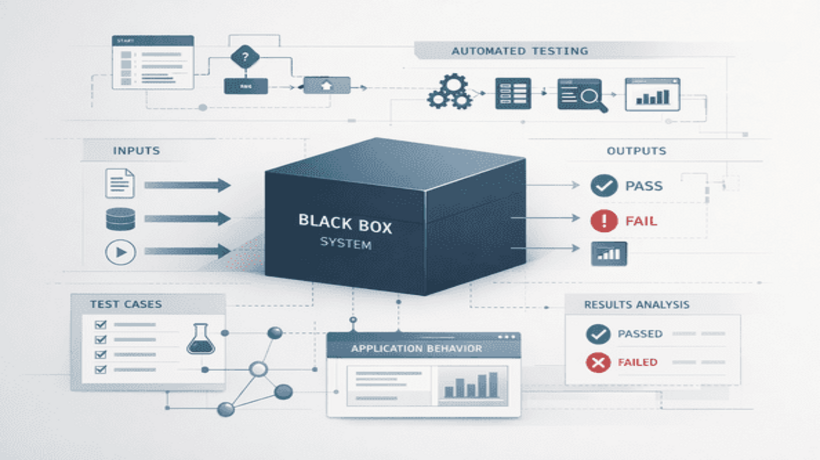
As applications grow in size and complexity, maintaining effective testing becomes increasingly challenging. Large systems often include multiple modules, integrations, and user workflows, making it difficult to ensure complete coverage. This is where scaling black box testing becomes essential.
By focusing on system behavior rather than internal implementation, black box testing helps teams validate functionality at scale. However, without the right strategy, it can quickly become inefficient and hard to manage.
Challenges of Scaling Black Box Testing
Before scaling, it’s important to understand the common challenges:
-
Rapid growth of test cases leading to longer execution times
-
Difficulty maintaining consistency across multiple modules
-
Increased risk of redundant or overlapping tests
-
Managing dependencies in distributed systems
-
Limited visibility into internal system behavior
Addressing these challenges requires a structured and strategic approach.
Prioritize Test Cases Based on Impact
Not all test cases are equally important in large applications. Focus on high-impact areas such as:
-
Core business workflows
-
Frequently used features
-
Critical integrations between services
Risk-based prioritization ensures that the most important functionalities are always validated, even as the test suite grows.
Use Modular Test Design
Breaking down test cases into smaller, reusable components improves scalability. Modular design allows teams to:
-
Reuse test logic across different scenarios
-
Reduce duplication in test scripts
-
Simplify maintenance and updates
This approach is particularly useful when dealing with black box testing for complex applications with shared functionalities.
Leverage Automation Strategically
Automation is key to scaling black box testing effectively. However, it must be applied thoughtfully:
-
Automate repetitive and stable test cases
-
Focus on API-level testing for faster execution
-
Avoid over-automation of frequently changing features
A balanced automation strategy ensures efficiency without increasing maintenance overhead.
Implement Parallel Test Execution
Running tests sequentially can significantly slow down large test suites. Parallel execution allows multiple tests to run simultaneously, reducing overall execution time.
Benefits include:
-
Faster feedback cycles
-
Better resource utilization
-
Improved pipeline efficiency
This is especially important for large applications with extensive regression requirements.
Integrate with CI/CD Pipelines
To scale effectively, black box testing must be integrated into CI/CD workflows. This enables:
-
Automated test execution on every code change
-
Early detection of defects
-
Continuous validation of application stability
Running smaller, high-priority test suites during commits and full suites at scheduled intervals helps balance speed and coverage.
Optimize Test Data Management
Large applications often require complex and dynamic test data. Poor data management can lead to inconsistent results and test failures.
Best practices include:
-
Using isolated and reusable datasets
-
Automating data setup and cleanup
-
Avoiding dependencies between test cases
Efficient data handling improves reliability and scalability.
Combine with Other Testing Approaches
While scaling black box testing, it’s important to complement it with other methods. Understanding the role of black box vs white box testing helps teams ensure both external behavior and internal logic are properly validated.
This combined approach provides deeper coverage and reduces the risk of hidden defects.
Monitor and Continuously Improve
Scaling is not a one-time effort. Teams should continuously monitor:
-
Test execution time
-
Failure rates and patterns
-
Coverage of critical workflows
Regular analysis helps identify bottlenecks and optimize the testing strategy over time.
Conclusion
Scaling black box testing for large applications requires more than just adding more test cases—it demands a strategic approach focused on prioritization, automation, modular design, and continuous improvement.
By integrating testing into CI/CD pipelines, leveraging parallel execution, and combining multiple testing approaches, teams can maintain efficiency while ensuring comprehensive validation. This enables faster releases, improved software quality, and a more reliable user experience in complex systems.
Categories
Read More
Unit Dose Packaging Market Size, Share and Growth Report (2025–2034) The unit dose packaging market is experiencing robust growth as industries increasingly adopt single-dose packaging formats to improve product safety, dosage accuracy, and user convenience. According to Packaging Market Insights, the market size is estimated at USD 32.6 billion in 2025 and is projected to reach USD 35.4...

https://katoci5133.livejournal.com/704.html

Live betting has completely changed the online betting experience. Instead of placing a bet before the match starts and waiting for the final result, players can now react to every important moment in real time. This is where SkyInPlay features become useful. They allow users to place smarter bets while the match is still happening, making the experience faster, more exciting, and...
在香港這個節奏快速、生活壓力繁重的國際都會,線上娛樂早已成為許多人放鬆身心、尋找刺激的重要途徑。隨著科技不斷進步,傳統的實體賭場已不再是唯一選擇,越來越多的玩家轉向線上現金網娛樂城,尋求更便捷、更多元、更具隱私的遊戲體驗。而在這股浪潮之中,yygame 這個名字逐漸在玩家社群中累積起良好的口碑與信譽,成為香港線上娛樂城領域中備受矚目的焦點。 yygame 所代表的不仅仅是一个遊戲平台,更是一種結合了先進科技、在地化服務與豐富遊戲內容的全新娛樂模式。從經典不敗的真人百家樂,到緊張刺激的體育賽事投注,再到瞬息萬變的電子老虎機與彩票遊戲,yygame 致力於為每一位玩家打造一個安全、公平、且充滿樂趣的線上博弈環境。本文將深入剖析 yygame 的各個面向,帶領讀者全面了解這個平台的魅力所在,以及它如何在競爭激烈的香港市場中脫穎而出。...

Pregnancy is a journey filled with anticipation, excitement, and countless milestones. Among the most cherished moments for expectant parents is getting a glimpse of their baby before birth. Thanks to modern imaging technology, this experience has become more vivid and emotionally meaningful than ever. Opting for 4d ultrasound houston services allows parents to see real-time movements and...