Static Hosting vs Server-Side Rendering: A Technical Comparison of React Deployment Architectures
Introduction
Deploying modern frontend applications is no longer a simple hosting decision. With frameworks built on React, developers must choose between multiple architectural patterns—each with different implications for performance, scalability, and infrastructure complexity.
The concept of reactjs web hosting is often misunderstood as a basic hosting choice, but in reality, it involves selecting the right rendering strategy and deployment model based on application behavior.
Understanding React Deployment Models
React applications are not deployed as traditional server-rendered websites by default. Instead, they are typically built into static assets:
-
HTML entry file
-
JavaScript bundles
-
CSS and media files
These files are then served to the browser, where rendering happens client-side.
However, modern architectures extend beyond this basic model, introducing hybrid rendering techniques and backend integrations.
Static Hosting vs Application Hosting
Static React Hosting
In static hosting, the React application is pre-built and deployed as static files.
How it works:
-
Build process generates optimized assets
-
Files are served via HTTP/CDN
-
Rendering happens entirely in the browser
This model is highly efficient because no server-side computation is required during requests.
Application Hosting
In contrast, application hosting involves running server-side code:
-
Node.js servers render content dynamically
-
APIs process data and return responses
-
Persistent processes manage application state
Modern architectures often combine both—static frontend + dynamic backend APIs.
When evaluating reactjs web hosting, understanding this distinction is critical.
Client-Side Rendering (CSR) vs Server-Side Rendering (SSR)
Client-Side Rendering (CSR)
CSR is the default model for React:
-
Browser receives minimal HTML
-
JavaScript loads and renders UI
-
Interactions handled entirely on client
Advantages:
-
Reduced server load
-
Simpler deployment (works with static hosting)
-
Ideal for highly interactive applications
Limitations:
-
Slower initial load time
-
SEO challenges due to delayed content rendering
Server-Side Rendering (SSR)
SSR shifts rendering to the server:
-
Server generates HTML per request
-
Fully rendered page sent to client
-
React hydrates the UI afterward
Advantages:
-
Faster initial content display
-
Improved SEO visibility
-
Better performance on low-end devices
Trade-offs:
-
Increased server load
-
Higher infrastructure complexity
Frameworks like Next.js enable SSR by extending React’s capabilities beyond client-side rendering.
Static Generation (SSG) vs Dynamic Rendering
Static Site Generation (SSG)
SSG builds pages at compile time:
-
Pre-rendered HTML served instantly
-
No runtime computation
-
Extremely fast delivery via CDN
This approach is ideal for:
-
Marketing websites
-
Blogs
-
Documentation platforms
SSG combines performance and cost efficiency by eliminating server overhead.
Dynamic Rendering (SSR / APIs)
Dynamic rendering generates content on demand:
-
Fetches data at request time
-
Customizes output per user
-
Requires backend infrastructure
This is essential for:
-
Dashboards
-
User-specific content
-
Real-time applications
Performance Engineering: Hydration and Execution Cost
React applications involve a process called hydration, where JavaScript attaches interactivity to pre-rendered HTML.
-
SSR improves initial load speed
-
Hydration adds client-side execution overhead
-
Large bundles increase Time to Interactive (TTI)
Modern approaches optimize this by:
-
Code splitting
-
Lazy loading components
-
Reducing unnecessary hydration
This highlights that reactjs web hosting is not just about serving files—it’s about managing execution cost across client and server.
Scalability: CDN-Based vs Server-Based Architectures
Static Hosting (CDN-Based)
-
Scales globally via content delivery networks
-
Minimal infrastructure cost
-
Handles high traffic efficiently
Server-Based Hosting
-
Requires scaling compute resources
-
Load balancing needed for high traffic
-
Higher operational complexity
A decoupled architecture—static frontend + scalable backend—is often the most efficient solution.
Cost Comparison
Static Hosting
-
Low cost
-
Pay for storage and bandwidth
-
No compute overhead
Server-Side Hosting
-
Higher cost due to compute usage
-
Scaling increases expenses
-
Requires monitoring and optimization
For many use cases, static deployment significantly reduces total cost while maintaining performance.
When Each Approach Makes Sense
Use Static Hosting If:
-
Application is frontend-heavy
-
Content does not change frequently
-
SEO is not critical
Use SSR or Hybrid Models If:
-
SEO is important
-
Content is dynamic or user-specific
-
Faster initial load is required
Use Hybrid Architecture If:
-
You need both performance and flexibility
-
Frontend and backend are decoupled
Conclusion
The concept of reactjs web hosting goes far beyond choosing a hosting provider. It is fundamentally about selecting the right rendering strategy and infrastructure model.
Static hosting offers simplicity, scalability, and cost efficiency, while server-side approaches provide better SEO and dynamic capabilities. Hybrid architectures combine the strengths of both but require careful design.
The right decision depends on workload characteristics, user experience requirements, and long-term scalability goals.
Категории
Больше
Игра Neverness to Everness стремительно набирает популярность, уже привлекая внимание миллионов будущих игроков. Отметка в тридцать миллионов предварительных регистраций была успешно преодолена, что говорит о высоком интересе сообщества. В качестве благодарности за столь активную поддержку, каждый участник получит ценный подарок при запуске проекта. Разработчики гарантируют бесплатное...

Promo codes such as 1X200RED serve as activation tools within the bonus program. These codes are combinations of letters and numbers that unlock access to predefined bonuses. Each code is unique, and its application depends on the specific promotional conditions at the time. The bonus structure may differ based on campaign rules, and the format of the reward—whether it's bonus money, free...

The global energy landscape is undergoing a profound metamorphosis as nations pivot away from fossil fuels toward a hydrogen-based economy. Central to this transition is the advancement of hydrogen production technologies that can operate at an industrial scale while maintaining economic viability. Among the various methods available, the alkaline water electrolysis market stands out as...

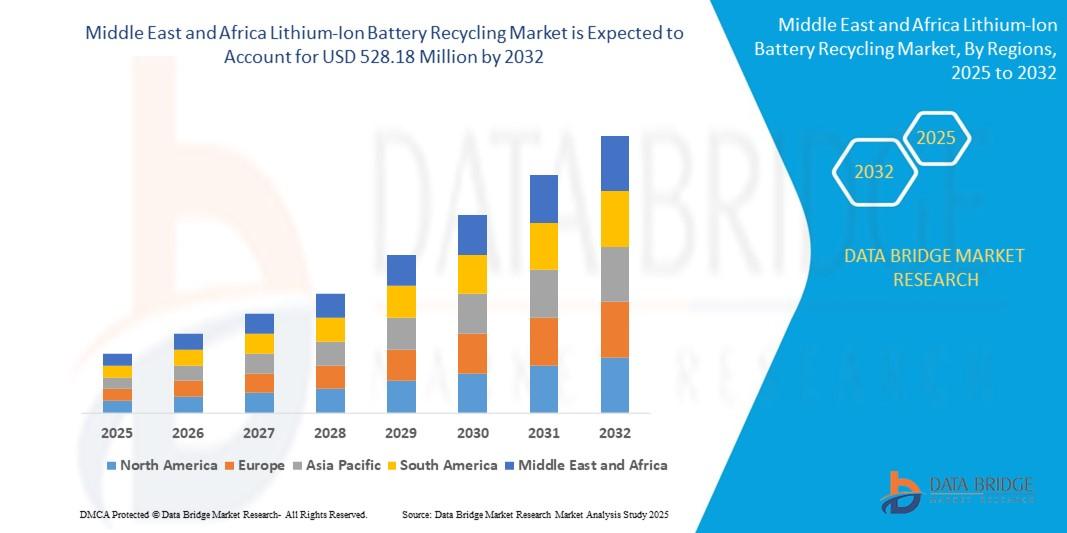
The Middle East and Africa Lithium-Ion Battery Recycling Market is positioned for robust growth, driven primarily by the escalating adoption of Electric Vehicles (EVs) and significant investments in renewable energy storage solutions across the region, particularly in the Gulf Cooperation Council (GCC) countries and South Africa. Governments are increasingly implementing stringent...
Kuwait chocolate is more than just a sweet treat it represents a growing luxury dessert culture in Kuwait and the wider Gulf region. Known for its rich flavors, premium ingredients, and elegant presentation, Kuwait chocolate has become a symbol of celebration, hospitality, and modern gourmet taste. Whether gifted during special occasions or enjoyed as a personal indulgence, it...