Advanced Infrastructure Strategies for High-Performance Frontend Delivery
Modern frontend systems have evolved into complex distributed architectures where performance is no longer determined solely by application logic but by how efficiently content is rendered, delivered, and hydrated across global networks. React-based applications, in particular, require carefully designed hosting environments to balance rendering strategies, caching, and runtime execution.
Organizations exploring reactjs web hosting often encounter challenges related to rendering performance, asset delivery, and scalability. These challenges arise due to the shift from simple client-side applications to hybrid rendering models that integrate server-side rendering (SSR), static generation, and edge-based execution.
Rendering Paradigms and Infrastructure Implications
React applications can be deployed using multiple rendering strategies, each with unique infrastructure requirements:
-
Client-Side Rendering (CSR): Execution happens entirely in the browser
-
Server-Side Rendering (SSR): HTML is generated on the server
-
Static Site Generation (SSG): Pages are pre-built and served via CDN
SSR has gained renewed importance due to its ability to improve initial load performance and search engine visibility. Research indicates that SSR can significantly improve metrics like First Contentful Paint (FCP) and Time to First Byte (TTFB), enabling faster user-perceived performance.
However, SSR introduces additional server load and requires intelligent caching strategies to remain scalable. Without caching, repeated server-side rendering can become a performance bottleneck.
A production-grade reactjs web hosting environment must therefore support hybrid rendering, allowing applications to combine SSR, SSG, and CSR based on use case.
Edge Rendering and CDN Integration
Content Delivery Networks (CDNs) play a central role in modern frontend hosting. Instead of serving content from a single origin server, CDNs distribute assets across geographically dispersed edge nodes, reducing latency and improving availability.
Advanced reactjs web hosting architectures integrate edge rendering, where server-side logic is executed closer to the user. This approach minimizes round-trip latency and improves responsiveness, particularly for global applications.
Research shows that caching pre-rendered HTML at the edge significantly reduces server load and improves scalability.
Edge-based execution also enables personalization without sacrificing performance, as dynamic content can be generated locally rather than at a centralized server.
Hydration and Execution Optimization
One of the most critical aspects of React performance is hydration—the process of attaching interactivity to server-rendered HTML. While SSR improves initial load times, hydration can introduce delays in interactivity if not optimized.
Recent studies propose adaptive hydration techniques, where components are hydrated selectively based on priority, visibility, or user interaction. This reduces the amount of JavaScript executed during initial load, improving metrics such as Time to Interactive (TTI).
A high-performance reactjs web hosting environment must support:
-
Code splitting to reduce bundle size
-
Lazy loading of non-critical components
-
Deferred hydration for improved responsiveness
These optimizations ensure that applications remain interactive without overloading the client device.
Microservices and API Integration
Modern React applications are often part of larger distributed systems built on microservices architecture. Frontend applications communicate with backend services through APIs, requiring efficient request handling and low-latency communication.
Research on microservices highlights the importance of distributed service coordination and dynamic provisioning in maintaining performance under varying workloads.
A robust reactjs web hosting setup must integrate seamlessly with backend systems, ensuring:
-
Efficient API routing and load balancing
-
Secure data transmission
-
Scalable communication between services
Decoupling frontend and backend layers allows independent scaling, improving system flexibility and resilience.
Performance Metrics and Optimization Strategies
Frontend performance is measured using metrics such as:
-
FCP (First Contentful Paint)
-
TTFB (Time to First Byte)
-
TTI (Time to Interactive)
Studies show that server-rendered pages can load significantly faster than purely client-rendered applications, with measurable improvements in user engagement and session duration.
A well-optimized reactjs web hosting environment focuses on:
-
Minimizing JavaScript payload size
-
Leveraging CDN caching for static assets
-
Optimizing server response times
These strategies ensure consistent performance across different devices and network conditions.
Scalability and Distributed Deployment
Scalability is a key requirement for applications with growing user bases. Modern hosting environments use distributed architectures to handle increasing traffic without compromising performance.
Techniques such as horizontal scaling, load balancing, and auto-scaling enable systems to adapt to changing workloads. Edge networks further enhance scalability by distributing traffic across multiple nodes.
A scalable reactjs web hosting architecture ensures that applications can handle high concurrency while maintaining low latency and high availability.
Security and Network Efficiency
Security is a fundamental aspect of frontend hosting. React applications must be protected against vulnerabilities such as cross-site scripting (XSS) and data interception.
Key security measures include:
-
HTTPS and TLS encryption
-
Content Security Policies (CSP)
-
Secure API communication
Network efficiency techniques such as Brotli compression and HTTP/2 multiplexing further enhance performance by reducing payload size and improving connection efficiency.
Conclusion
Hosting React applications in modern environments requires a deep understanding of rendering strategies, distributed systems, and performance optimization techniques. From edge rendering and CDN integration to adaptive hydration and microservices communication, each component plays a critical role in delivering fast and reliable user experiences.
As frontend architectures continue to evolve, hosting environments must adapt to support hybrid rendering models and global scalability. A well-designed approach to reactjs web hosting ensures that applications remain performant, secure, and capable of handling increasing complexity in modern web ecosystems.
Categorie
Leggi tutto
Boost your Pegasystems PEGACPRSA22V1 exam preparation with DumpsHero’s expert-crafted study guides and practice materials. Study smarter, build confidence, and pass with ease. Prepare Smarter for the Pegasystems PEGACPRSA22V1 Exam with DumpsHero – Your Trusted Study Companion Mastering the Pegasystems PEGACPRSA22V1 exam dumps the right blend of knowledge, practice, and confidence....

Our global service continues to adapt and improve, ensuring members can enjoy content where they are right now. While we strive toward worldwide availability for all titles, current licensing agreements vary by region. We are enhancing our systems to detect and manage proxy usage, aligning with industry standards. Members accessing the service through proxies will soon find their content...

Netflix has recently expanded its presence in Europe by opening a new customer service center in Amsterdam, which will initially create 170 jobs, increasing to over 400 by 2018. This facility supports users across eleven countries, including Belgium, Denmark, Finland, Ireland, Luxembourg, the Netherlands, Norway, Poland, Romania, Sweden, and the UK, providing multilingual assistance. Alongside...

Think about the brands you remember instantly. Sometimes it’s not the product that stays in your mind first — it’s the logo, colors, packaging, or the way everything looks together.That’s the power of good design. People often decide whether a business looks trustworthy within a few seconds. A poorly designed logo or outdated marketing creative can quietly push customers...

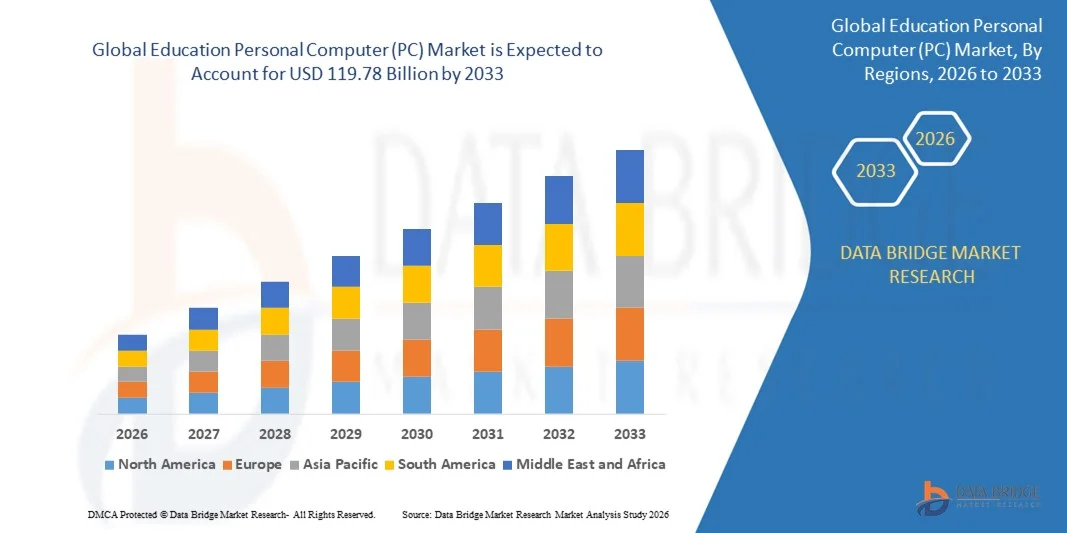
"According to the latest report published by Data Bridge Market Research, the Education Personal Computer (PC) Market The global education personal computer (PC) market size was valued at USD 46.35 billion in 2025 and is expected to reach USD 119.78 billion by 2033, at a CAGR of 12.60% during the forecast period An influential Education Personal Computer...