Enhancing Property Value and Security Through Expert Timber Perimeter Solutions
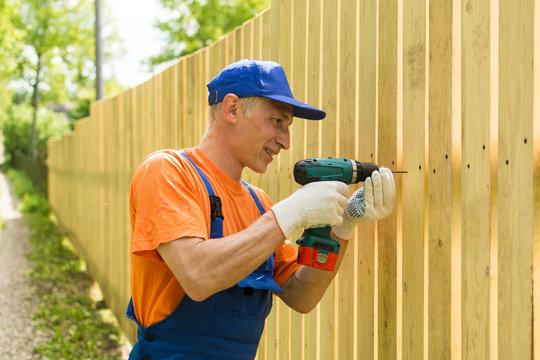
Natural wood remains the premier choice for homeowners seeking a balance between organic aesthetics and functional boundary definition. While many home improvement projects are manageable for a weekend enthusiast, the structural integrity of a perimeter barrier depends heavily on precise alignment and post-setting techniques. A professionally executed installation ensures that the structure can withstand shifting soil conditions and high-wind events without leaning or warping. Beyond the immediate visual upgrade, a well-placed timber barrier serves as a long-term investment in land utility, providing a safe environment for families while clearly defining the transition between private and public spaces.
The selection of materials plays a pivotal role in the longevity of the project. Pressure-treated pine and cedar are the industry standards, each offering distinct advantages in terms of rot resistance and grain patterns. Cedar, known for its natural oils that repel insects and moisture, tends to age into a graceful silver patina if left untreated, whereas pressure-treated lumber is chemically fortified to endure direct ground contact. The choice between these materials often dictates the maintenance schedule for the coming decade. Proper installation involves more than just nailing boards together; it requires an understanding of local frost lines and drainage patterns to prevent the premature decay of the foundational supports.
Privacy is perhaps the most sought-after benefit of a tall timber enclosure. In modern residential layouts, where houses are often built in close proximity, creating an outdoor sanctuary becomes a priority. A solid-board or board-on-board design eliminates sightlines entirely, allowing for a secluded backyard experience. This physical barrier also acts as a subtle acoustic dampener, reducing the intrusion of neighborhood noise and street traffic. By choosing a style that complements the architectural lines of the home—whether it be a classic dog-ear, a sophisticated cap-and-rail, or a rustic horizontal slat—homeowners can create a cohesive look that feels like a natural extension of their living space.
Structural Foundations and the Science of Post Setting
The durability of any vertical structure is determined by what lies beneath the surface. For a timber barrier to remain straight and sturdy for twenty years, the posts must be anchored with mathematical precision. This process begins with a professional site survey to identify utility lines and property markers, followed by the excavation of post holes that reach below the local frost line. If a post is not set deep enough, the natural expansion and contraction of the soil during seasonal changes will eventually "heave" the post out of the ground, leading to a sagging or collapsed fence line.
Consistency in the concrete pour is equally vital. Professionals use a specific mix that provides a solid anchor while allowing for slight drainage away from the wood to prevent "foot rot" at the base. Aligning these posts requires laser levels or high-tension string lines to ensure that the entire run is perfectly linear. Even a discrepancy of half an inch can become glaringly obvious once the horizontal rails and vertical pickets are attached. By focusing on these hidden structural elements, installers guarantee that the fence remains a permanent fixture rather than a temporary fix.
Material Selection for Diverse Environmental Demands
Choosing the right wood species is a decision that impacts both the initial budget and the lifetime cost of the installation. For those prioritizing a premium look and natural durability, Western Red Cedar is the gold standard. It possesses a high level of dimensional stability, meaning it is less likely to twist or shrink as it dries. On the other hand, Southern Yellow Pine that has been kiln-dried and pressure-treated offers incredible strength and is often the more economical choice for expansive properties. The treatment process involves forcing chemical preservatives deep into the wood fibers, making it virtually impervious to fungal decay and termite infestation.
Environmental factors such as humidity, sun exposure, and soil acidity should dictate the final material choice. In regions with high moisture levels, stainless steel or galvanized fasteners are essential to prevent "bleeding," where rust stains drip down the wood pickets. Furthermore, the application of a high-quality UV-rated stain or sealant can double the life of the wood by preventing the sun from breaking down the cellulose fibers. Understanding these nuances allows a homeowner to select a finish that either highlights the natural wood grain or provides a bold, solid color that matches the home’s trim.
Technical Nuances of Wood Fence Installation Services
Navigating the complexities of local zoning laws and homeowner association (HOA) regulations is a critical step that often precedes the physical work. Professional Wood Fence Installation services involve a comprehensive approach that includes securing the necessary permits and ensuring the design adheres to height restrictions and setback requirements. This administrative oversight prevents costly legal issues or the forced removal of a non-compliant structure. Once the legalities are cleared, the focus shifts to the topography of the land. Installing a fence on a slope requires specialized techniques, such as "stepping" the panels or "racking" the fence to follow the contour of the ground, ensuring there are no large gaps at the bottom where pets could escape.
The assembly phase is where craftsmanship becomes visible. The spacing between pickets must be uniform to maintain a professional appearance, and horizontal rails must be positioned at heights that provide maximum leverage against wind pressure. Using three rails instead of two on a six-foot fence, for example, significantly reduces the likelihood of pickets warping over time. A professional team also pays close attention to the gate hardware, using heavy-duty hinges and reinforced frames to prevent the common issue of sagging gates that eventually fail to latch. These technical details distinguish a high-quality installation from a standard one, providing a finished product that is as functional as it is beautiful.
Maximizing Longevity Through Proactive Maintenance
While wood is a resilient material, it is an organic one that requires periodic attention to stay in peak condition. The first year after installation is the most critical, as the wood needs time to "season" or dry out before a permanent sealer can be applied. Once the moisture content has dropped to an appropriate level, applying a penetrating oil-based stain will provide a barrier against the elements. This treatment should ideally be refreshed every three to five years, depending on the intensity of the local climate. Regular inspections should also include checking for loose fasteners or any signs of ground-level moisture retention that could lead to rot.
Keeping vegetation, such as heavy vines or tall grass, away from the base of the fence is another simple but effective maintenance strategy. Plants trap moisture against the wood and can harbor wood-destroying insects. Additionally, ensuring that irrigation sprinklers are not spraying directly onto the fence panels will prevent premature graying and water staining. If a picket does become damaged by a lawnmower or a fallen branch, wood allows for easy individual replacement without needing to dismantle large sections of the fence. This modularity makes timber a highly practical choice for long-term property management.
Aesthetic Customization and Trend Integration
Modern fence designs have moved far beyond the traditional white picket style. Today, many homeowners are opting for horizontal orientations that provide a sleek, contemporary look and make small yards feel more expansive. Others are experimenting with "shadowbox" styles, which look identical on both sides, making them a popular "neighbor-friendly" option. Decorative elements like lattice toppers, post caps with integrated LED lighting, or mixed-material designs that incorporate metal frames with wood infill are also gaining traction. These customizations allow the fence to serve as a primary design feature of the landscape rather than just a boundary.
The color palette for wood fences is also evolving. While natural wood tones remain timeless, dark charcoals, deep greens, and even black stains are becoming popular in modern landscape architecture. These darker hues provide a stunning backdrop for greenery and floral arrangements, making the colors of the garden pop. By treating the perimeter as a canvas, homeowners can express their personal style while increasing the curb appeal of their property. A thoughtful design considers the view from both the street and the kitchen window, ensuring the fence adds value to every perspective of the home.
Comprehensive Solutions for Durable Perimeter Protection
Achieving a flawless exterior boundary requires a deep understanding of local soil conditions, material science, and precision carpentry. Expert teams focus on providing a seamless transition from the initial consultation to the final walkthrough, ensuring that every post is plumb and every rail is secure. By utilizing high-grade Western Red Cedar and pressure-treated timber, the goal is to create a structure that resists the rigors of the environment. Each project is approached with a commitment to structural integrity, using specialized techniques to handle uneven terrain and custom gate requirements. This dedication to quality ensures that the enclosure remains a sturdy and attractive feature for many years to come.
The process involves careful site preparation, where utility lines are clearly marked and the layout is double-checked for accuracy against property lines. This meticulous planning prevents future disputes and ensures the installation proceeds efficiently. Whether the objective is to create a safe enclosure for pets, a private retreat for relaxation, or a decorative accent to enhance curb appeal, the focus remains on delivering a product that exceeds standard expectations. By combining traditional woodworking skills with modern installation technology, these solutions provide homeowners with peace of mind and a significant boost to their property's market value.
Conclusion
The decision to install a timber perimeter is an investment in the functionality and aesthetic harmony of a home. A well-constructed wood fence provides a unique combination of warmth, security, and privacy that other materials struggle to replicate. By prioritizing high-quality materials and professional installation techniques, property owners can ensure their barrier remains resilient against the elements and provides a safe haven for their families for decades.
The technical aspects of the project, from post-hole depth to the selection of corrosion-resistant fasteners, are what ultimately determine the success of the installation. While the visual impact is immediate, the long-term value lies in the structural stability and the ease of maintenance. Understanding the specific needs of the local climate and the unique topography of the yard allows for a customized approach that addresses both practical concerns and personal style preferences.
Categorias
Leia mais
The Endless Appeal of the Dinosaur Game Everyone has been there. You are right in the middle of a deep dive into a research project or about to send an important email when the internet cuts out. Suddenly a small pixelated T-Rex appears on your screen. While most Page Not Found errors are a source of frustration. The dinosaur game turned a connection failure into a beloved digital pastime. What...
The world of online gaming is growing rapidly, and players are always searching for reliable and engaging platforms. One name that is gaining attention among gaming enthusiasts is IE777 Game. Whether you are a beginner or an experienced player, the platform offers a smooth and entertaining experience. With easy access, user-friendly features, and exciting gameplay, many users are now...

Summary Patch 0.5 quietly introduced some of the strongest character upgrades Path of Exile 2 has seen so far. Did you know your helmet can now be anointed? Are you taking advantage of extra jewel sockets hidden outside the passive tree? From powerful Delirium rewards to overlooked quality upgrades, these tricks can dramatically boost your build's damage, survivability, and flexibility. Better...

qq dewa poker is an online poker platform that has gained significant popularity across southeast asia, especially in indonesia. Known for its user-friendly interface, secure gameplay, and variety of poker variants, qq dewa poker provides an engaging experience for both beginners and experienced players. The platform allows users to enjoy online poker anytime, combining entertainment,...

Making Huawei H19-301 Exam Study Simple and Stress-Free Preparing for the Huawei H19-301 exam does not have to feel stressful or confusing. Many students struggle because they study too much without a clear plan. They read many resources but still feel unsure about what really matters for the exam. Choosing clear and trusted Huawei H19-301 study material makes preparation simple, focused, and...