Modern Corner House Plan: Smart Design for Space, Light, and Style
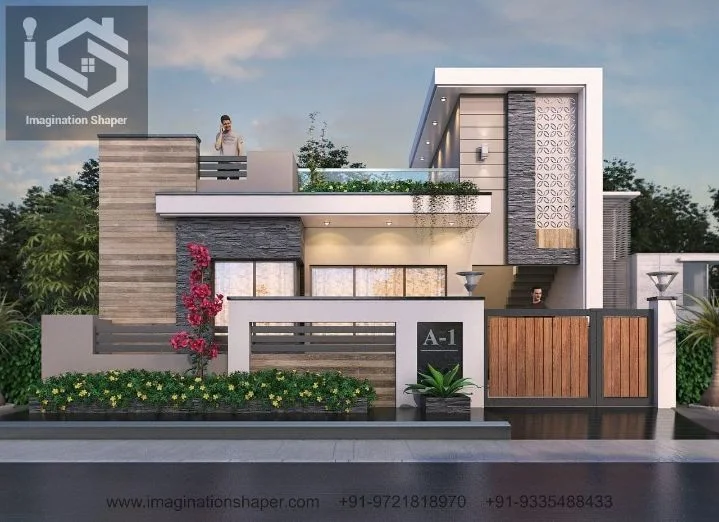
Introduction
A corner house plan refers to a residential design built on a plot located at the intersection of two roads. Because it has road access on two sides, it offers unique architectural opportunities compared to standard single-side plots. Corner houses are often preferred for their openness, better ventilation, and enhanced visibility, making them ideal for both modern and traditional home designs.
Advantages of a Corner House
One of the biggest advantages of a corner house is the availability of more natural light and air circulation due to extra open sides. This improves indoor comfort and reduces dependency on artificial lighting during the day. Another benefit is better access and flexibility in entry points, allowing homeowners to design separate gates for vehicles and pedestrians. Corner plots also provide a stronger street presence, which enhances the overall aesthetic value of the property.
Key Design Considerations
When planning a corner house, privacy becomes an important factor because the house is more exposed to public view. Architects often use boundary walls, landscaped gardens, or strategic window placement to maintain privacy. Another key consideration is traffic noise from both roads, which can be minimized through soundproof windows and proper orientation of living spaces. The layout should also ensure efficient use of space while maintaining openness.
Floor Plan Layout Ideas
A well-designed Corner house plan usually separates public and private spaces effectively. Living rooms and guest areas are often placed near the main entrance, while bedrooms are positioned in quieter zones. Kitchens are typically designed with easy access to dining areas and sometimes include a side entrance for convenience. Architects may also include dual entrances—one facing each road—to improve functionality and accessibility.
Parking and Entry Design
Corner houses provide excellent opportunities for parking design. A dedicated driveway from one road and a pedestrian entrance from the other can create smooth traffic flow within the property. Covered parking or a garage can be placed strategically without blocking the main façade. Proper planning ensures that vehicles do not interfere with garden spaces or living areas.
Ventilation and Natural Lighting
Because of two open sides, corner houses naturally receive more sunlight and airflow. Large windows, glass doors, and open balconies can enhance these benefits. Cross-ventilation can be optimized by aligning openings on opposite sides of the house, helping maintain a cool and fresh indoor environment throughout the year.
Landscaping and Exterior Design
Outdoor spaces play a major role in corner house plans. Landscaped gardens along the boundary walls, corner lawns, or decorative plants can enhance curb appeal. Since the house is visible from two streets, exterior design elements like modern façades, lighting, and textures should be carefully chosen to create an attractive appearance from multiple angles.
Privacy and Security
Security is an important aspect of corner house planning due to increased exposure. Strong boundary walls, CCTV installation, and well-lit exterior spaces help improve safety. At the same time, thoughtful architectural design can ensure privacy inside the house without making it feel closed or confined.
Conclusion
A corner house plan offers a unique combination of visibility, space, and design flexibility. With proper planning, it can provide excellent natural lighting, ventilation, and aesthetic appeal while maintaining privacy and security. Whether designed in a modern or traditional style, a corner house can become a highly functional and visually impressive home when its advantages are fully utilized.
Categories
Read More
Arsenal return to action against Southampton in the FA Cup on Saturday, after playing in the Champions League final 2026. First leg against Donning CP on April 7, and then continue their Head Alliance title run against Bournemouth on April 11. Mikel Arteta is confronting a potential damage emergency as Arsenal store offered to bounce back from defeat in the Carabao Cup final. Football fans are...

Finding the Best lawyer in delhi high court can feel overwhelming, especially when you need legal help urgently. With so many advocates and law firms available, it’s easy to get confused about where to start. However, with the right approach and a few practical steps, you can quickly identify a reliable lawyer who fits your needs. In this article, we’ll break down simple and...

Hearing is one of the most important senses that connects us to the world. It allows us to communicate, enjoy music, stay alert to our surroundings, and respond to warning sounds. Despite its importance, ear care is often overlooked until problems begin to appear. Maintaining good ear health is essential for clear hearing, proper balance, and overall well-being. With the right habits...

The mortgage landscape in the United Kingdom is currently undergoing one of its most significant transformations in a decade. As we move through 2026, the Financial Conduct Authority (FCA) has introduced a suite of updated regulations aimed at tightening consumer protections while simultaneously fostering a more technologically integrated lending environment. For professionals in the industry,...

In today’s digital transformation era, enterprise cloud platforms are becoming essential for modern organizations. One of the most in-demand enterprise solutions is Workday, a powerful cloud-based software used for Human Capital Management (HCM), Finance, Payroll, and Analytics. As businesses increasingly adopt Workday, the demand for trained professionals is growing rapidly. If you are...