Thread Mill vs Tap: Which One Gives Better Thread Quality?
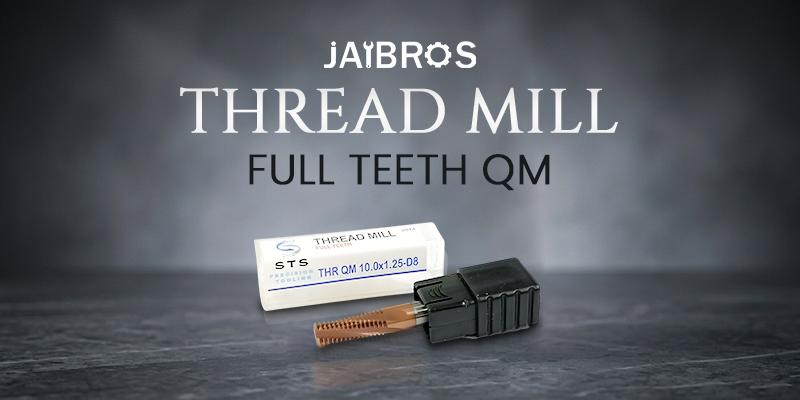
Thread Mill vs Tap: Which Gives Better Thread Quality
Thread creation is a critical process in machining, especially in industries where precision and durability are essential. Whether you are working on automotive parts, aerospace components, or industrial machinery, the quality of threads directly impacts performance and reliability.
Two of the most commonly used methods for thread creation are tapping and thread milling. While both methods are effective, they differ significantly in terms of flexibility, accuracy, and application. Choosing the right method can improve productivity, reduce costs, and enhance overall machining results.
In this blog, we will compare thread mill and tapping processes to help you understand which method delivers better thread quality and when to use each.
What Is a Thread Mill?
A thread mill is a cutting tool used in CNC machining to create threads using a milling process. Unlike tapping, which cuts threads in one pass, thread milling involves a rotating tool that follows a programmed path to produce threads.
A thread mill tool is highly versatile and can be used for both internal and external threading. It is commonly used in CNC machines for high-precision applications.
What Is Tapping?
Tapping is a traditional method used to create threads by cutting them directly into a hole using a tap. This process is simple and fast, making it suitable for high-volume production.
However, tapping has limitations, especially when working with hard materials or complex designs. Once a tap breaks, it can be difficult to remove, leading to downtime and increased costs.
Key Differences Between Thread Milling and Tapping
1. Thread Quality
When it comes to thread quality, a thread mill offers superior results. The milling process allows better control over cutting conditions, resulting in smoother and more accurate threads.
Tapping, on the other hand, can produce acceptable results but may struggle with consistency, especially in hard materials.
2. Flexibility
One of the biggest advantages of using a thread mill is its flexibility. A single tool can create threads of different sizes and pitches by adjusting the program.
In contrast, tapping requires a separate tap for each thread size, making it less flexible.
3. Tool Breakage Risk
Tool breakage is a major concern in machining. A broken tap can be difficult to remove and may damage the workpiece.
With thread milling, the risk is significantly lower. Even if a thread mill tool breaks, it is easier to remove without damaging the part.
4. Material Compatibility
Thread milling is suitable for a wide range of materials, including hard metals and exotic alloys.
Tapping works well for softer materials but may face challenges when dealing with tougher materials.
Using a thread milling cutter ensures better performance across different materials.
5. Chip Control
Chip control is another important factor in machining. Thread milling produces smaller chips that are easier to remove, reducing the risk of clogging.
Tapping often produces continuous chips, which can cause issues in deep holes.
6. Machine Requirements
Thread milling requires a CNC machine capable of performing complex movements. A thread milling machine tool is designed to handle these operations efficiently.
Tapping can be performed on simpler machines, making it more accessible for basic applications.
Advantages of Thread Milling
-
Higher precision and better thread quality
-
Greater flexibility for different thread sizes
-
Lower risk of tool breakage
-
Suitable for hard materials
-
Better chip control
A high-quality thread mill ensures consistent performance and reliable results in modern machining environments.
Advantages of Tapping
-
Faster for simple and repetitive tasks
-
Lower initial cost
-
Easy to use for basic applications
Tapping remains a practical choice for high-volume production where speed is more important than flexibility.
When to Use Thread Milling
Thread milling is ideal for:
-
High-precision applications
-
Hard or difficult materials
-
Complex thread designs
-
Low to medium production volumes
Using thread mill tools in these scenarios ensures better results and improved efficiency.
When to Use Tapping
Tapping is suitable for:
-
Simple thread designs
-
High-volume production
-
Soft materials
-
Basic machining setups
It is a cost-effective solution for straightforward applications.
Role of CNC Tools in Threading
Modern threading operations rely heavily on cnc tools for precision and efficiency. CNC machines enable accurate control over tool movement, ensuring consistent thread quality.
Whether using a tap or a thread mill, the right tooling solution is essential for achieving optimal results.
Choosing the Right Method for Better Thread Quality
Selecting between tapping and thread milling depends on your specific requirements.
If your priority is precision and flexibility, a thread mill is the better choice. It provides superior control and delivers high-quality threads.
If you need speed and simplicity for large-scale production, tapping may be more suitable.
Ultimately, the choice depends on factors such as material, production volume, and required accuracy.
Future of Threading Technology
The future of threading lies in advanced CNC technologies and smart tooling solutions. Thread milling is gaining popularity due to its flexibility and ability to handle complex applications.
Innovations in tool design and materials are further improving performance and durability.
As manufacturing continues to evolve, the use of thread mill tools is expected to increase significantly.
Conclusion
Both tapping and thread milling have their own advantages, but when it comes to thread quality, flexibility, and reliability, thread mill stands out as the better option. It offers precise control, reduced risk of breakage, and the ability to work with a wide range of materials.
While tapping remains useful for simple and high-volume tasks, modern manufacturing increasingly relies on thread milling for advanced applications. Using the right thread milling cutter and thread milling machine tool ensures consistent and high-quality results.
At Jaibros, we provide high-quality CNC tools and advanced threading solutions designed to meet modern manufacturing demands. Our range of thread mill tools is built for precision, durability, and performance, helping businesses achieve superior machining results and stay ahead in today’s competitive industry.
FAQs
1. What is the main difference between thread milling and tapping?
Thread milling uses a rotating tool with programmed movement, while tapping cuts threads directly in one pass.
2. Which method provides better thread quality?
Thread milling generally provides better accuracy and smoother thread finish.
3. Is thread milling more expensive than tapping?
Initial costs may be higher, but it offers better long-term value due to flexibility and durability.
4. Can thread milling be used for all materials?
Yes, it works well with a wide range of materials, including hard metals.
5. When should I use tapping instead of thread milling?
Use tapping for simple, high-volume production where speed is the priority.
Категории
Больше
Building permit data is filed weeks or months before construction begins. That timing makes it one of the earliest public signals of economic activity in a given area, earlier than MLS listings, earlier than census updates, and earlier than most buyers realize when researching a market. For land buyers, understanding what permit trends reveal is a meaningful addition to any market research...

Go To My Site :-www.hotkavya.com WhatsApp :-Hot Kavya Mumbai Escorts Cash Payment Low Price Mumbai Escorts excels at providing excellent services that exceed customer satisfaction, offering luxury services tailored to satisfy your wildest fantasies. Booking an encounter with an attractive escort from your own home takes only minutes of clicks or...

When it comes to buying reliable and affordable vehicles, many Pakistani buyers prefer Japanese used cars. These vehicles are known for their durability, advanced technology, and excellent fuel efficiency. Over the past decade, the demand for imported Japanese vehicles has grown rapidly in Pakistan, as people look for better quality and long-lasting cars at reasonable prices. Companies...

If you’re looking for the best off-campus housing with private study spaces near UNCW, you’ll find that dedicated study areas greatly enhance your academic performance. Places like Redpoint Wilmington stand out, offering spacious layouts and a focus on student success with modern amenities that cater to both study and social life. Individual leases provide financial flexibility,...

"Executive Summary Dental Sealants Market Size and Share: Global Industry Snapshot The global dental sealants market size was valued at USD 1.12 billion in 2024 and is expected to reach USD 2.76 billion by 2032, at a CAGR of 8.00% during the forecast period Each of the topics covered in the Dental Sealants report is studied very well to get a clear idea...