2026 World Cup Knockout Stage Explained: Extra Time, Penalty Shootouts & FIFA Rules
The FIFA World Cup 2026 introduces a larger tournament with 48 teams, making the knockout stage more competitive than ever. Once the group stage concludes, only the qualified teams remain in the race for football's biggest prize. Unlike group-stage matches, every knockout fixture must produce a winner. If the teams are level after regular time, FIFA follows a clear sequence of tie-breaker rules to determine which nation advances. Understanding these rules helps fans enjoy every dramatic moment of the tournament.
How the Knockout Stage Works
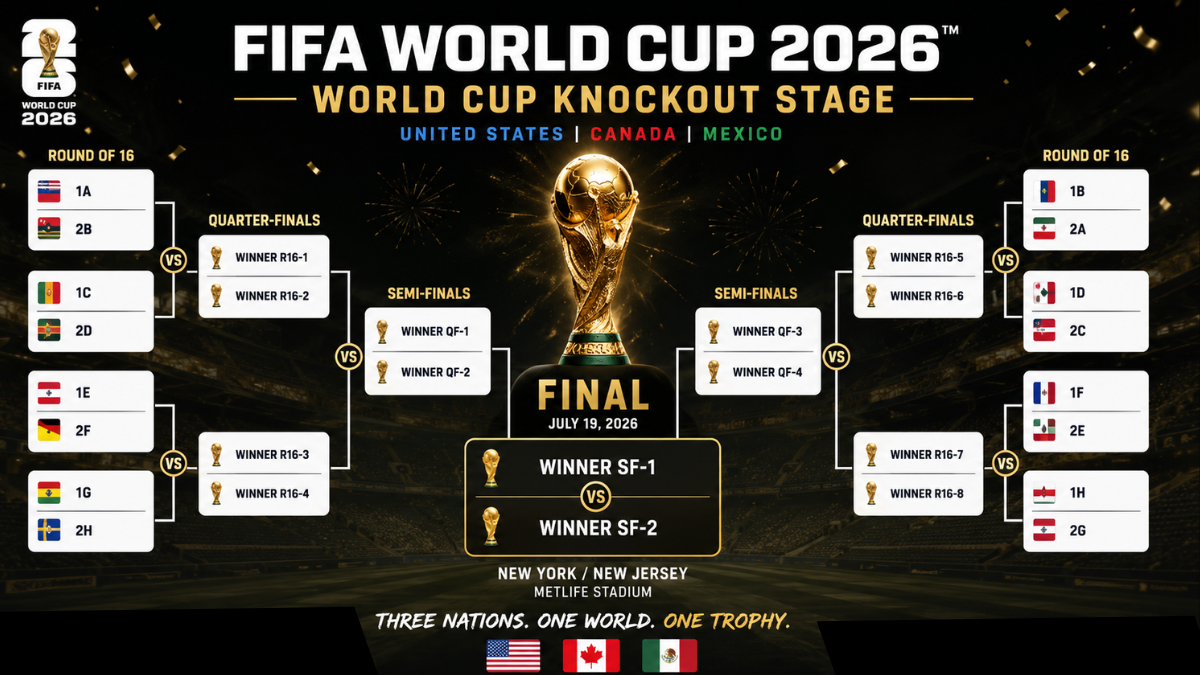
The knockout stage follows a single-elimination format. A team that wins advances to the next round, while the losing team is immediately eliminated from the competition. The 2026 FIFA World Cup features an expanded knockout bracket beginning with the Round of 32, followed by the Round of 16, quarter-finals, semi-finals, the third-place playoff, and the Final.
Unlike league competitions where teams can recover from a defeat, there are no second chances in the knockout rounds. Every match becomes increasingly important as teams move closer to lifting the World Cup trophy.
What Happens if a Match Is Tied After 90 Minutes?
Each knockout match starts with 90 minutes of regulation play, consisting of two 45-minute halves plus stoppage time. If one team has scored more goals at the end of regulation, it advances directly to the next round.
However, if both teams finish level after 90 minutes, the match moves to extra time. Draws are not permitted in the knockout stage because one team must progress.
FIFA Extra Time Rules
Extra time consists of two 15-minute periods, giving both teams an additional 30 minutes to find a winner. There is a short interval between the two halves of extra time, and teams switch ends before the second period begins.
Goals scored during extra time count exactly the same as goals scored during normal time. If one team is leading after the full 120 minutes, the referee ends the match, and that team qualifies for the next round.
Extra time often tests a team's fitness, squad depth, and tactical discipline. Managers may introduce fresh substitutes to increase attacking options or strengthen the defense during these crucial minutes.
Penalty Shootouts Explained
If the score remains tied after extra time, the winner is decided through a penalty shootout. Each team initially takes five penalties, alternating turns.
The team that scores the most penalties after five attempts wins the match. If one team gains an unassailable lead before all five kicks are completed, the shootout ends immediately.
If both teams remain tied after the first five penalties, the contest moves into sudden death. Each team takes one penalty per round until one side scores and the other misses, producing a winner.
Penalty shootouts are among the most dramatic moments in football, demanding exceptional composure from both players and goalkeepers.
Important FIFA Knockout Rules
Several additional rules apply during knockout matches. There is no away-goals rule in the FIFA World Cup, meaning every goal carries equal value regardless of venue. Teams can use their available substitutions according to FIFA's competition regulations, allowing coaches to refresh tired players or introduce specialist penalty takers before a shootout.
Discipline, stamina, tactical awareness, and mental strength often become just as important as technical ability once matches extend beyond 90 minutes.
Conclusion
The FIFA World Cup 2026 knockout stage guarantees high-pressure football where every match must produce a winner. The process is straightforward: 90 minutes of regulation time, followed by 30 minutes of extra time if required, and finally a penalty shootout if the teams remain level. These FIFA rules ensure fairness while creating unforgettable moments that define World Cup history. For players and fans alike, the knockout stage represents the ultimate test of skill, resilience, and determination on football's biggest stage.
https://bumppy.com/2026-world-cup-knockout-stage-tie-breakers-explained/ 2026 World Cup Knockout Stage Explained: Extra Time, Penalty Shootouts & FIFA Rules
The FIFA World Cup 2026 introduces a larger tournament with 48 teams, making the knockout stage more competitive than ever. Once the group stage concludes, only the qualified teams remain in the race for football's biggest prize. Unlike group-stage matches, every knockout fixture must produce a winner. If the teams are level after regular time, FIFA follows a clear sequence of tie-breaker rules to determine which nation advances. Understanding these rules helps fans enjoy every dramatic moment of the tournament.
How the Knockout Stage Works
The knockout stage follows a single-elimination format. A team that wins advances to the next round, while the losing team is immediately eliminated from the competition. The 2026 FIFA World Cup features an expanded knockout bracket beginning with the Round of 32, followed by the Round of 16, quarter-finals, semi-finals, the third-place playoff, and the Final.
Unlike league competitions where teams can recover from a defeat, there are no second chances in the knockout rounds. Every match becomes increasingly important as teams move closer to lifting the World Cup trophy.
What Happens if a Match Is Tied After 90 Minutes?
Each knockout match starts with 90 minutes of regulation play, consisting of two 45-minute halves plus stoppage time. If one team has scored more goals at the end of regulation, it advances directly to the next round.
However, if both teams finish level after 90 minutes, the match moves to extra time. Draws are not permitted in the knockout stage because one team must progress.
FIFA Extra Time Rules
Extra time consists of two 15-minute periods, giving both teams an additional 30 minutes to find a winner. There is a short interval between the two halves of extra time, and teams switch ends before the second period begins.
Goals scored during extra time count exactly the same as goals scored during normal time. If one team is leading after the full 120 minutes, the referee ends the match, and that team qualifies for the next round.
Extra time often tests a team's fitness, squad depth, and tactical discipline. Managers may introduce fresh substitutes to increase attacking options or strengthen the defense during these crucial minutes.
Penalty Shootouts Explained
If the score remains tied after extra time, the winner is decided through a penalty shootout. Each team initially takes five penalties, alternating turns.
The team that scores the most penalties after five attempts wins the match. If one team gains an unassailable lead before all five kicks are completed, the shootout ends immediately.
If both teams remain tied after the first five penalties, the contest moves into sudden death. Each team takes one penalty per round until one side scores and the other misses, producing a winner.
Penalty shootouts are among the most dramatic moments in football, demanding exceptional composure from both players and goalkeepers.
Important FIFA Knockout Rules
Several additional rules apply during knockout matches. There is no away-goals rule in the FIFA World Cup, meaning every goal carries equal value regardless of venue. Teams can use their available substitutions according to FIFA's competition regulations, allowing coaches to refresh tired players or introduce specialist penalty takers before a shootout.
Discipline, stamina, tactical awareness, and mental strength often become just as important as technical ability once matches extend beyond 90 minutes.
Conclusion
The FIFA World Cup 2026 knockout stage guarantees high-pressure football where every match must produce a winner. The process is straightforward: 90 minutes of regulation time, followed by 30 minutes of extra time if required, and finally a penalty shootout if the teams remain level. These FIFA rules ensure fairness while creating unforgettable moments that define World Cup history. For players and fans alike, the knockout stage represents the ultimate test of skill, resilience, and determination on football's biggest stage.
https://bumppy.com/2026-world-cup-knockout-stage-tie-breakers-explained/