• Why Functional Testing Is Important for Smart Manufacturing?

    Functional testing is important for smart manufacturing because it verifies product performance, identifies defects before deployment, improves reliability, reduces production costs, ensures quality standards, supports automation, minimizes failures, enhances customer satisfaction, and delivers consistent, high-quality electronic products with greater efficiency, accuracy, safety, long-term performance, across diverse industrial applications worldwide consistently.

    visit  https://www.kbhelectronics.com/resources/why-functional-testing-is-important-for-smart-manufacturing
    Why Functional Testing Is Important for Smart Manufacturing? Functional testing is important for smart manufacturing because it verifies product performance, identifies defects before deployment, improves reliability, reduces production costs, ensures quality standards, supports automation, minimizes failures, enhances customer satisfaction, and delivers consistent, high-quality electronic products with greater efficiency, accuracy, safety, long-term performance, across diverse industrial applications worldwide consistently. visit  https://www.kbhelectronics.com/resources/why-functional-testing-is-important-for-smart-manufacturing
    www.kbhelectronics.com
    See why functional testing is essential for smart manufacturing by improving automation, safety, quality, efficiency, and equipment reliability.
    0 Kommentare ·0 Anteile ·358 Ansichten ·0 Vorschau
  • Automated Double Shuttle Table Wax Machine with Safety Features

    In modern investment casting, operational safety and process consistency are non-negotiable. IC Machines introduces the Double Shuttle Table Wax Machine, a next-generation system designed to minimize human error, maximize workplace safety, and ensure absolute precision through advanced automation. This isn't just a molding machine; it's a smart manufacturing hub engineered for the demands of Industry 4.0.

    Safety is embedded in every cycle of our Double Shuttle Table Wax Machine. The integrated Nozzle Strike Safety mechanism prevents costly damage and potential injury during die loading, while the robust Hydraulic Pattern Ejector ensures delicate wax patterns are removed gently and consistently, reducing breakage rates. For heavy-duty operations, the optional Jib Crane further enhances ergonomic safety by eliminating manual lifting of heavy dies.
    Precision is automated through our Metered Injection system, which delivers exact shot weights every time, eliminating the variability of manual operation. Operators can monitor performance in real-time via the intuitive Touch Operation panel, which includes a built-in Injection Counter to track production volume accurately without manual logging. Perhaps most critically, the machine features advanced Self-Diagnostics, automatically detecting faults and alerting maintenance teams before minor issues escalate into unplanned downtime.

    Built on a rigid C-Frame press with water-cooled platens and 5-zone temperature control, this machine handles both paste and granular waxes with thermal perfection. The "Home Button" feature allows for instant reset and positioning, streamlining changeovers. Backed by Laxminarayan Technologies' legacy of excellence since 1986, this system combines decades of mechanical expertise with modern digital intelligence.

    Upgrade to a Double Shuttle Table Wax Machine that protects your team, guarantees your quality, and optimizes your output. With available models in 12T, 20T, and 35T capacities, we have the right smart solution for your foundry. Experience the future of safe, automated casting today.
    Visit site: ( https://www.ic-machines.com/wax-injection-machine/)

    #double shuttle table wax machine
    Automated Double Shuttle Table Wax Machine with Safety Features In modern investment casting, operational safety and process consistency are non-negotiable. IC Machines introduces the Double Shuttle Table Wax Machine, a next-generation system designed to minimize human error, maximize workplace safety, and ensure absolute precision through advanced automation. This isn't just a molding machine; it's a smart manufacturing hub engineered for the demands of Industry 4.0. Safety is embedded in every cycle of our Double Shuttle Table Wax Machine. The integrated Nozzle Strike Safety mechanism prevents costly damage and potential injury during die loading, while the robust Hydraulic Pattern Ejector ensures delicate wax patterns are removed gently and consistently, reducing breakage rates. For heavy-duty operations, the optional Jib Crane further enhances ergonomic safety by eliminating manual lifting of heavy dies. Precision is automated through our Metered Injection system, which delivers exact shot weights every time, eliminating the variability of manual operation. Operators can monitor performance in real-time via the intuitive Touch Operation panel, which includes a built-in Injection Counter to track production volume accurately without manual logging. Perhaps most critically, the machine features advanced Self-Diagnostics, automatically detecting faults and alerting maintenance teams before minor issues escalate into unplanned downtime. Built on a rigid C-Frame press with water-cooled platens and 5-zone temperature control, this machine handles both paste and granular waxes with thermal perfection. The "Home Button" feature allows for instant reset and positioning, streamlining changeovers. Backed by Laxminarayan Technologies' legacy of excellence since 1986, this system combines decades of mechanical expertise with modern digital intelligence. Upgrade to a Double Shuttle Table Wax Machine that protects your team, guarantees your quality, and optimizes your output. With available models in 12T, 20T, and 35T capacities, we have the right smart solution for your foundry. Experience the future of safe, automated casting today. Visit site: ( https://www.ic-machines.com/wax-injection-machine/) #double shuttle table wax machine
    0 Kommentare ·1 Anteile ·2KB Ansichten ·0 Vorschau
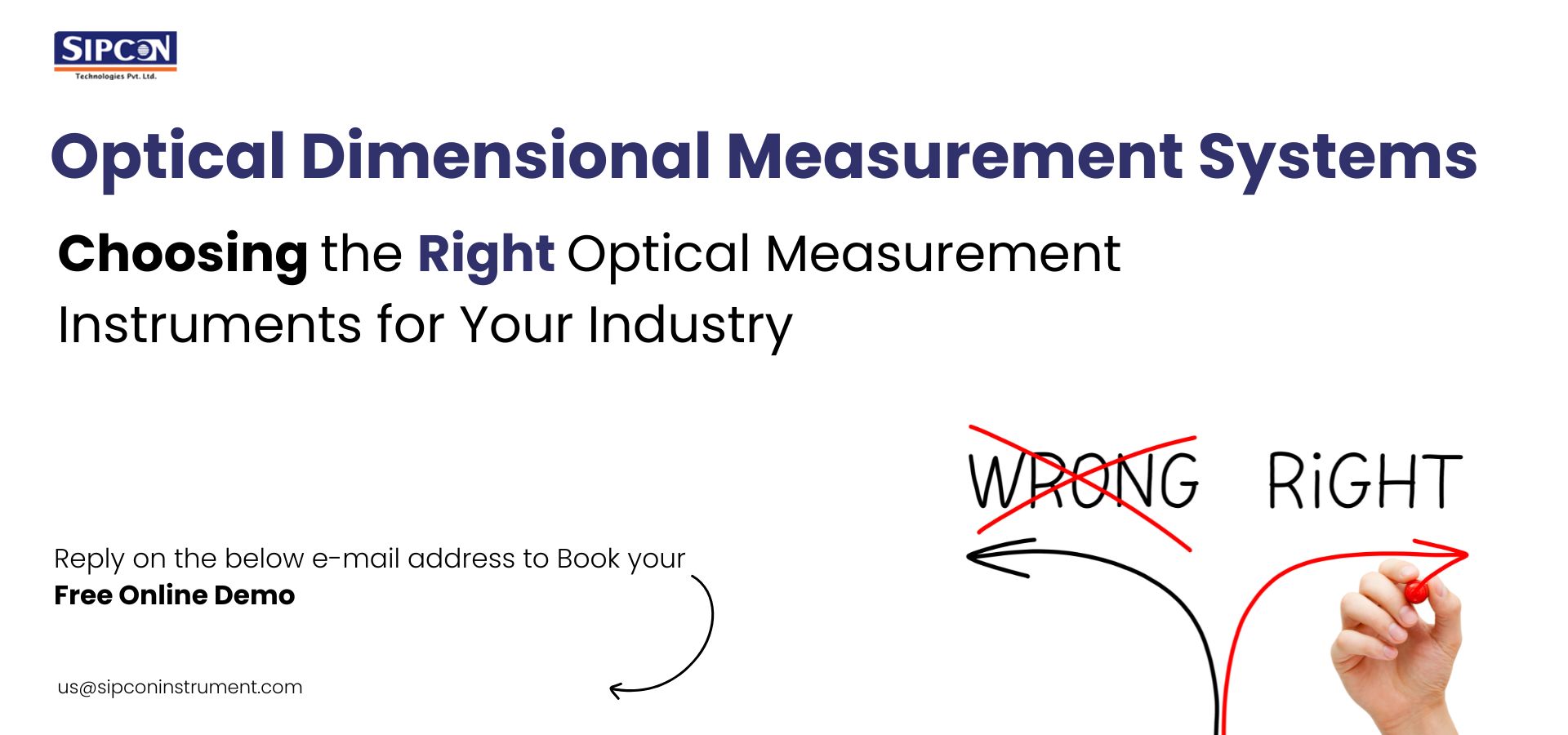
  • Why Optical Measurement Systems Redefine Precision Inspection

    Optical measurement instruments are transforming industrial inspection by enabling ultra-precise, non-contact dimensional analysis of complex parts. Unlike traditional methods, optical dimensional measurement systems use advanced imaging and software algorithms to capture accurate measurements within seconds, improving productivity and consistency. These technologies are widely adopted in high-precision sectors such as aerospace, automotive, electronics, and medical manufacturing, where even micron-level errors are unacceptable. A trusted optical measurement equipment supplier delivers integrated solutions that enhance quality control, reduce rejection rates, and support automated inspection workflows. As industries shift toward smart manufacturing, optical systems are becoming essential tools for achieving reliable, repeatable, and scalable measurement accuracy. Call +1 (262) 391-4785 or email us@sipconinstrument.com today!

    Learn More: https://www.sipconinstrument.com/us/blog/optical-measurement-instruments-systems-types-applications-suppliers/
    Why Optical Measurement Systems Redefine Precision Inspection Optical measurement instruments are transforming industrial inspection by enabling ultra-precise, non-contact dimensional analysis of complex parts. Unlike traditional methods, optical dimensional measurement systems use advanced imaging and software algorithms to capture accurate measurements within seconds, improving productivity and consistency. These technologies are widely adopted in high-precision sectors such as aerospace, automotive, electronics, and medical manufacturing, where even micron-level errors are unacceptable. A trusted optical measurement equipment supplier delivers integrated solutions that enhance quality control, reduce rejection rates, and support automated inspection workflows. As industries shift toward smart manufacturing, optical systems are becoming essential tools for achieving reliable, repeatable, and scalable measurement accuracy. Call +1 (262) 391-4785 or email us@sipconinstrument.com today! Learn More: https://www.sipconinstrument.com/us/blog/optical-measurement-instruments-systems-types-applications-suppliers/
    Optical Measurement Instruments: Types, Applications & Suppliers
    www.sipconinstrument.com
    Explore optical measurement instruments & systems, their types, applications, benefits, and leading suppliers for accurate industrial testing.
    0 Kommentare ·0 Anteile ·1KB Ansichten ·0 Vorschau
  • Pharmaceutical Industry Trends, Outlook and Priorities 2026

    The pharmaceutical industry in 2026 faces pricing pressures, supply chain deglobalization and shifting regulatory dynamics. AI is accelerating drug discovery, cutting development timelines by up to 50%. Key pharmaceutical industry trends include direct-to-patient models, AI-driven customer engagement, smart manufacturing and first-in-class innovation. For more info: https://www.zs.com/insights/pharma-industry-outlook-2026
    Pharmaceutical Industry Trends, Outlook and Priorities 2026 The pharmaceutical industry in 2026 faces pricing pressures, supply chain deglobalization and shifting regulatory dynamics. AI is accelerating drug discovery, cutting development timelines by up to 50%. Key pharmaceutical industry trends include direct-to-patient models, AI-driven customer engagement, smart manufacturing and first-in-class innovation. For more info: https://www.zs.com/insights/pharma-industry-outlook-2026
    0 Kommentare ·0 Anteile ·1KB Ansichten ·0 Vorschau
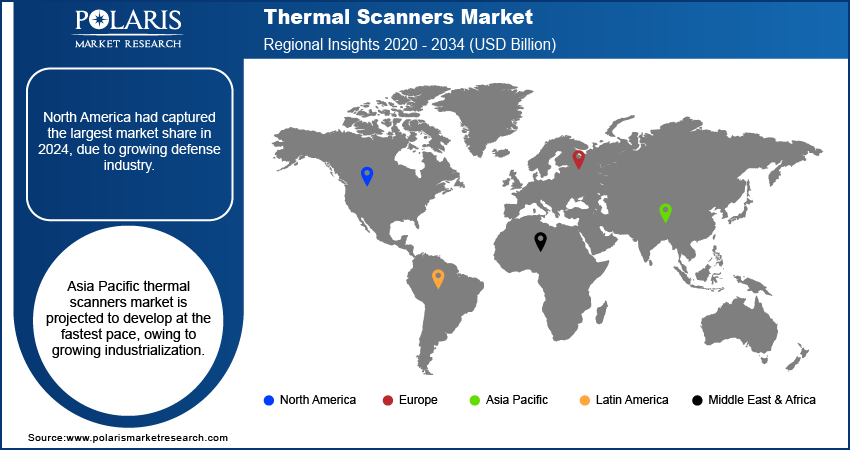
  • The global thermal scanners market size was valued at USD 5.58 billion in 2024. The market is projected to grow at a CAGR of 8.50% during 2025 to 2034.

    The global thermal scanners market is witnessing strong growth as industries, governments, and healthcare institutions increasingly adopt thermal imaging technology for safety, security, and diagnostic applications. These systems—designed to detect infrared energy and convert it into temperature readings or thermal images—have become essential in modern infrastructure, especially in the wake of heightened health and security awareness. The demand for accurate, non-contact temperature measurement and enhanced surveillance capabilities continues to drive innovation and adoption across multiple sectors.

    Market Overview
    Thermal scanners are devices that measure surface temperature variations using infrared radiation. They are widely used for applications in industrial inspection, defense surveillance, healthcare diagnostics, building maintenance, and airport screening. The technology plays a critical role in detecting heat patterns that are invisible to the naked eye, allowing users to identify anomalies, prevent failures, and ensure safety.

    The market has evolved rapidly due to advances in sensor technology, artificial intelligence (AI), and image-processing algorithms. Modern scanners offer higher resolution, faster frame rates, and integration with cloud and Internet of Things (IoT) platforms. These developments are enabling precise temperature mapping and automated monitoring across both fixed and portable devices.

    Growing concerns over workplace safety, along with the expansion of automation and predictive maintenance programs, are key drivers behind the adoption of thermal scanners. In industrial environments, they help detect equipment overheating, electrical faults, and process irregularities before they escalate into costly failures. Similarly, in healthcare and public safety, thermal imaging systems have proven invaluable for mass temperature screening and diagnostic imaging, ensuring efficient disease prevention and control.

    As industries transition toward smart manufacturing and connected security systems, the integration of thermal imaging with digital analytics and wireless networks is expected to shape the future of the market.

    Browse More Insights: https://www.polarismarketresearch.com/industry-analysis/thermal-scanner-market

    Market Segmentation
    The global thermal scanners market can be segmented by type, wavelength, application, and end-use industry.

    1. By Type:

    Handheld Thermal Scanners: Portable devices used by technicians, security personnel, and healthcare professionals for quick, on-site thermal inspections. They are valued for their flexibility and ease of use.

    Fixed or Mounted Thermal Scanners: Installed in buildings, airports, production facilities, and surveillance systems for continuous temperature monitoring and automation.

    Pan-Tilt-Zoom (PTZ) Thermal Cameras: Provide wide-area coverage with remote-controlled viewing angles, commonly used in perimeter security and traffic monitoring.

    2. By Wavelength:

    Short-Wave Infrared (SWIR): Suitable for imaging through glass and detecting high-temperature materials like metals and ceramics.

    Mid-Wave Infrared (MWIR): Offers high sensitivity and is used in scientific research, defense, and industrial applications.

    Long-Wave Infrared (LWIR): Ideal for non-contact temperature measurements and widely used in medical and surveillance systems.

    3. By Application:

    Industrial Inspection: Used in predictive maintenance, process control, and electrical diagnostics to prevent system failures.

    Security and Surveillance: Enables night vision and intrusion detection in defense, transportation, and border control.

    Healthcare and Screening: Utilized for non-invasive body temperature screening and diagnostic imaging.

    Automotive and Transportation: Integrated into driver-assistance systems for pedestrian detection and enhanced visibility in low-light conditions.

    Building and Construction: Employed to detect heat leaks, insulation failures, and energy inefficiencies.

    4. By End-Use Industry:

    Healthcare: For patient monitoring and thermal screening in hospitals and clinics.

    Manufacturing: To monitor machinery temperature and ensure production safety.

    Defense and Aerospace: For target acquisition, surveillance, and situational awareness.

    Commercial and Public Infrastructure: Used in airports, offices, and public spaces for safety screening and energy management.

    Automotive: For safety and thermal sensing applications in electric vehicles and autonomous systems.

    The wide range of applications underscores the versatility of thermal scanners across different industries, reinforcing their importance in modern operational environments.


    The global thermal scanners market size was valued at USD 5.58 billion in 2024. The market is projected to grow at a CAGR of 8.50% during 2025 to 2034. The global thermal scanners market is witnessing strong growth as industries, governments, and healthcare institutions increasingly adopt thermal imaging technology for safety, security, and diagnostic applications. These systems—designed to detect infrared energy and convert it into temperature readings or thermal images—have become essential in modern infrastructure, especially in the wake of heightened health and security awareness. The demand for accurate, non-contact temperature measurement and enhanced surveillance capabilities continues to drive innovation and adoption across multiple sectors. Market Overview Thermal scanners are devices that measure surface temperature variations using infrared radiation. They are widely used for applications in industrial inspection, defense surveillance, healthcare diagnostics, building maintenance, and airport screening. The technology plays a critical role in detecting heat patterns that are invisible to the naked eye, allowing users to identify anomalies, prevent failures, and ensure safety. The market has evolved rapidly due to advances in sensor technology, artificial intelligence (AI), and image-processing algorithms. Modern scanners offer higher resolution, faster frame rates, and integration with cloud and Internet of Things (IoT) platforms. These developments are enabling precise temperature mapping and automated monitoring across both fixed and portable devices. Growing concerns over workplace safety, along with the expansion of automation and predictive maintenance programs, are key drivers behind the adoption of thermal scanners. In industrial environments, they help detect equipment overheating, electrical faults, and process irregularities before they escalate into costly failures. Similarly, in healthcare and public safety, thermal imaging systems have proven invaluable for mass temperature screening and diagnostic imaging, ensuring efficient disease prevention and control. As industries transition toward smart manufacturing and connected security systems, the integration of thermal imaging with digital analytics and wireless networks is expected to shape the future of the market. Browse More Insights: https://www.polarismarketresearch.com/industry-analysis/thermal-scanner-market Market Segmentation The global thermal scanners market can be segmented by type, wavelength, application, and end-use industry. 1. By Type: Handheld Thermal Scanners: Portable devices used by technicians, security personnel, and healthcare professionals for quick, on-site thermal inspections. They are valued for their flexibility and ease of use. Fixed or Mounted Thermal Scanners: Installed in buildings, airports, production facilities, and surveillance systems for continuous temperature monitoring and automation. Pan-Tilt-Zoom (PTZ) Thermal Cameras: Provide wide-area coverage with remote-controlled viewing angles, commonly used in perimeter security and traffic monitoring. 2. By Wavelength: Short-Wave Infrared (SWIR): Suitable for imaging through glass and detecting high-temperature materials like metals and ceramics. Mid-Wave Infrared (MWIR): Offers high sensitivity and is used in scientific research, defense, and industrial applications. Long-Wave Infrared (LWIR): Ideal for non-contact temperature measurements and widely used in medical and surveillance systems. 3. By Application: Industrial Inspection: Used in predictive maintenance, process control, and electrical diagnostics to prevent system failures. Security and Surveillance: Enables night vision and intrusion detection in defense, transportation, and border control. Healthcare and Screening: Utilized for non-invasive body temperature screening and diagnostic imaging. Automotive and Transportation: Integrated into driver-assistance systems for pedestrian detection and enhanced visibility in low-light conditions. Building and Construction: Employed to detect heat leaks, insulation failures, and energy inefficiencies. 4. By End-Use Industry: Healthcare: For patient monitoring and thermal screening in hospitals and clinics. Manufacturing: To monitor machinery temperature and ensure production safety. Defense and Aerospace: For target acquisition, surveillance, and situational awareness. Commercial and Public Infrastructure: Used in airports, offices, and public spaces for safety screening and energy management. Automotive: For safety and thermal sensing applications in electric vehicles and autonomous systems. The wide range of applications underscores the versatility of thermal scanners across different industries, reinforcing their importance in modern operational environments.
    Thermal Scanners Market Size, Share | Industry Growth Report, 2034
    www.polarismarketresearch.com
    Thermal Scanner Market to grow from USD 5.58 billion in 2024 to USD 12.59 Billion by 2034 at 8.5% CAGR, driven by infrared technology and healthcare & defense applications.
    0 Kommentare ·0 Anteile ·16KB Ansichten ·0 Vorschau